


The Stealth Range

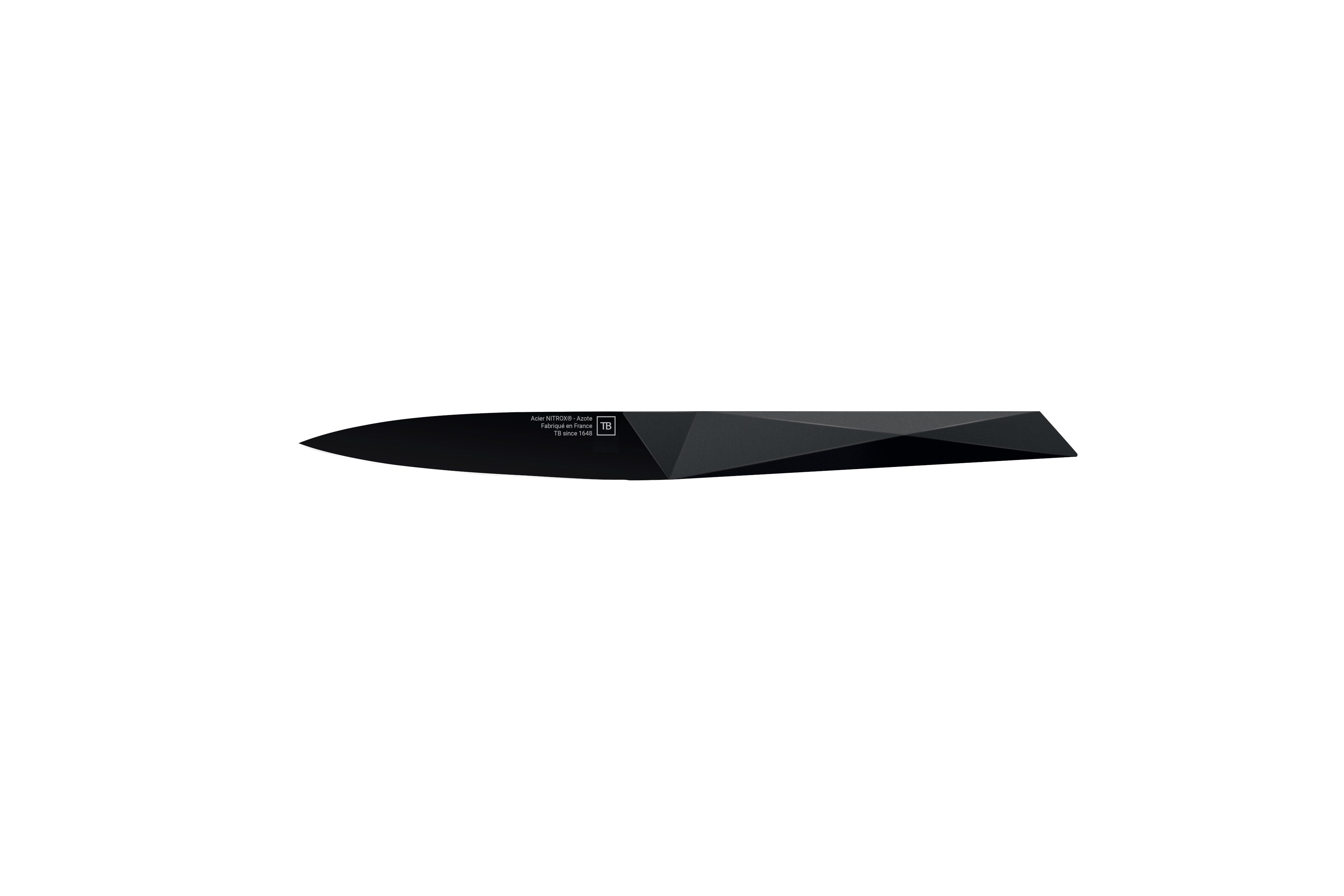
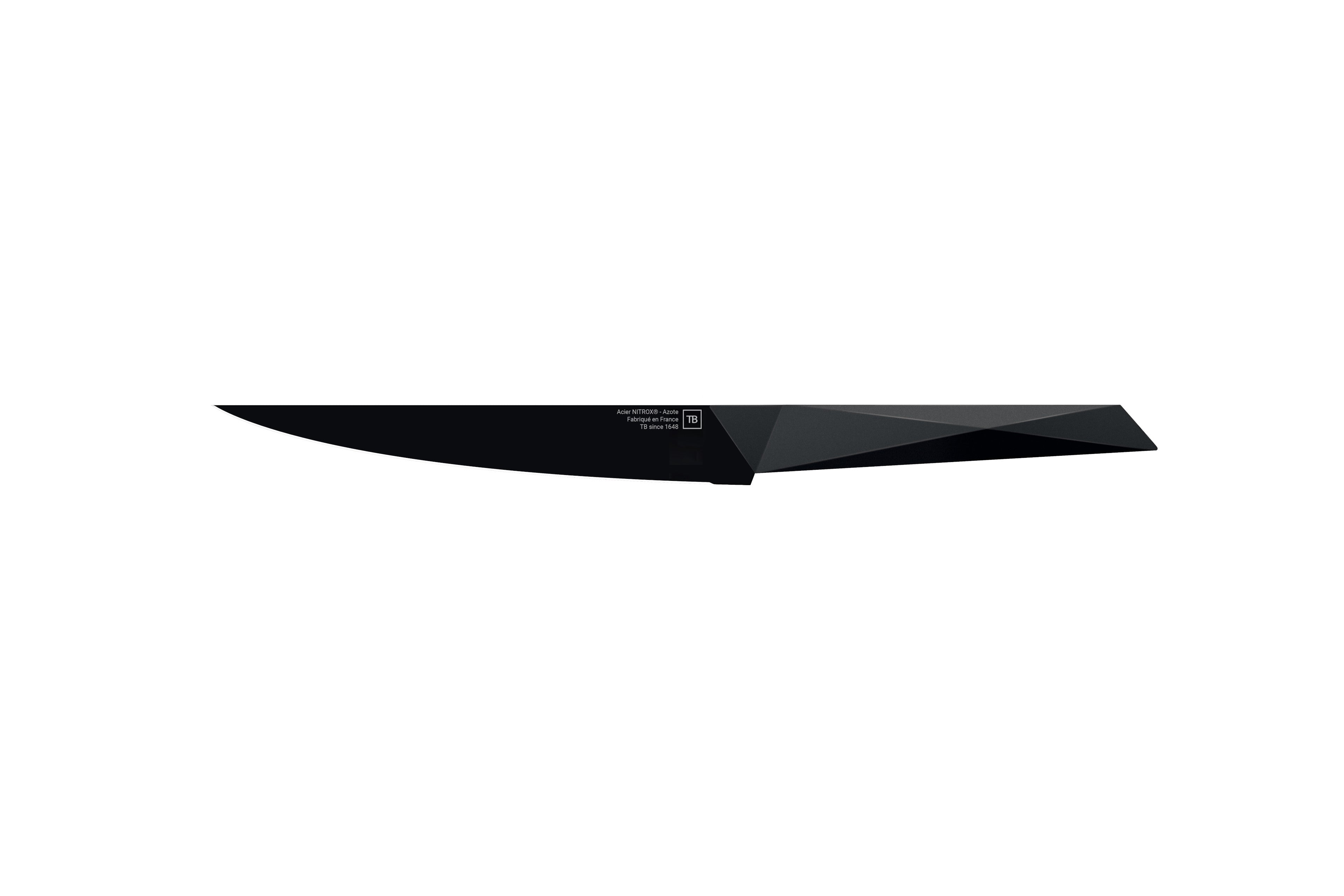
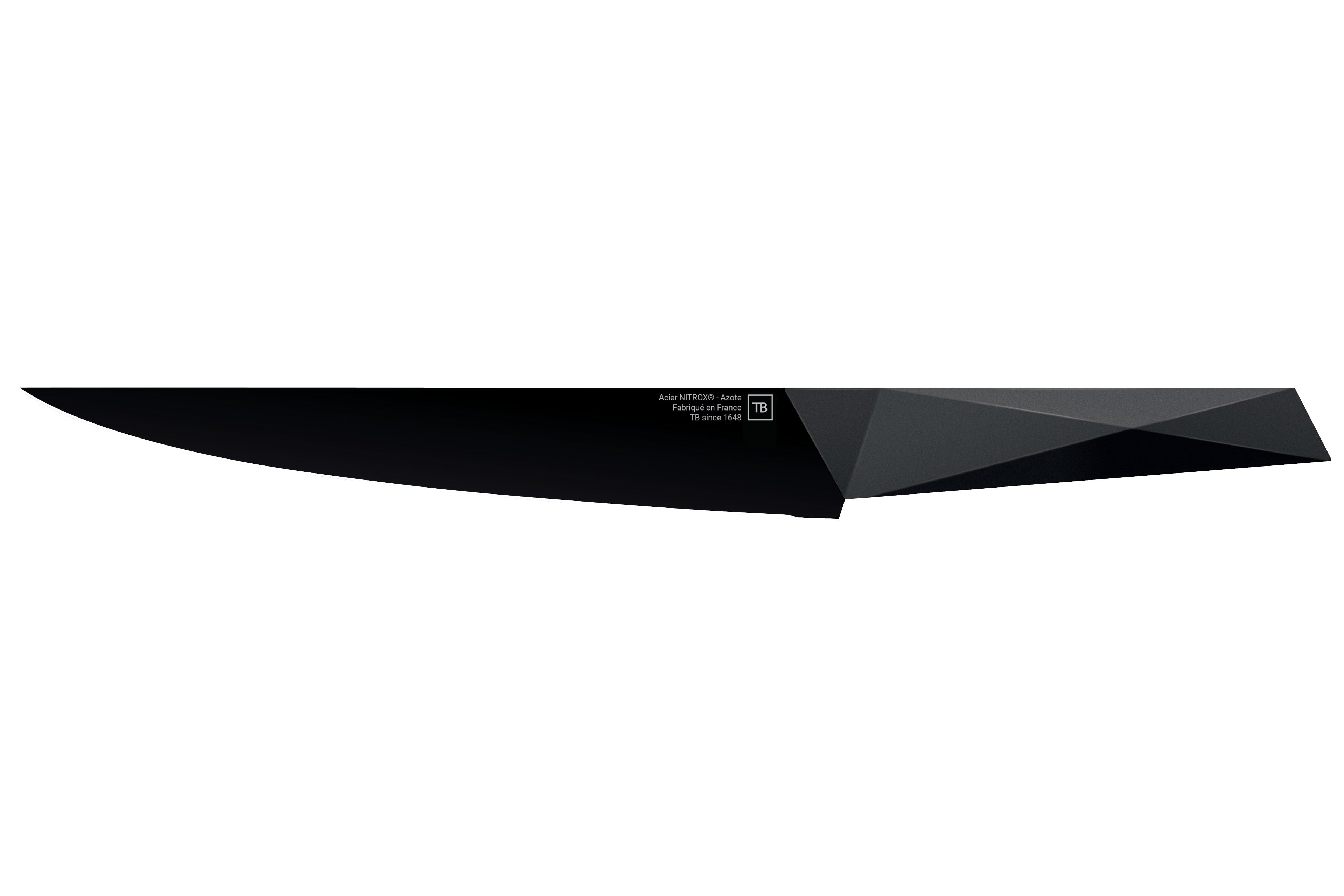
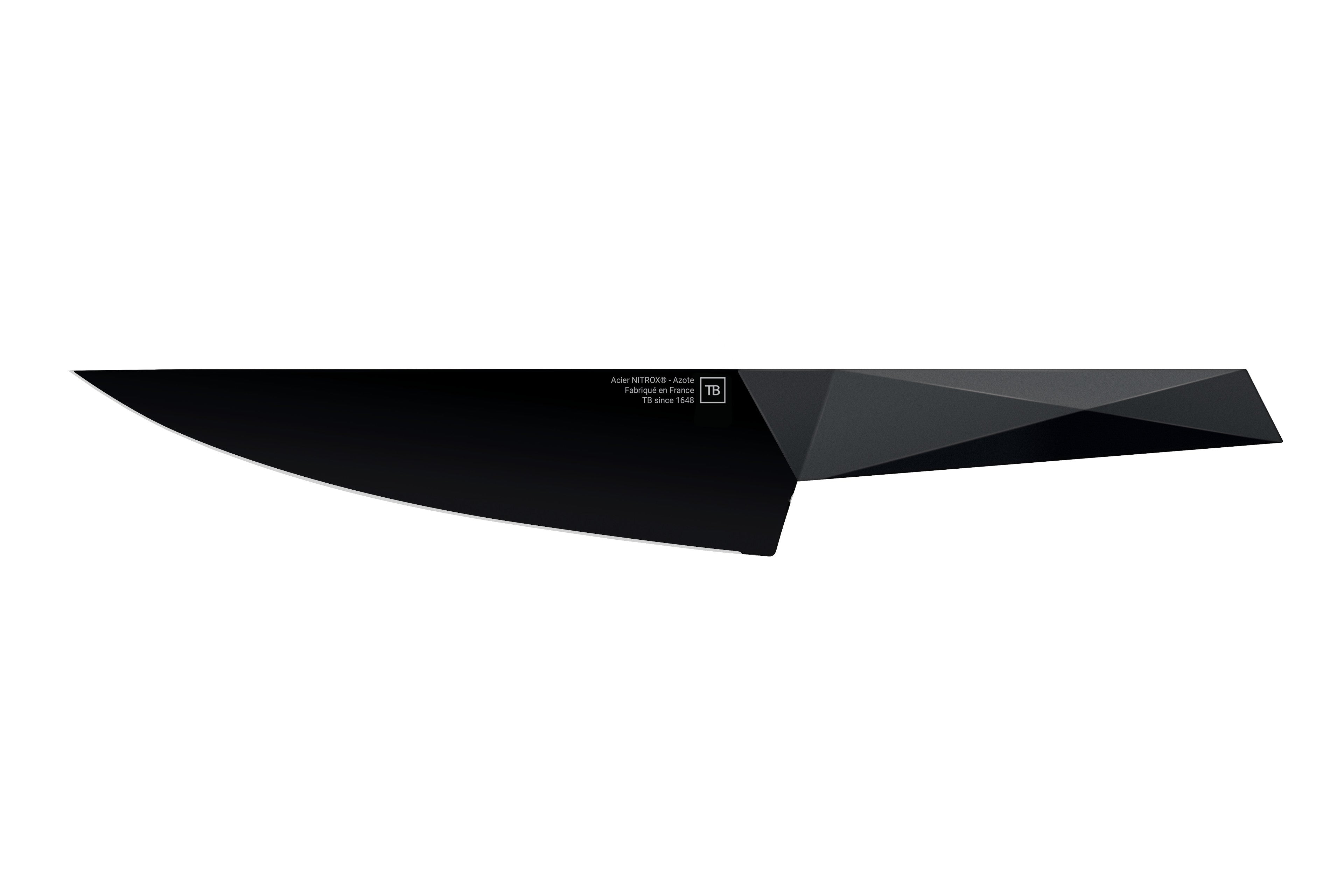
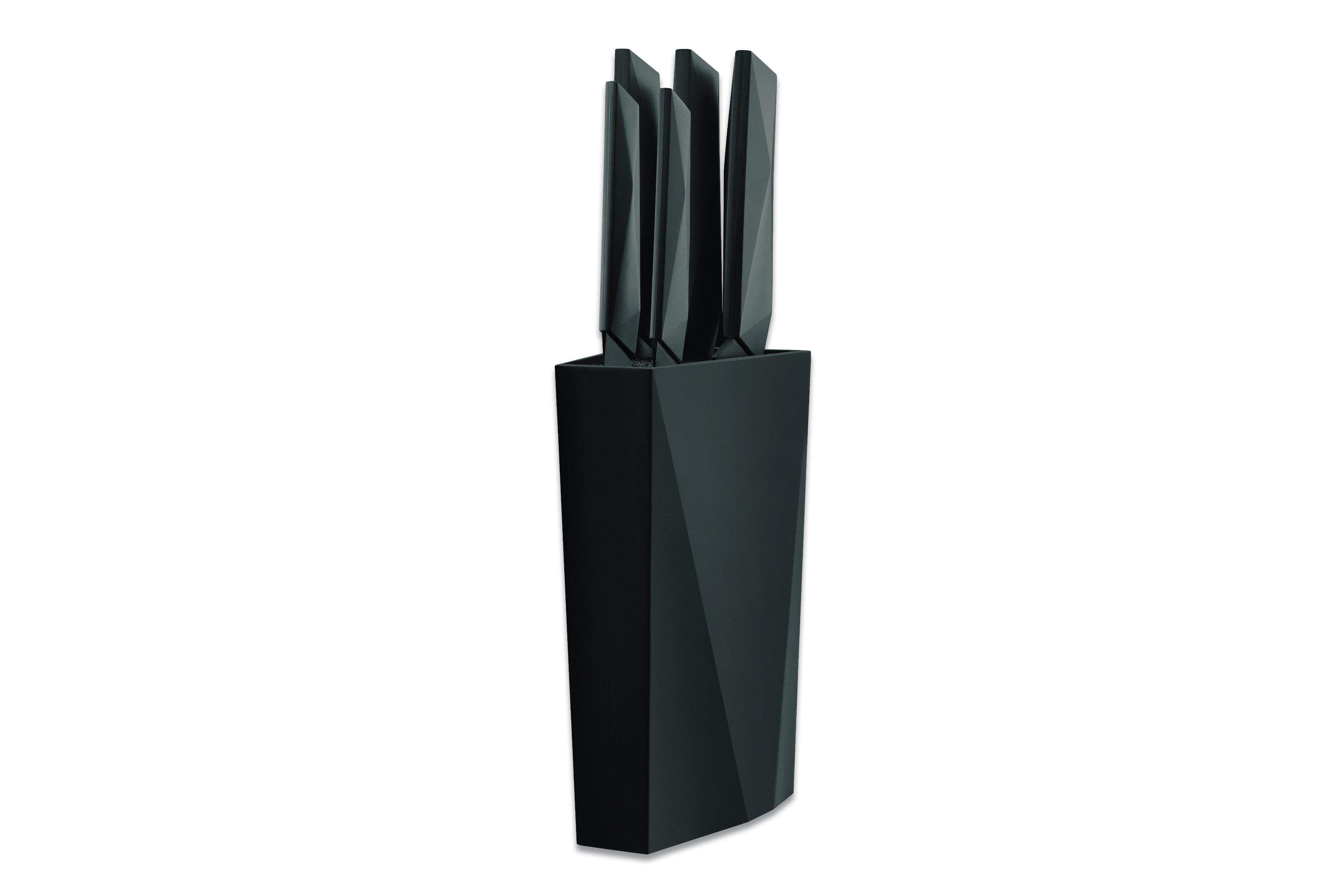
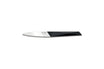
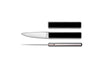
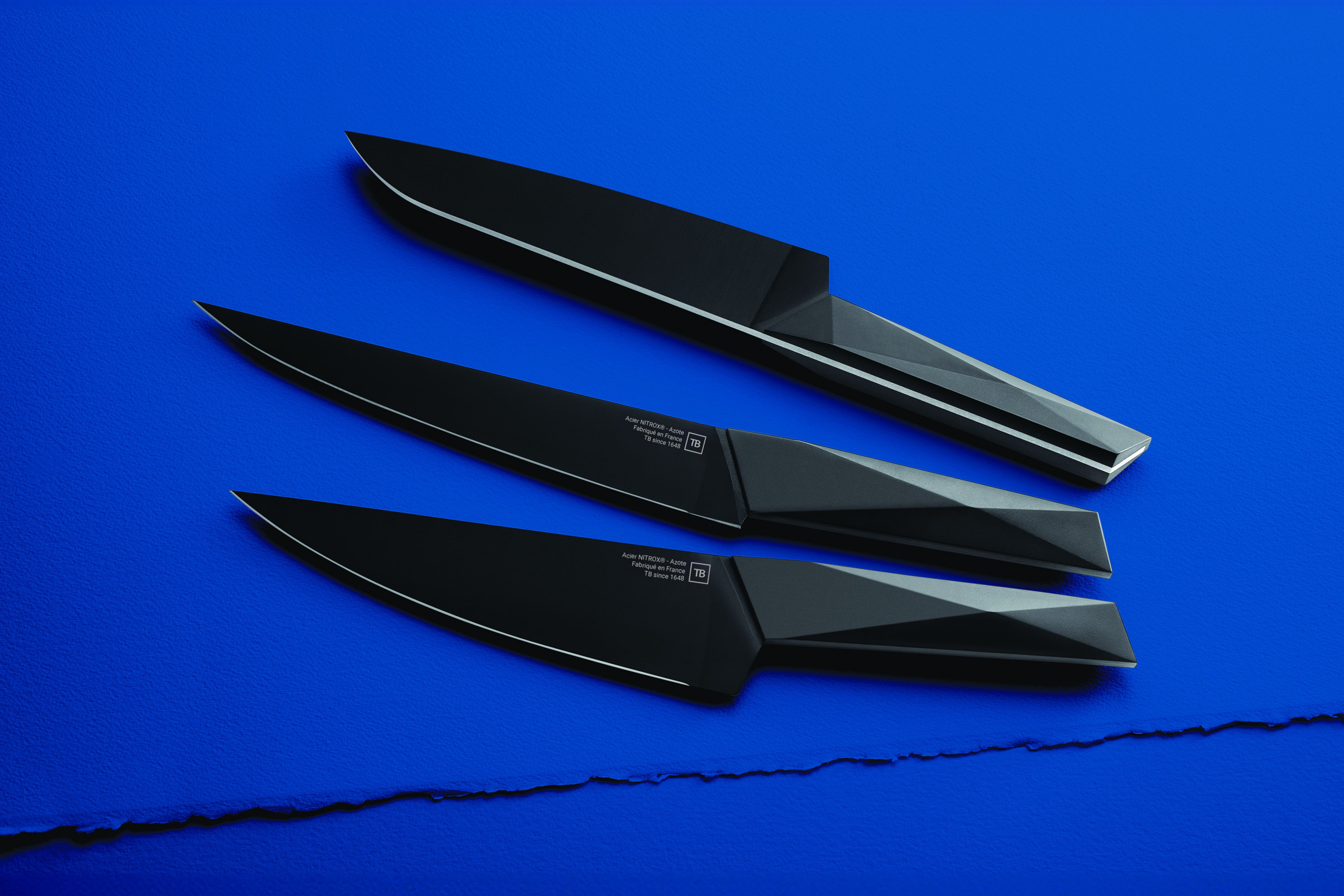 Paring Knife - Furtif - Black Blade
Filleting Knife - Furtif - Black Blade
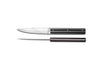
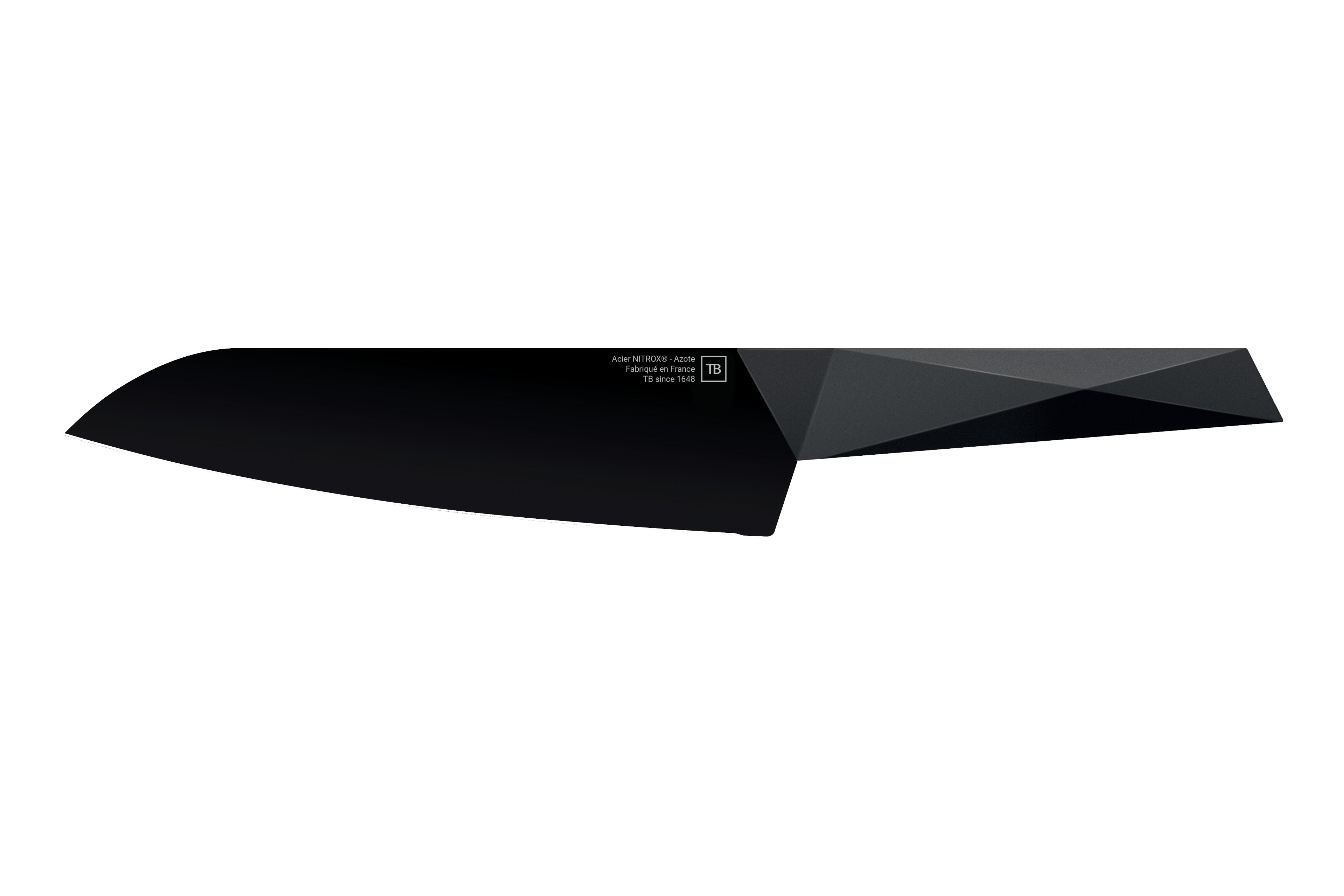
Santoku Knife - Furtif - Black Blade
Kitchen Knife - Furtif - Black Blade
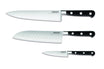
Chef's Knife - Furtif
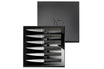
Block of 5 knives - Furtif - Black Blade
Paring Knife - Furtif - Black Blade
Filleting Knife - Furtif - Black Blade
Santoku Knife - Furtif - Black Blade
Kitchen Knife - Furtif - Black Blade
Chef's Knife - Furtif
Block of 5 knives - Furtif - Black Blade
Stealth - Black Blade
Furtif: The alliance of design and performance
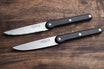
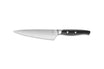
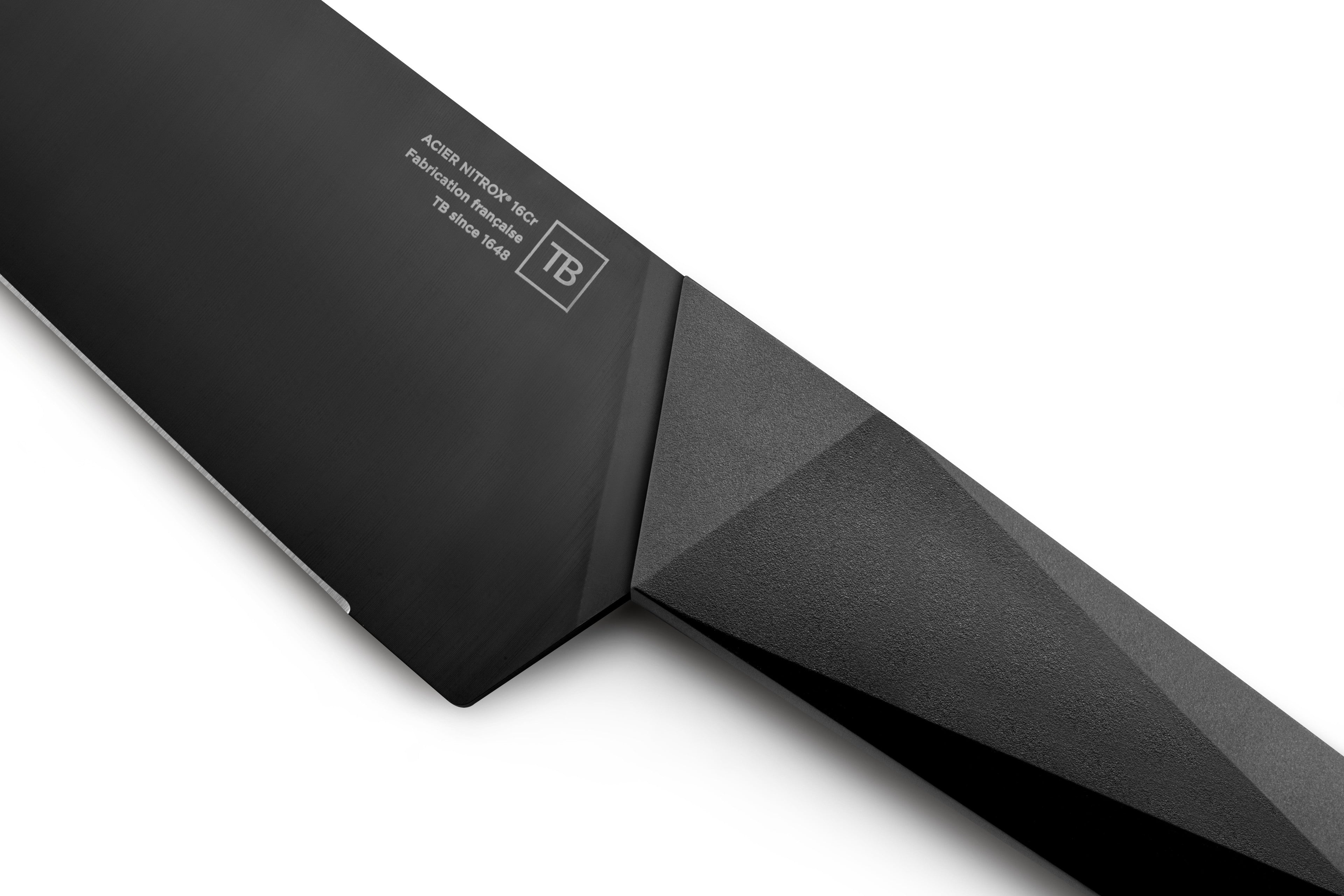
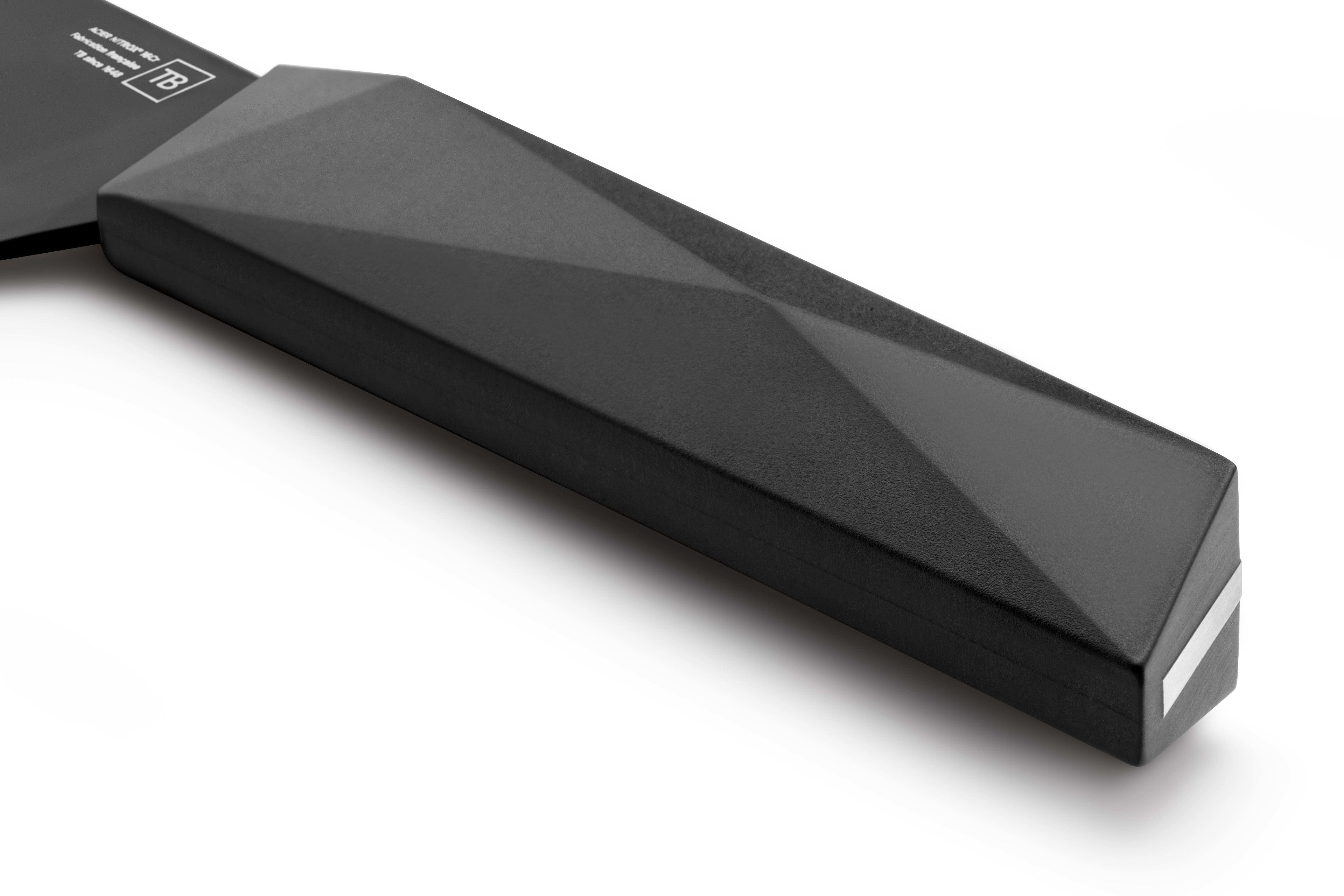
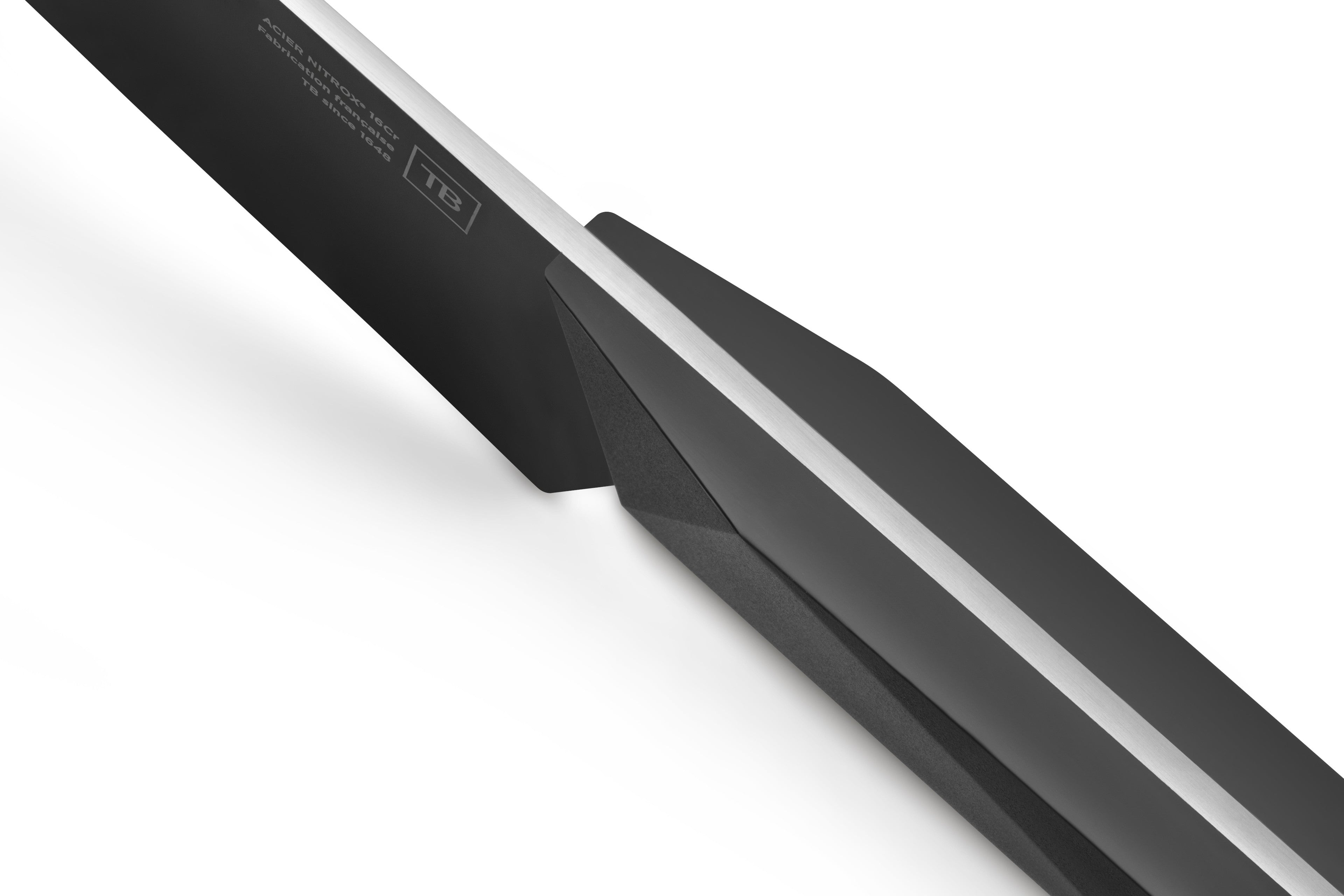
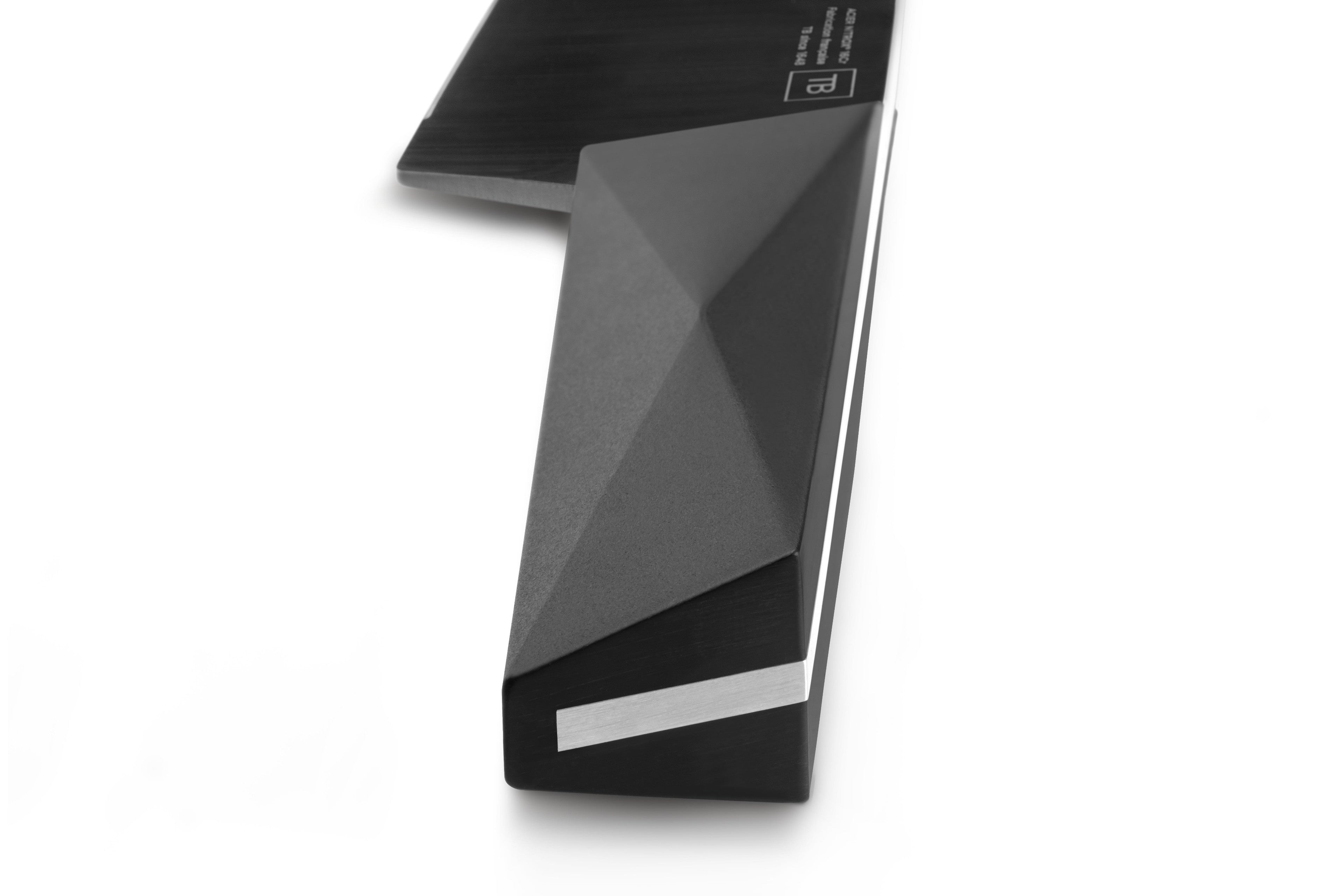
Discover the Furtif range, inspired by the F-117 bomber, with its bold geometric design and precise angles. Established for over ten years, this collection seduces with its surprising ergonomics, offering optimal comfort thanks to an inclined facet connecting the handle to the blade.
Exceptional materials
Carefully manufactured, each piece features an impeccable finish, combining metal and plastic without rough edges. The blade, coated with technical PVD, guarantees scratch resistance and durability.
Unrivaled performance
The blades, sharpened with a precise cutting angle, ensure clean and precise cuts, ideal for chefs and cooking enthusiasts. Choose the Furtif range: a perfect fusion of style and functionality for exceptional cuisine.
Select items to add to your cart
Product specifications
Office
Steak
Fillet of sole
Santoku
Kitchen
Meat
(in g)
230
200
320
430
320
(in mm)
90
165.75
190
210
190
(in mm)
119.26
119.26
145.37
145.37
145.37
ABS
ABS
ABS
ABS
ABS
(Per side in °)
15
17
15
15
15
full tang
full tang
full tang
full tang
full tang
Nitrox
Nitrox
Nitrox
Nitrox
Nitrox
Smooth
Smooth
Smooth
Smooth
Smooth
56.58
56.58
56.58
56.58
56.58
Oui
Oui
Oui
Oui
Oui
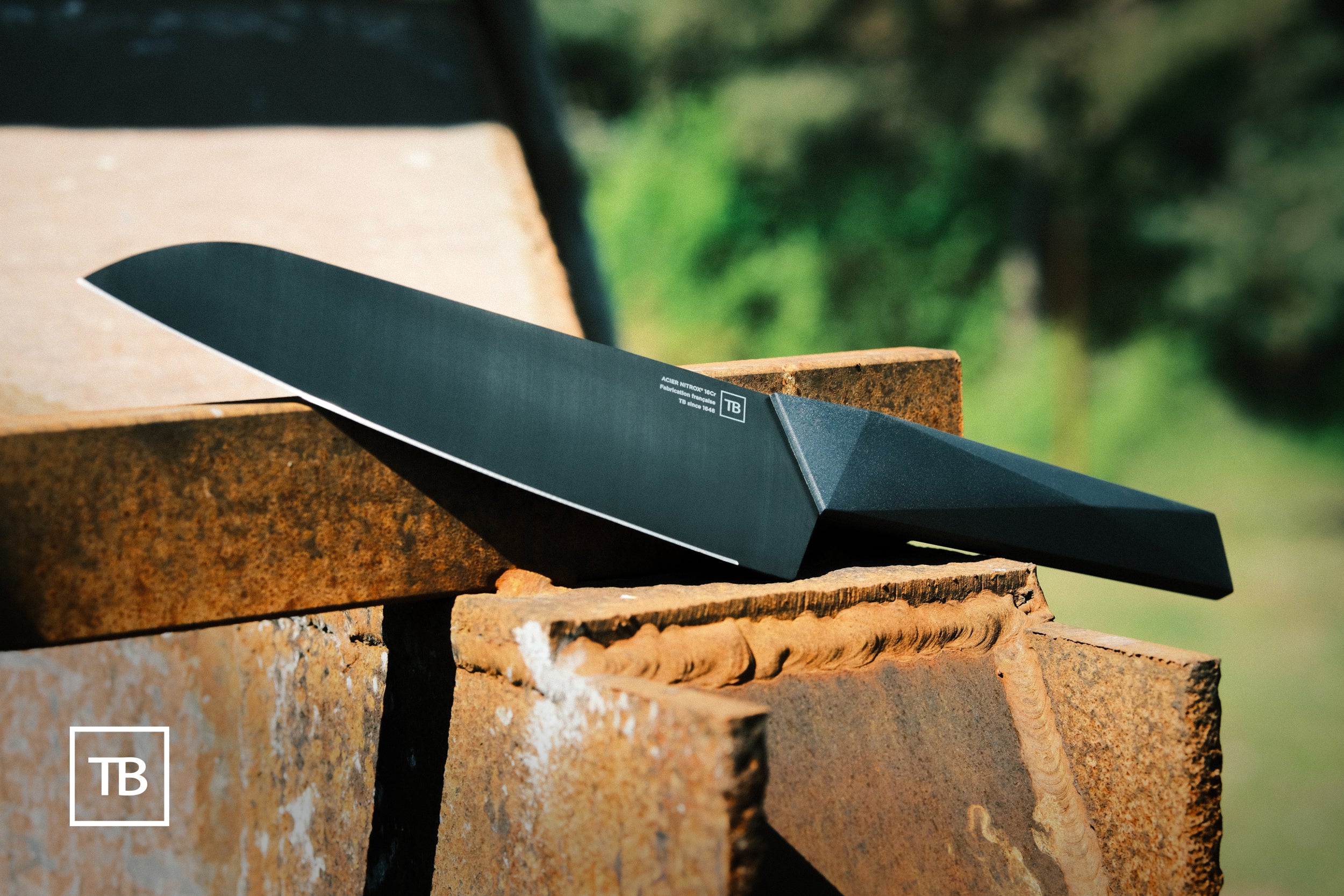
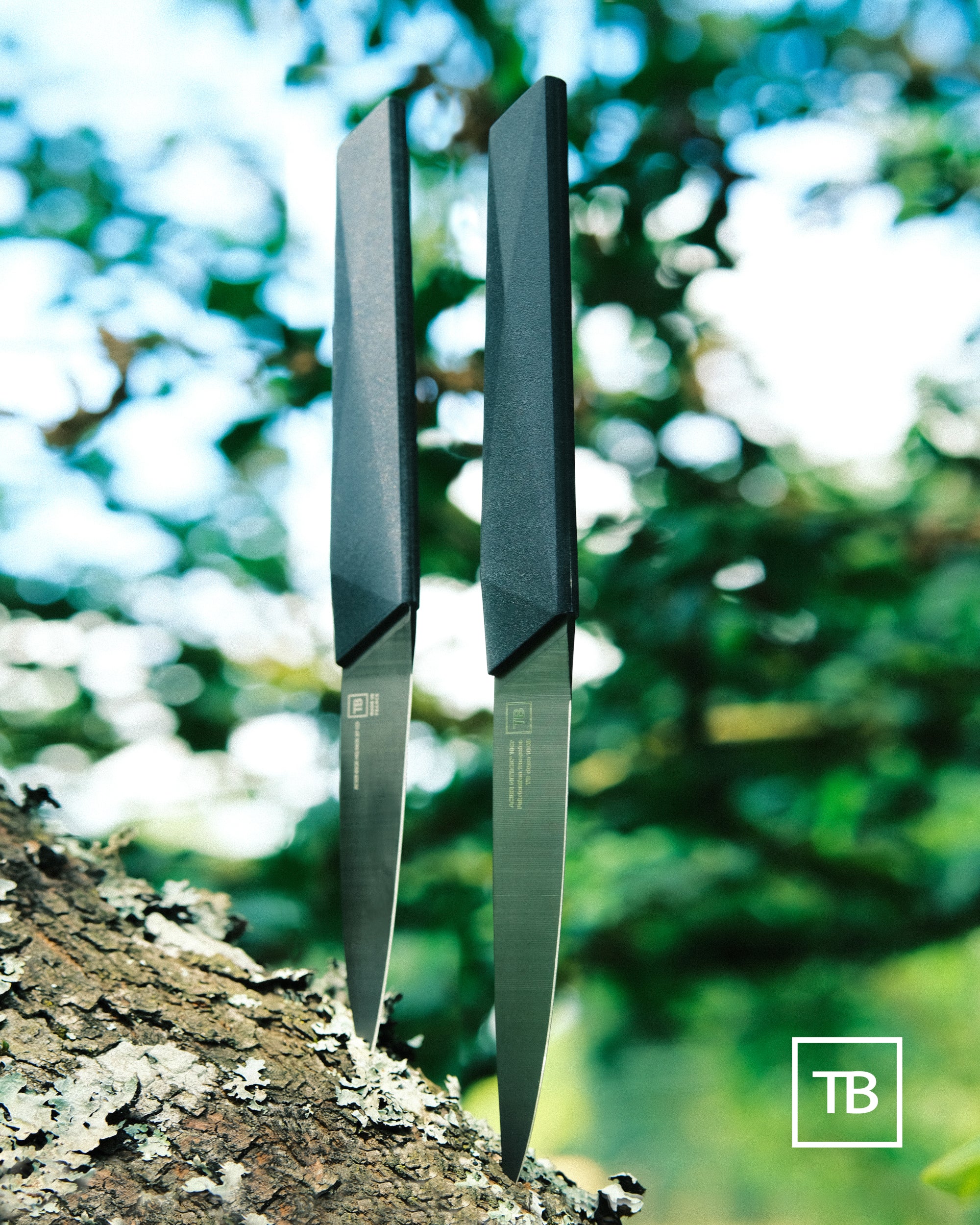
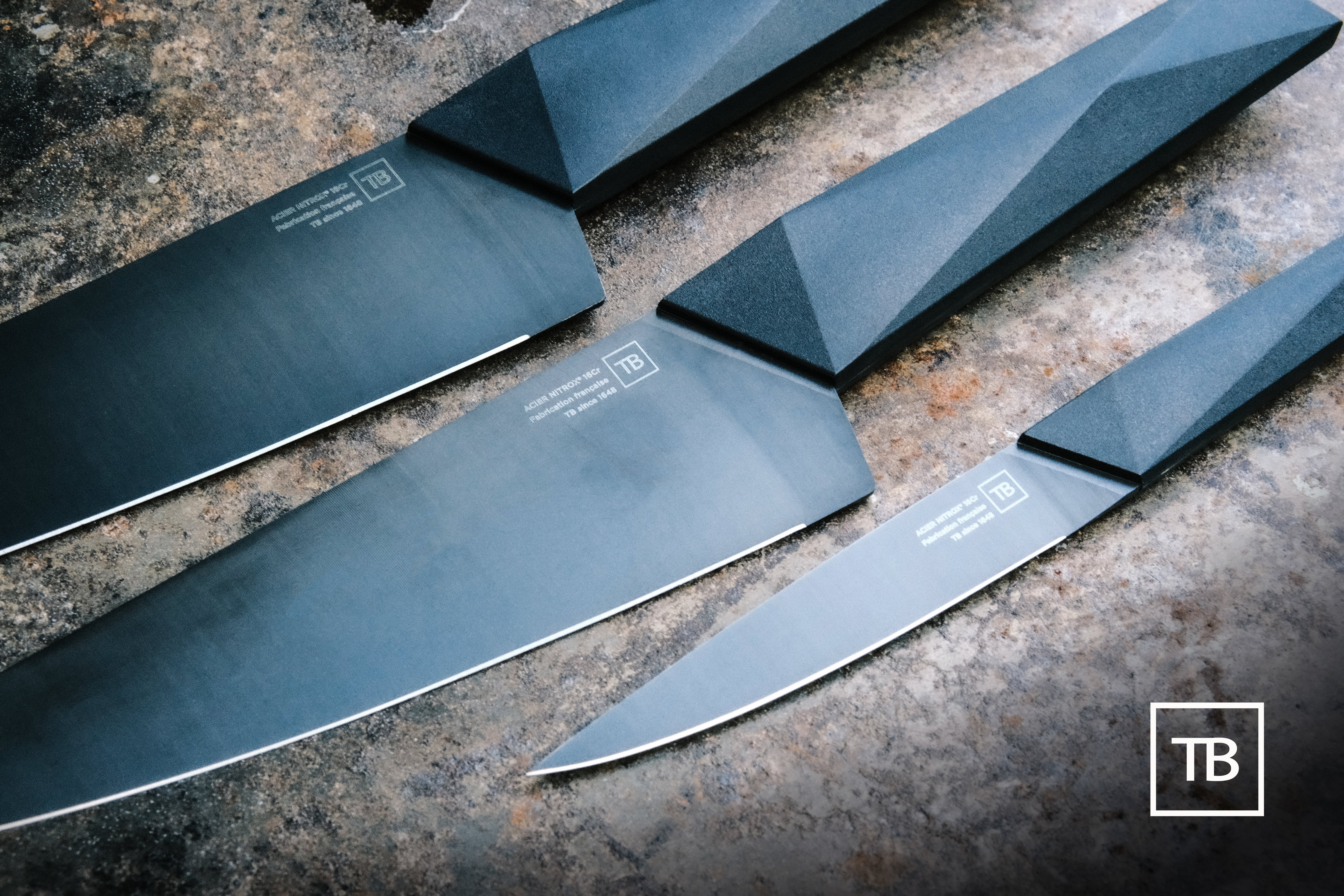
F-17 bomber-inspired design
Faceted handle
Black PVD coating on the blade
Why is Furtif® the most radical Chef knife ever designed by TB-1648®?
Imagine a kitchen knife whose design is inspired by an American stealth bomber. Geometric facets meeting at sharp angles. A fully faceted handle that, at first glance, seems totally uncomfortable. And then you pick it up. And then, absolute surprise: it's one of the most comfortable knives you've ever held.
The Furtif® from TB-1648® was not intended for commercialization. It was a cutlery "concept car," a demonstration of pure technical design. A style exercise so radical that it seemed too avant-garde for the market. But professionals decided otherwise. Ten years later, this knife, initially conceived as an exhibition piece, has become one of the brand's bestsellers. A fascinating paradox: the most angular design conceals the most accomplished ergonomics.
Initially, the Furtif® wasn't even supposed to exist in catalogs. TB-1648® had designed it as a demonstration of technical and design capability. A pure stylistic exercise, too radical, too geometric, too far removed from the codes of traditional professional cutlery. The kind of product you display at a booth to show what you can do, but don't mass-produce. The inspiration? The F-117 Nighthawk, the American stealth bomber with its characteristic geometric facets. An aircraft designed to be invisible to radar, with that recognizable angular silhouette. TB-1648® transposed this aesthetic onto a kitchen knife: all surfaces meet at angles, creating a radical faceted volume. And then professionals started asking for it. Again and again. They had to remanufacture a series. Then another. Then a third. Ten years later, the Furtif® has become a permanent fixture in the catalog and one of the best-selling products. A success no one had anticipated, proving there's an audience for radical design in cutlery. What's fascinating is the systematic reaction at trade shows. At first glance, visitors are put off. These facets, these angles, this aggressive geometry — how can you cook with that? Then they pick up the knife. And then their expression changes. "Ah, actually... the grip is good." This discrepancy between visual perception and tactile reality is the Furtif®'s strength. This is the central paradox of Furtif®: the more visually uncomfortable it seems, the more pleasant it proves to be in hand. This is not an accident. It's the result of in-depth ergonomic reflection where each facet has been designed never to hinder handling. The secret lies in the inclination of the facets. Take the facet that joins the handle and the blade. It's not perpendicular. It's angled towards the blade. The result: when you grip the knife firmly to cut with force, this facet perfectly cradles the palm. It's "very pleasant," to quote the designer. "Extremely pleasant," even. The handle has significant volume. This isn't just aesthetic. This volume provides strength. It allows for a lot of cutting power to be transmitted without excessive effort. For carving a thick piece or cleanly slicing a dense vegetable, this volume makes a difference. But the real tour de force is the finish of the junctions. Where the metal of the handle meets the composite, there are no rough edges. Zero. The two materials blend into each other with perfect continuity. You run your finger over the junction, you feel nothing. No relief, no tactile demarcation. Just a smooth, homogeneous surface. This finish is not automated. It is done entirely by hand. Each Furtif® undergoes meticulous manual polishing to achieve this level of perfection. This explains why users feel no discomfort despite the apparent angles. The Furtif® doesn't just feature a radical design. It pushes the "total black look" logic to the blade itself. And to achieve this deep black, TB-1648® uses a PVD (Physical Vapor Deposition) coating — the same technology used in military applications. This coating is deposited in a vacuum chamber. The blade steel is placed in an enclosure where the pressure is reduced to near-space vacuum levels. Metallic particles are then vaporized and deposited on the blade's surface, forming a layer a few microns thick. This technique guarantees permanent molecular adhesion. Initially, TB-1648® was interested in PVD's anti-reflective property, used on military equipment to prevent reflections that could betray a position. But by applying it to the Furtif®, the company discovered significant additional benefits.
How did a cutlery "concept car" become a bestseller?
Why can such an angular design be so comfortable?
What is technical PVD coating and why does it change everything?
On the Furtif®, the blade angle is very narrow. Much more so than on a standard chef's knife. This acute angle promotes what professionals call a "quality cut", or more precisely, a very, very high-quality cut. What does this mean in practice? A blade with a narrow angle penetrates material with less resistance. It separates fibers rather than crushing them. You feel it immediately when you cut a ripe tomato, a fish fillet, or a slice of raw meat: the blade glides, doesn't slip, and doesn't compress the product. The cutting edge of the Furtif® is very regular. This is visible to the naked eye, even from a distance. And it's even more noticeable to the touch. When you lightly run your finger over the blade (with caution, of course), you hear that characteristic sound, a sign that "the cut bites." It must be said clearly: Furtif® is polarizing. "You either love it or you don't, there's no middle ground," admits the designer himself. It's a knife that doesn't seek consensus. It fully embraces its aesthetic radicalism. This polarization begins at first glance. At a professional trade show booth, reactions are immediate and strong. Some visitors are positively drawn to it. Others are immediately put off: those facets, those angles, that total blackness—too aggressive, too different. But there's a fascinating phenomenon. Among those who are initially put off, many change their minds as soon as they hold the knife. Renowned chefs adopted it first for its radical aesthetics, then for its formidable ergonomics. Furtif® is for those who embrace their aesthetic choices and seek an uncompromising tool. Furtif® is designed for professional use. Its volumetric handle and ergonomics designed for strength make it a tool suitable for long shifts. Its versatility is total: vegetables, meats, fish, herbs. The black PVD coating requires no specific maintenance. Simply wash the knife normally after use. However, avoid abrasive materials like steel wool and washing in the dishwasher. The narrow blade angle requires professional sharpening or mastery of sharpening stones. Use a ceramic honing rod or a quality manual sharpener to maintain the edge between sharpenings.What cutting performance does such a narrow blade angle offer?
Why does Furtif® divide users so much?
How to maintain and use Furtif® daily?
Professional and intensive use
Care and Sharpening
FAQ - Furtif®
Does the faceted design really not interfere with the grip?
Is the black PVD coating really scratch-resistant?
What is "the biting cut" mentioned to describe the cutting edge?
Why was the Furtif® initially a "concept car"?
Technical Glossary
- PVD (Physical Vapor Deposition):
- Physical vapor deposition technique. Creates an extremely hard and adherent layer a few microns thick.
- Narrow blade angle:
- Sharper cutting angle than average (15° to 20°). Facilitates easier penetration into material.
- Geometric facets:
- Flat surfaces meeting at distinct angles, inspired by the architecture of stealth aircraft.
- Manual polishing:
- Hand-finished to ensure a perfect, seamless junction between metal and composite.
Initially, the Furtif® wasn't even supposed to exist in catalogs. TB-1648® had designed it as a demonstration of technical and design capability. A pure stylistic exercise, too radical, too geometric, too far removed from the codes of traditional professional cutlery. The kind of product you display at a booth to show what you can do, but don't mass-produce. The inspiration? The F-117 Nighthawk, the American stealth bomber with its characteristic geometric facets. An aircraft designed to be invisible to radar, with that recognizable angular silhouette. TB-1648® transposed this aesthetic onto a kitchen knife: all surfaces meet at angles, creating a radical faceted volume. And then professionals started asking for it. Again and again. They had to remanufacture a series. Then another. Then a third. Ten years later, the Furtif® has become a permanent fixture in the catalog and one of the best-selling products. A success no one had anticipated, proving there's an audience for radical design in cutlery. What's fascinating is the systematic reaction at trade shows. At first glance, visitors are put off. These facets, these angles, this aggressive geometry — how can you cook with that? Then they pick up the knife. And then their expression changes. "Ah, actually... the grip is good." This discrepancy between visual perception and tactile reality is the Furtif®'s strength. This is the central paradox of Furtif®: the more visually uncomfortable it seems, the more pleasant it proves to be in hand. This is not an accident. It's the result of in-depth ergonomic reflection where each facet has been designed never to hinder handling. The secret lies in the inclination of the facets. Take the facet that joins the handle and the blade. It's not perpendicular. It's angled towards the blade. The result: when you grip the knife firmly to cut with force, this facet perfectly cradles the palm. It's "very pleasant," to quote the designer. "Extremely pleasant," even. The handle has significant volume. This isn't just aesthetic. This volume provides strength. It allows for a lot of cutting power to be transmitted without excessive effort. For carving a thick piece or cleanly slicing a dense vegetable, this volume makes a difference. But the real tour de force is the finish of the junctions. Where the metal of the handle meets the composite, there are no rough edges. Zero. The two materials blend into each other with perfect continuity. You run your finger over the junction, you feel nothing. No relief, no tactile demarcation. Just a smooth, homogeneous surface. This finish is not automated. It is done entirely by hand. Each Furtif® undergoes meticulous manual polishing to achieve this level of perfection. This explains why users feel no discomfort despite the apparent angles. The Furtif® doesn't just feature a radical design. It pushes the "total black look" logic to the blade itself. And to achieve this deep black, TB-1648® uses a PVD (Physical Vapor Deposition) coating — the same technology used in military applications. This coating is deposited in a vacuum chamber. The blade steel is placed in an enclosure where the pressure is reduced to near-space vacuum levels. Metallic particles are then vaporized and deposited on the blade's surface, forming a layer a few microns thick. This technique guarantees permanent molecular adhesion. Initially, TB-1648® was interested in PVD's anti-reflective property, used on military equipment to prevent reflections that could betray a position. But by applying it to the Furtif®, the company discovered significant additional benefits.
How did a cutlery "concept car" become a bestseller?
Why can such an angular design be so comfortable?
What is technical PVD coating and why does it change everything?
On the Furtif®, the blade angle is very narrow. Much more so than on a standard chef's knife. This acute angle promotes what professionals call a "quality cut", or more precisely, a very, very high-quality cut. What does this mean in practice? A blade with a narrow angle penetrates material with less resistance. It separates fibers rather than crushing them. You feel it immediately when you cut a ripe tomato, a fish fillet, or a slice of raw meat: the blade glides, doesn't slip, and doesn't compress the product. The cutting edge of the Furtif® is very regular. This is visible to the naked eye, even from a distance. And it's even more noticeable to the touch. When you lightly run your finger over the blade (with caution, of course), you hear that characteristic sound, a sign that "the cut bites." It must be said clearly: Furtif® is polarizing. "You either love it or you don't, there's no middle ground," admits the designer himself. It's a knife that doesn't seek consensus. It fully embraces its aesthetic radicalism. This polarization begins at first glance. At a professional trade show booth, reactions are immediate and strong. Some visitors are positively drawn to it. Others are immediately put off: those facets, those angles, that total blackness—too aggressive, too different. But there's a fascinating phenomenon. Among those who are initially put off, many change their minds as soon as they hold the knife. Renowned chefs adopted it first for its radical aesthetics, then for its formidable ergonomics. Furtif® is for those who embrace their aesthetic choices and seek an uncompromising tool. Furtif® is designed for professional use. Its volumetric handle and ergonomics designed for strength make it a tool suitable for long shifts. Its versatility is total: vegetables, meats, fish, herbs. The black PVD coating requires no specific maintenance. Simply wash the knife normally after use. However, avoid abrasive materials like steel wool and washing in the dishwasher. The narrow blade angle requires professional sharpening or mastery of sharpening stones. Use a ceramic honing rod or a quality manual sharpener to maintain the edge between sharpenings.What cutting performance does such a narrow blade angle offer?
Why does Furtif® divide users so much?
How to maintain and use Furtif® daily?
Professional and intensive use
Care and Sharpening
FAQ - Furtif®
Does the faceted design really not interfere with the grip?
Is the black PVD coating really scratch-resistant?
What is "the biting cut" mentioned to describe the cutting edge?
Why was the Furtif® initially a "concept car"?
Technical Glossary
- PVD (Physical Vapor Deposition):
- Physical vapor deposition technique. Creates an extremely hard and adherent layer a few microns thick.
- Narrow blade angle:
- Sharper cutting angle than average (15° to 20°). Facilitates easier penetration into material.
- Geometric facets:
- Flat surfaces meeting at distinct angles, inspired by the architecture of stealth aircraft.
- Manual polishing:
- Hand-finished to ensure a perfect, seamless junction between metal and composite.
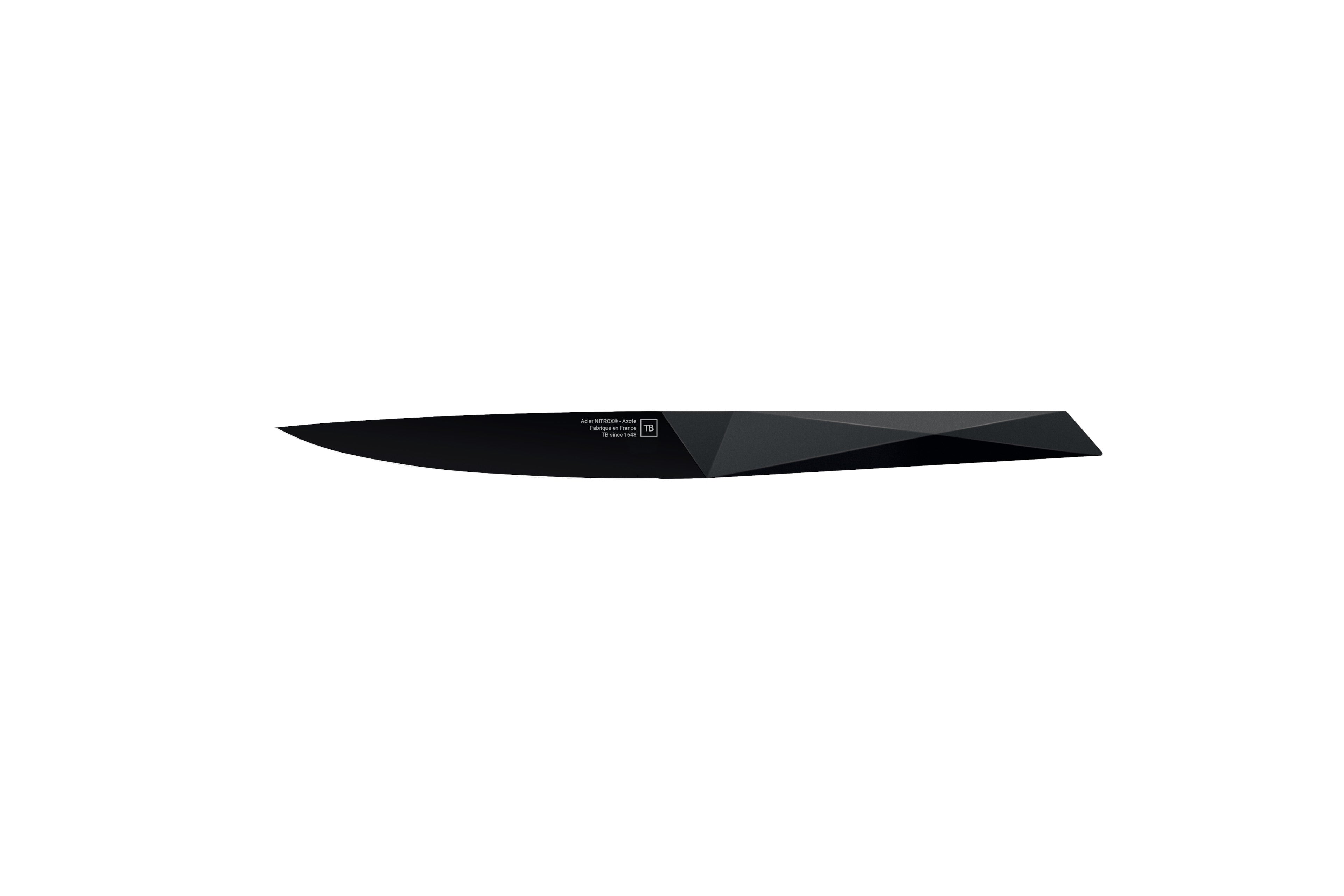
The Office
- 90 mm blade
- 119.26 mm handle
- 56/58 HRC
Very easy to handle, this knife with a 9 cm blade guarantees precise cutting in order to serve multiple uses in the kitchen.
The Steak
- 104.88 mm blade
- 119.26 mm handle
- 54/56 HRC
Very easy to handle, this knife with an 11 cm blade guarantees precise cutting in order to serve multiple uses in the kitchen.
Fillet of sole
- 165.75 mm blade
- 119.26 mm handle
- 56/58 HRC
Dedicated to cutting fine flesh, this fish knife.
The Santoku
- 190 mm blade
- 145.37 mm handle
- 56/58 HRC
A very versatile and precise Japanese kitchen knife.
The Kitchen
- 210 mm blade
- 145.37 mm handle
- 56/58 HRC
Very easy to handle, this knife guarantees precise cutting of vegetables in order to serve multiple uses in the kitchen.
The Chief
- 190 mm blade
- 145.37 mm handle
- 56/58 HRC
Very easy to handle, this knife guarantees precise cutting of pieces of meat, but also vegetables in order to serve multiple uses in the kitchen.