
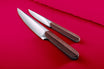
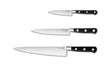
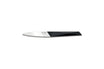
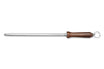

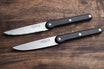

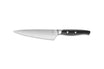
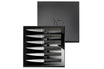
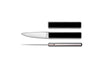
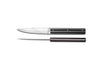
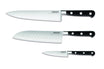
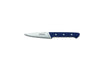

NanoCut is a proprietary blade technology from TB-1648 that produces an asymmetrical, nanometer-thin edge with a total angle of 18°—compared to 30-40° for a conventional knife. Nitrox steel selected for corrosion resistance and edge retention. Asymmetrical design concentrates cutting force on one side: sashimi precision, fine julienne, charcuterie. Handles made from recyclable cellulose acetate.
Discover Nanocut®
The Tarrerias-Bonjean technology that reinvents cutting
Since 1648, the name Tarrerias has echoed through the valleys of Thiers, the birthplace of French cutlery. With a centuries-old heritage passed down from generation to generation, we have always placed innovation at the heart of our craft. Today, TB Groupe is proud to present Nanocut®, a groundbreaking technology that redefines cutting standards and propels the art of sharpness into a new era. Designed and manufactured in the heart of our workshops in Thiers, Nanocut® is far more than just a blade: it is the promise of an unmatched cutting experience, combining exceptional performance, remarkable durability, and renewed pleasure with every use.
Nanocut® cutting innovation
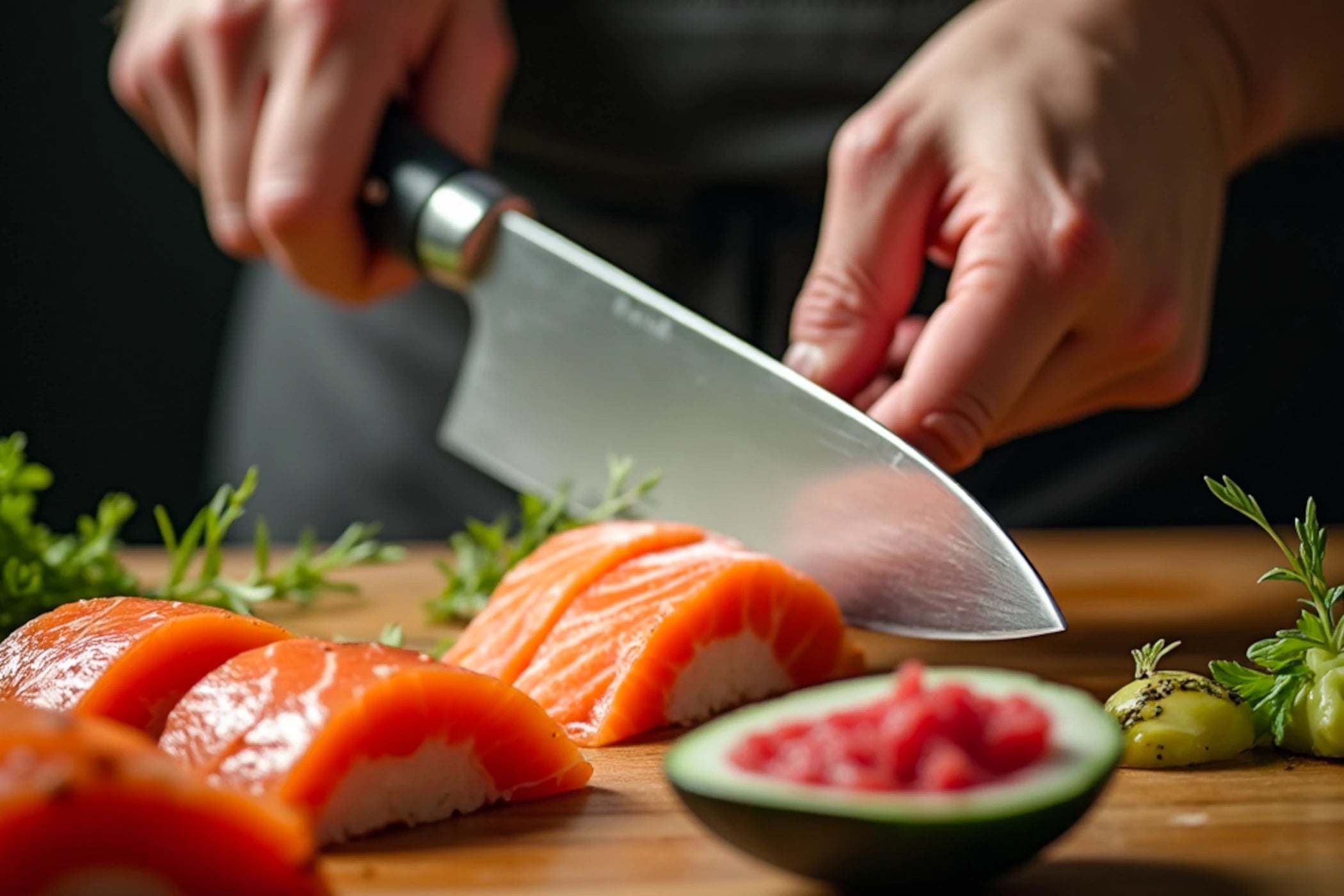
Features:
Nanometric cutting with exceptional performance
Nitrox® steel known for its quality and high corrosion resistance
Durable handle made of recyclable cellulose acetate, derived from transformed wood fiber
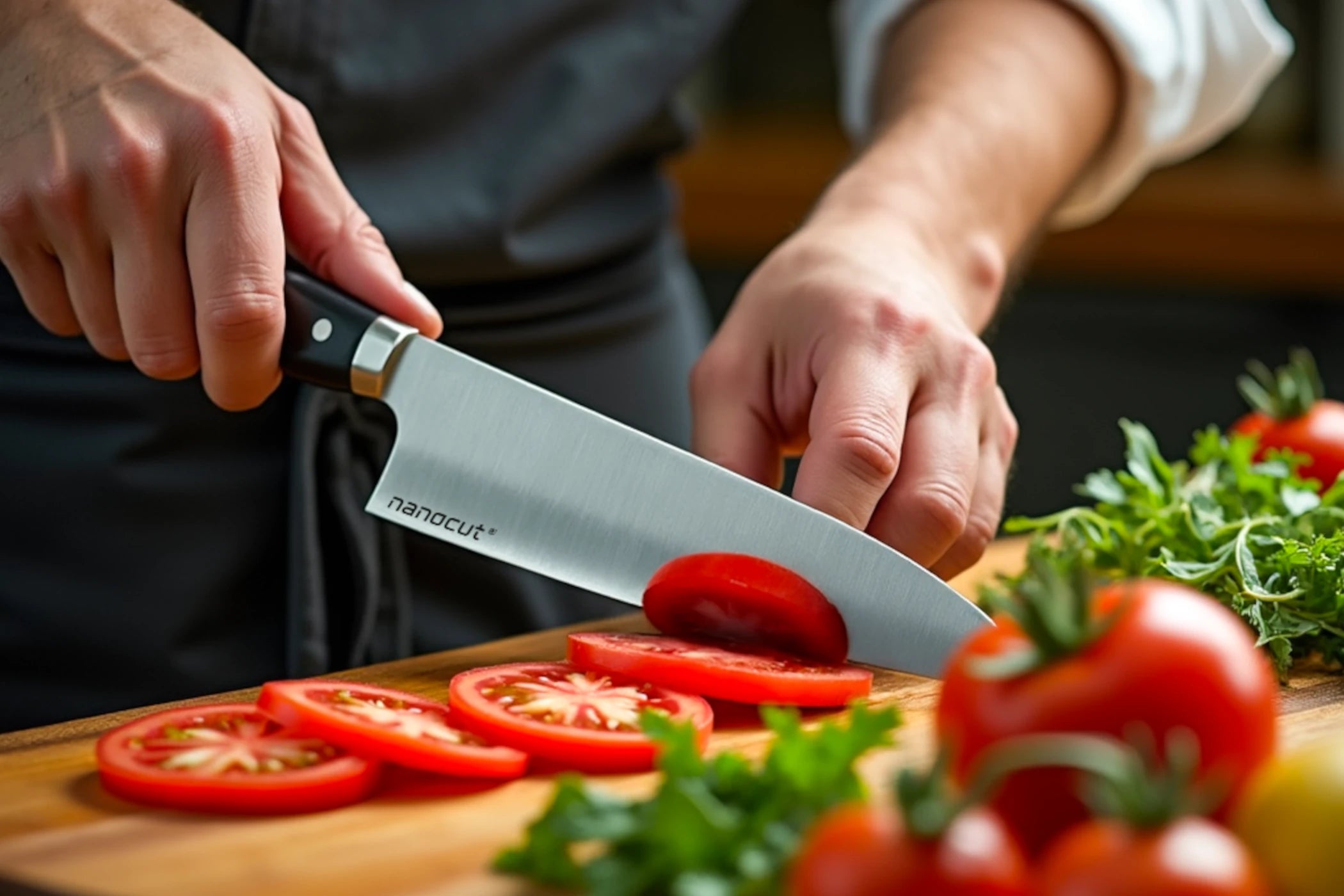
Tips for Use:
Easy sharpening: Sharpening only on the side opposite the visible bevel (on the unmarked side of the blade) is enough to restore the knife’s remarkable performance. This can be done using a quality sharpening steel or a water stone.
Protect the edge: To protect the edge of your Nanocut® knife, do not store it in a drawer in direct contact with other knives or utensils. Prefer storing it in a knife block or on a magnetic strip.
Dishwasher safe: Suitable for dishwasher use. However, to preserve all the characteristics of your knife, we recommend washing it by hand with a soft sponge.
User and Care Guide - Nanocut® Technology Knives
Nanocut® technology, developed by TB-1648, redefines the cutting edge of stainless steel blades at a nanometric scale. This precision offers exceptional cutting performance but requires a few simple precautions to maintain.
1. Use: A precision cut
The Nanocut® blade was designed to provide a smooth and effortless cut, allowing the perfect texture of each ingredient to be revealed.
- For what uses?: These knives are perfect for preparations requiring great finesse, such as making thin slices of fish (sashimi), the millimeter-precise cutting of vegetables, or the fine and regular cutting of cured meats (sausage).
- The cutting feel : You'll experience increased ease and less effort when cutting thanks to the perfectly smooth edge. The blade geometry is optimized for uncompromising performance.
Advice :
Given the very fine edge:
- Do not allow the cutting edge to come into direct contact with bones or fish bones.
- As with all types of knives, use a wooden or plastic cutting board. Never use a glass or slate cutting board.
2. Thread maintenance (Sharpening)
This is where Nanocut® technology differs from traditional knives. The blade has a unique geometry with asymmetrical bevels and a total cutting angle of 18°.
- Durability : If the usage instructions are followed, the Nanocut® edge maintains a perfect cut up to twice as long as most standard stainless steel knives. Sharpening is therefore less frequent.
- Specific sharpening technique : When needed, maintenance is simplified. The blade should not be sharpened like a classic knife in a "V" shape.
Important instruction: Simply use a sharpening steel on the back of the cutting edge only to restore its full cutting effectiveness.
3. Cleaning and Washing
Washing:
The blades of Nanocut® knives are made of high-quality stainless steel. However, as with all knives, dishwasher use is not recommended. Gentle washing with the non-abrasive side of a sponge is preferable.
However, if you wish to use a dishwasher for compatible knives, never place them loose, blade-side down in the cutlery basket. Position them at the same level as the glasses, ensuring the cutting edge is not in contact with anything (edge facing upwards), so that the vibrations from the wash cycle do not damage the edge.
Drying :
Wipe the blade immediately to avoid any water marks and preserve the integrity of the steel.
4. Storage
- Edge protection : To avoid damaging this straight blade edge, do not store the knife loose in a drawer with other metal utensils.
- Ideal solution : Use a knife block, a magnetic bar or a protective case to prevent the wire from being damaged, ensuring that the blade remains ready to "enhance your creations".