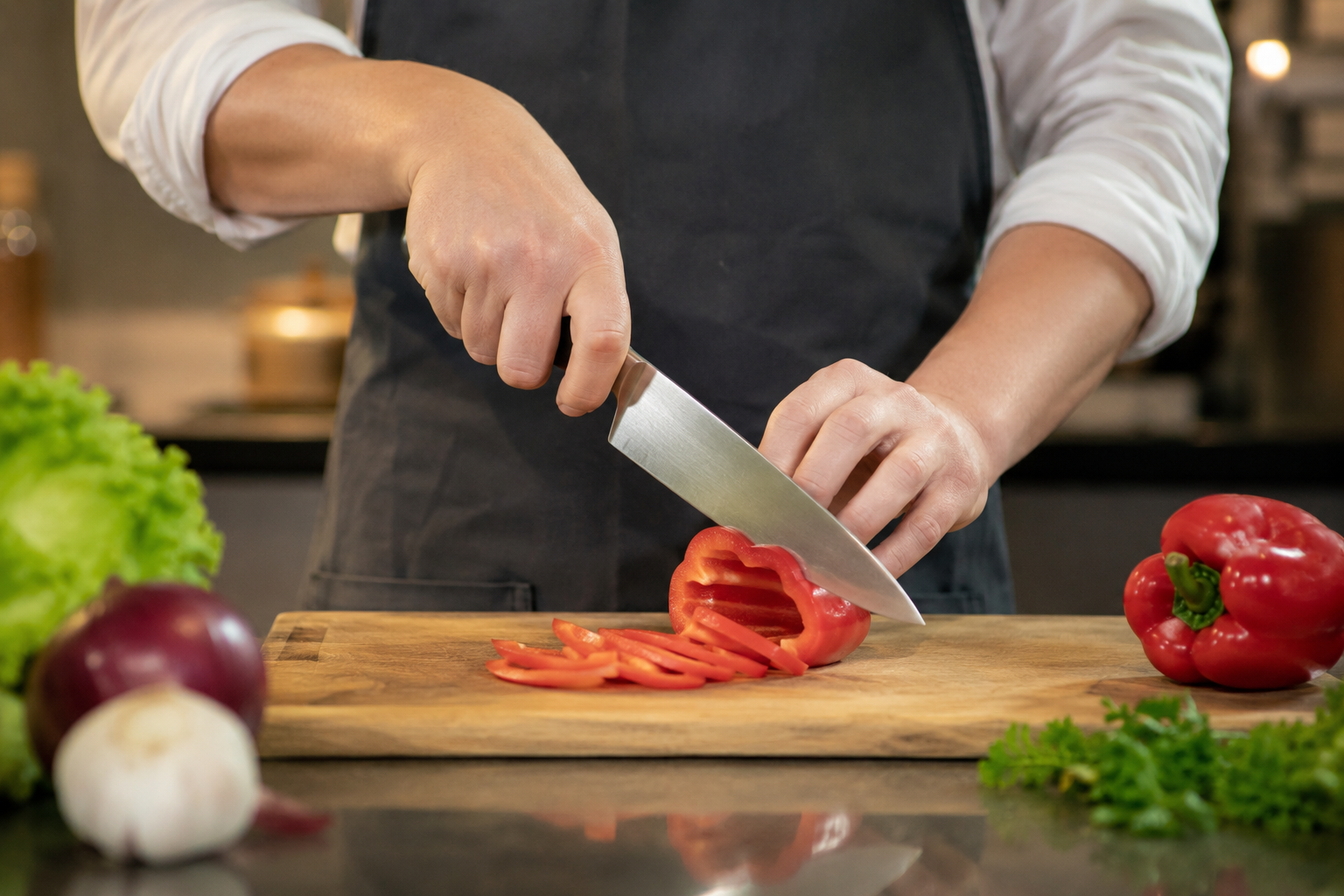


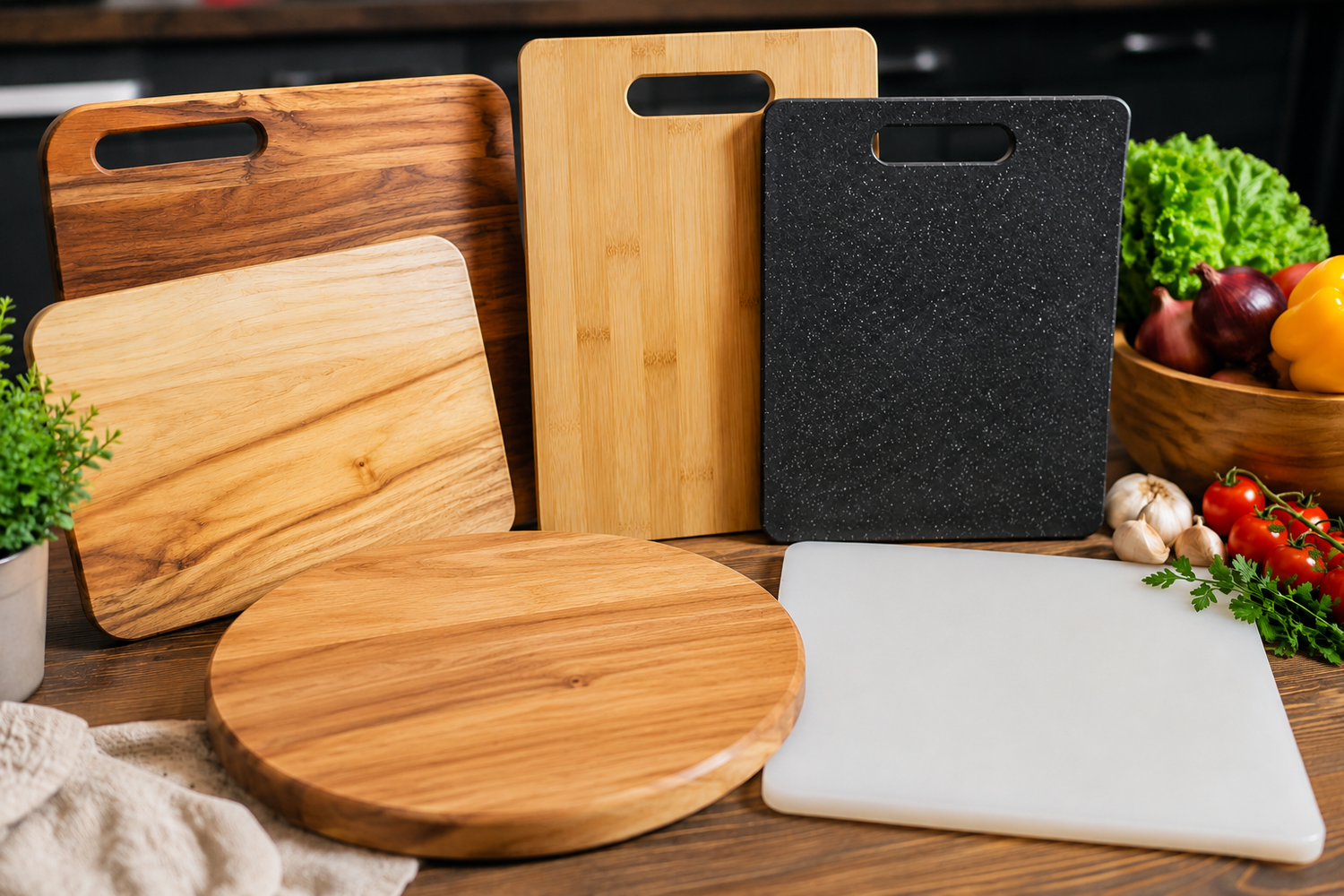
The cutting surface plays a crucial role in preserving your blades. An unsuitable board can prematurely dull or damage the cutting edge. Choosing the right surface allows you to work precisely and ensures the longevity of your kitchen tools.
Key points of the article
- The hardness of the board must be less than that of your knife's steel.
- Wood offers the best combination for absorbing cutting shocks.
- Regular maintenance of the board prevents bacterial growth.
Why the cutting board is as important as the knife
When you slice food, the knife's edge comes into direct contact with the surface below. If this surface is harder than the steel, the blade's edge flattens and deforms instantly. A suitable surface acts as a shock absorber, absorbing the impact with each cut.
The metal's resistance to shocks directly depends on its composition and hardness. To delve deeper into these technical aspects, you can consult the definition of stainless steel on the Wikipedia page on stainless steel.
Comparison of materials and their impact on the cutting edge
| Material | Hardness | Impact on the cutting edge | Recommendation |
|---|---|---|---|
| Glass | Very high | Immediate dulling and chipping | To be avoided |
| Bamboo | Medium to high | Normal to rapid wear | Use with caution |
| Wood | Low to medium | Maintains optimal sharpness | Highly recommended |
Different types of cutting boards
Each material has specific characteristics that alter hygiene, durability, and daily comfort of use.
Wood
Wood is the traditional material par excellence. It has naturally antibacterial properties and offers a soft surface that absorbs shocks without damaging the blade's edge. However, it requires regular maintenance to prevent it from drying out.
Plastic
Polyethylene or soft plastic boards are easy to clean and suitable for intensive use. They may show grooves after prolonged use, requiring regular replacement for hygiene reasons.
Bamboo
Bamboo is a very moisture-resistant grass. However, its hardness is greater than that of classic wood due to the natural fibers and glue used for assembly. It therefore dulls the cutting edge more quickly.
Glass (and why it's a bad idea)
Tempered glass or ceramic surfaces are hygienic and easy to wash, but their extreme hardness destroys the knife's edge in a few uses. The impact between the blade and the glass inevitably causes micro-chips on the steel.
Which board for your use
Using separate boards according to the ingredients prepared helps prevent cross-contamination and better distribute the wear of your supports.
Meat
For meat and fish, a thick plastic board or treated wood is recommended to withstand heavy cutting and allow for high-temperature cleaning if necessary.
Vegetables
A medium-sized wooden board offers ideal working comfort for slicing vegetables. The flexibility of the wood allows for rocking movements without forcing.
Daily use
For everyday cutting tasks, we recommend you equip yourself through our selection of equipment on our kitchen equipment.
Impact on knife lifespan
The choice of cutting surface directly influences the frequency of sharpening your knife needs. A poor cutting habit leads to accelerated wear requiring more frequent interventions.
Good practices to preserve the blade
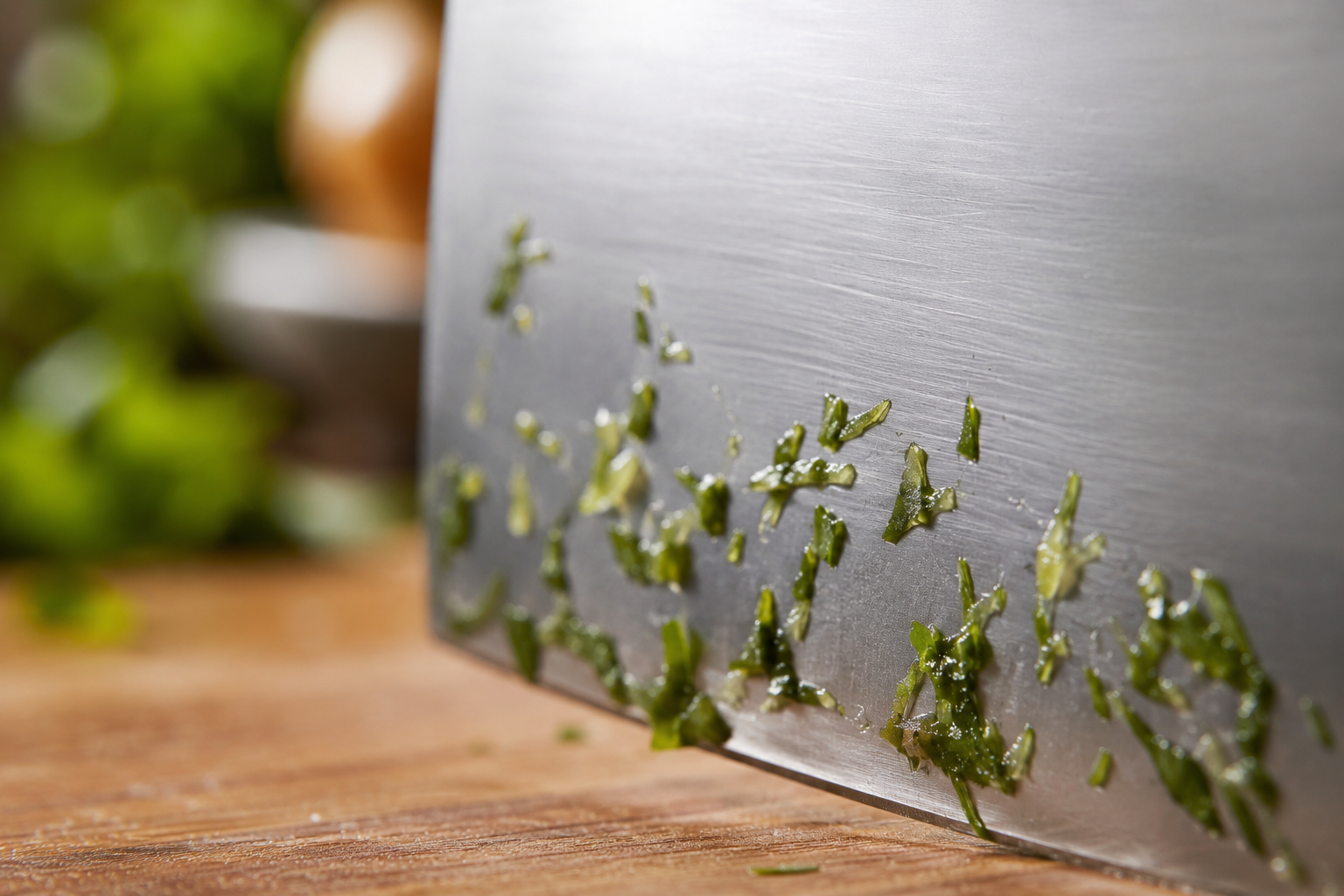
- Do not scrape the blade's edge on the board to collect cut ingredients.
- Use the back of the blade to push food.
- Check the flatness of the surface to avoid lateral twisting during cutting.
To learn more about the scraping action to avoid, you can consult our article on avoiding scraping your board with your knife.
What size and thickness to choose
Comfort of use also depends on the dimensions of the board. A surface that is too small limits freedom of movement, while insufficient thickness can lead to deformation of the support.
Recommended dimensions
For a family kitchen, a minimum thickness of 3 to 5 centimeters is ideal to ensure the stability of the board on the worktop. The surface must be large enough to accommodate the entire food without hindering the guiding hand.
Handling errors
| Choice error | Consequence on cutting | Correction |
|---|---|---|
| Board too thin | Instability and risk of slipping | Choose a thicker board |
| Reduced surface | Restricted movements | Adjust board size |
| Glass surface | Destruction of the cutting edge | Replace with wood |
Cutting board maintenance
To ensure the durability and hygiene of your equipment, appropriate cleaning is essential depending on the material of your board.
Cleaning
After each use, the board should be washed with lukewarm water and mild soap. Prolonged soaking is not recommended, as excessive moisture can cause the wood to swell and warp.
Disinfection
To eliminate odors and bacteria on wooden boards, rub the surface with coarse salt and half a lemon, then rinse with clear water and dry immediately.
Oiling (wood)
Applying a food-grade vegetable oil or mineral oil once a month nourishes the wood and makes it waterproof to liquids.
Find our other expert tips on the maintenance and preservation of your utensils in our guide on how to care for your kitchen knives.
Frequently Asked Questions
Why does glass damage knives?
Glass is a much harder surface than knife steel. With each contact, the cutting edge flattens or chips, causing immediate loss of sharpness and micro-fractures on the blade.
How to remove stains from a wooden cutting board?
You can apply a paste made of baking soda and lukewarm water, gently rub with a non-abrasive sponge, rinse with water, and dry with a clean cloth.
What is the best thickness for a wooden cutting board?
A thickness between 3 and 5 centimeters is ideal to prevent the board from deforming under the effect of moisture or repeated shocks during cutting.
Glossary
Cutting edge: The sharpened part of the blade that penetrates food to ensure a clean and regular cut.
Edge: The microscopic ridge of the knife, subjected to mechanical stress during cutting on the surface.
Micro-fractures: Small alterations invisible to the naked eye that can appear during impacts on overly hard materials.