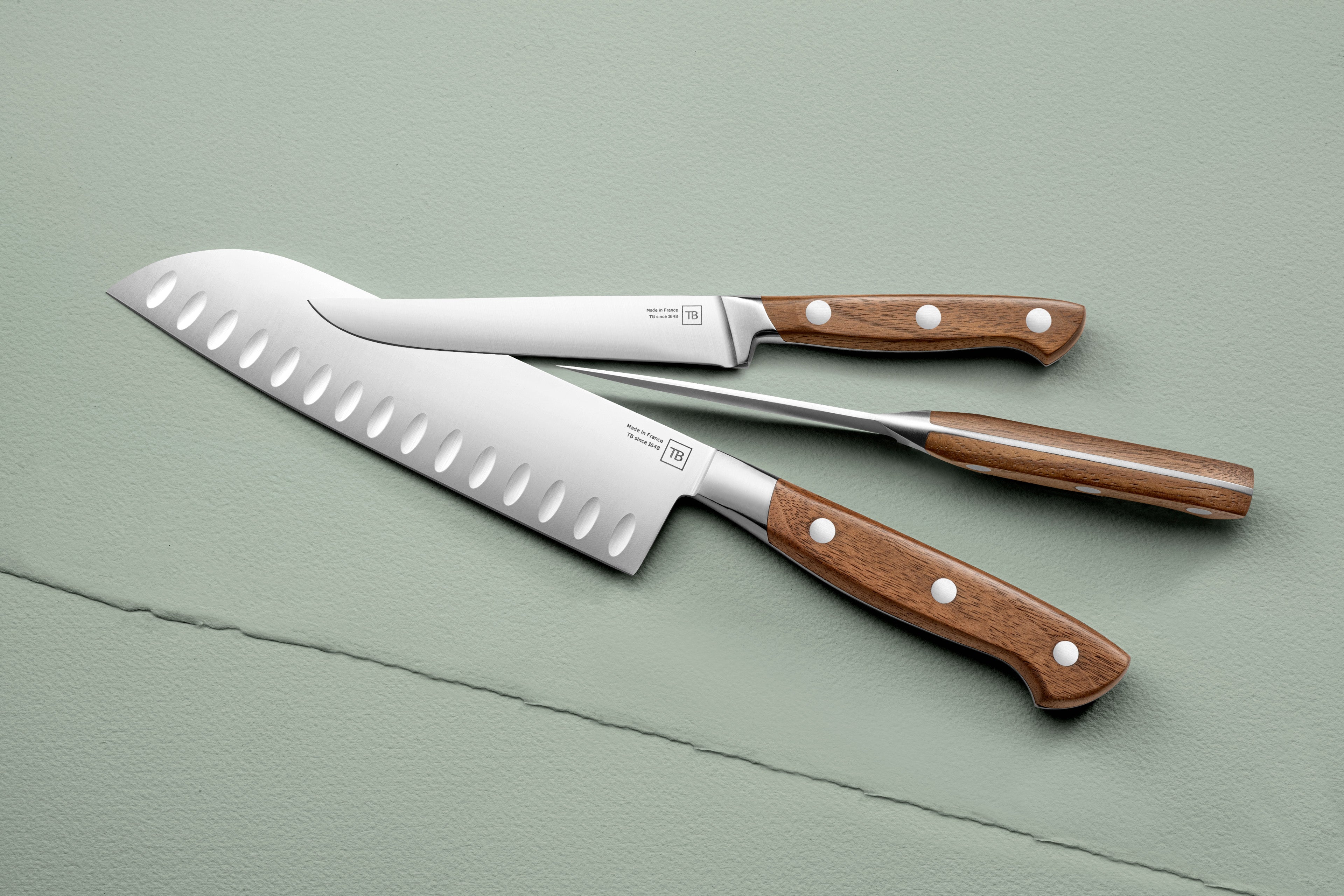




Regular maintenance of your kitchen knives not only guarantees the longevity of the steel but also ensures optimal cutting safety. A clean, dry, and properly sharpened knife is an indispensable tool for any discerning cook, allowing for lasting precision and complete respect for the food being prepared.
How to Properly Maintain Your Kitchen Knives?
Owning a high-quality knife is the first step, but knowing how to preserve it is what defines a true culinary enthusiast. Maintenance isn't just about cleaning; it's a ritual that preserves the mechanical properties of the steel and the aesthetics of the materials. At TB-1648, we design robust tools in our kitchen collections, but their performance directly depends on the care you give them daily. From the cutting board to the choice of sharpening method, every detail influences the durability of your equipment.
Why is Knife Maintenance Essential?
A poorly maintained knife quickly loses its sharpness, forcing the user to apply more pressure, thereby increasing the risk of slipping and injury. Beyond safety, hygiene is paramount. Food residues, if not properly removed, can promote bacterial growth or attack the steel's structure through acidity. According to AFNOR standards for stainless steels in contact with food, surface cleanliness is a prerequisite for maintaining the passive layer of stainless steel.
By taking care of your blades, you also prevent the appearance of micro-pitting corrosion. Even high-tech steels are never completely "stainless" if exposed to aggressive environments or prolonged humidity. Rigorous maintenance is therefore an act of sustainable management of your tools.
How to Wash Your Knife Correctly?
Hand washing is the absolute reference method. It should be done immediately after use to prevent acidic juices (tomato, lemon, onion) from lingering on the blade. Use lukewarm water, a non-abrasive sponge, and mild dish soap. It is imperative never to let your knives soak at the bottom of a sink full of soapy water: this poses a danger to your hands and unnecessarily exposes the handle and blade to prolonged immersion.
When cleaning, always rub from the spine of the blade towards the edge, and not the other way around, to avoid cutting the sponge or, worse, injuring yourself. Once clean, rinse thoroughly with clear water to remove any detergent residue that could dull the steel's shine.
Why Never Put a Knife in the Dishwasher?
This is the number one enemy of fine cutlery. Although some models claim theoretical compatibility, we strongly advise against this practice. The reasons are multiple: intense heat expands the components, aggressive detergents attack the rivets, and the blade's edge suffers impacts against other cutlery. To delve deeper into this topic, consult our dedicated article: knife in the dishwasher, good or bad idea.
Moreover, residual moisture at the end of the drying cycle is particularly detrimental to wooden handles and can cause irreversible tarnishing on blades, even those with high-resistance treatment.
How to Dry and Store Your Knife?
Drying must be immediate and complete. Use a dry and clean dish towel, wiping again from the spine towards the edge. Never let your knives air-dry in a cutlery basket, as water often collects at the guard or bolster, promoting oxidation.
For storage, loose in a drawer is to be avoided. Contact between blades dulls the edge very quickly. Prefer:
- A magnetic strip: hygienic and aesthetic, it avoids any contact with the cutting edge.
- A knife block: effectively protects blades from dust and shocks.
- A sheath or case: ideal if you transport your tools.
When Should You Sharpen Your Knife?
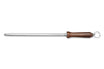
Sharpening should not wait until the knife no longer cuts at all. Regular maintenance of the "edge" with a butcher's steel or a whetstone helps maintain consistent performance. As soon as you feel unusual resistance when cutting a tomato or meat, it's time to act. For precise techniques, refer to the art of knife sharpening.
The choice of accessory is crucial. You will find suitable tools in our maintenance accessories section to bring your blades back to life safely.
| Maintenance Tool | Recommended Use | Frequency |
|---|---|---|
| Honing steel | Straighten the blade's edge. | Before each use. |
| Whetstone | Recreate the cutting edge (sharpening). | 1 to 2 times a year depending on use. |
| Manual sharpener | Quick and simplified maintenance. | As soon as cutting becomes difficult. |
How to Maintain the Handle According to its Material?
The handle is the part of the knife most used by hand. Its maintenance varies drastically depending on its porosity and chemical composition.
Wood (Pakkawood, olive, stabilized wood)
Wood is a living material that fears excessive humidity. Pakkawood, a composite material of wood and resin often cited on Wikipedia, is more resistant than natural wood but still requires manual care. For olive or stabilized wood, occasionally apply a drop of grapeseed oil to nourish the fiber and revive the wood grain.
Pro polymer
Polymer handles (such as ABS or polypropylene) are the simplest to maintain. They are very resistant to water and conventional detergents. A simple wash with soapy water is enough to restore their original appearance, without risk of cracking or thermal deformation.
Metal handle (stainless steel)
Highly hygienic, stainless steel handles only require careful wiping to avoid fingerprints or limescale. According to Wikipedia, the durability of this alloy is exceptional, making it a preferred choice for professional environments.
What are the Most Frequent Maintenance Mistakes?
Many bad habits can prematurely ruin a blade. The most common mistake concerns the cutting surface. Using a knife on a glass, marble, or ceramic surface destroys the edge in just a few passes. Always prefer a suitable board, as explained in our guide on how to choose your cutting board.
| Common Mistake | Consequence | Correction |
|---|---|---|
| Leaving the blade to soak | Appearance of rust and handle degradation. | Wash and dry immediately after use. |
| Cutting on glass/marble | Immediate dulling of the edge. | Use wood or food-grade plastic. |
| Using the green side of the sponge | Deep scratches on the blade's polish. | Use the soft side or a microfiber cloth. |
| Bulk storage | Blade collisions and dulling. | Install a magnetic strip or use a block. |
Frequently Asked Questions
My knife has rust spots, what should I do?
If oxidation spots appear, gently rub them with a damp cork stopper dipped in a very fine scouring powder or a special stainless steel cleaner. To prevent recurrence, always dry your knives immediately after washing.
How often should I use a honing steel?
A honing steel does not remove material but realigns the edge. Ideally, use it briefly before each cooking session. A few passes on each side of the blade are enough to maintain a razor-sharp edge.
Can I use olive oil for my wooden handle?
It is best to avoid olive oil as it can become rancid over time. Prefer a food-grade mineral oil or a neutral oil like grapeseed oil to nourish the wood without an unpleasant odor.