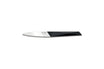

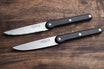
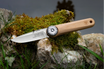

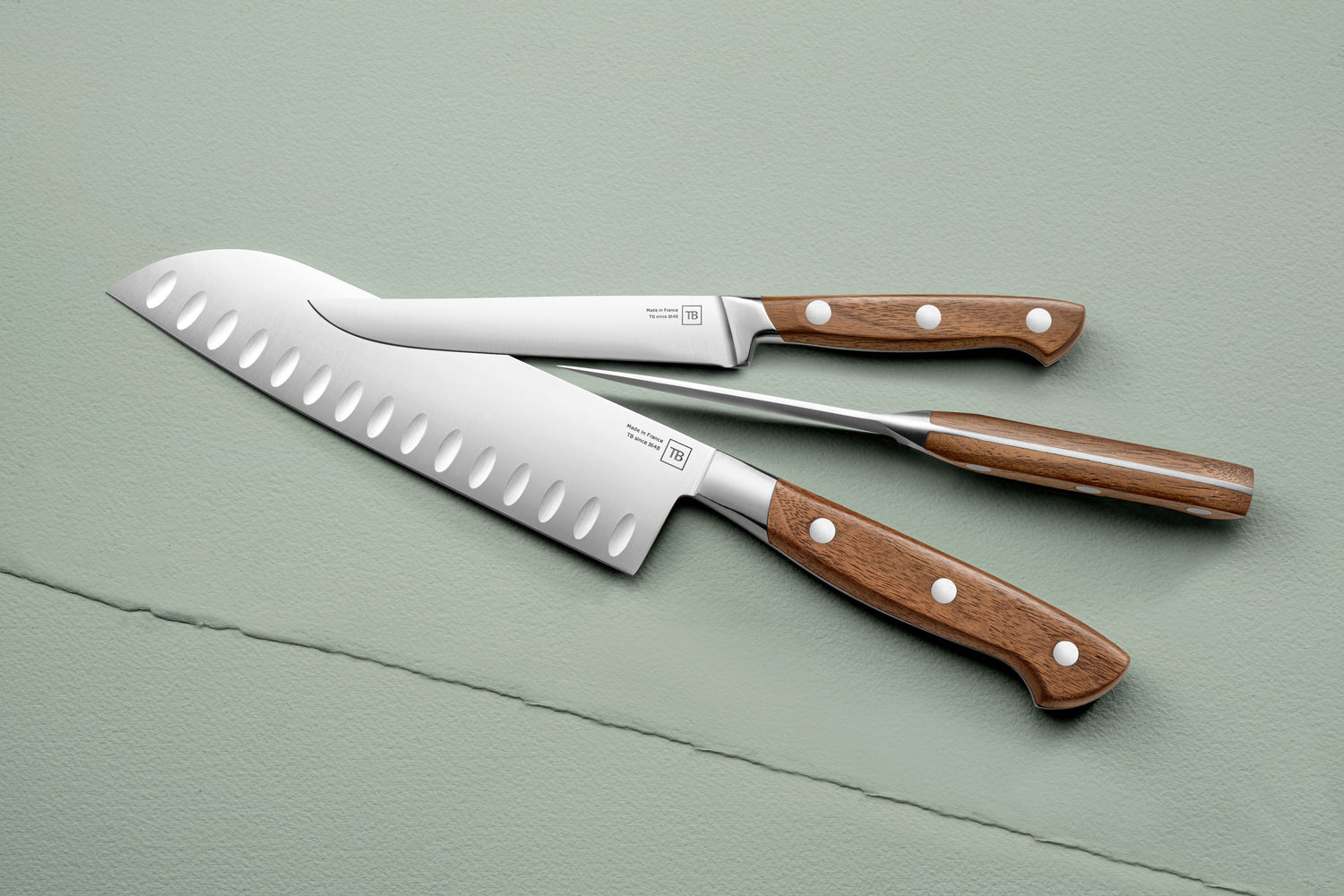
The Santoku knife has become a staple of modern cuisine, prized by both professional chefs and passionate home cooks. With its distinctive shape, versatility, and ability to make precise cuts, the Santoku is now an essential in many kitchens around the world. But what is the story behind this iconic knife? Let's explore its origins, evolution, and unique characteristics.
The origins of the Santoku knife
The Santoku, literally "three virtues" in Japanese, refers to the three types of cutting for which it is particularly well-suited: slicing, chopping, and dicing. This traditional Japanese knife has its roots in 20th-century Japan, when it was designed to meet the needs of a more modern home kitchen. At that time, the European chef's knife, with its large blade and elongated shape, dominated many kitchens. However, the Santoku knife was specifically designed for the demands of Japanese cuisine, which favors a more technical approach to food preparation.
The transition from tradition to modernity
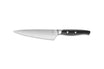
In the 1940s and 1950s, the Santoku knife emerged when Japanese housewives sought a lighter, more maneuverable, and more versatile tool than traditional knives. Unlike the Western chef's knife, the Santoku has a shorter blade, typically between 16 and 20 cm long, making it easier to handle for quick and precise cuts. It is also characterized by its slightly curved edge, allowing for a smooth, fluid cutting motion, ideal for chopping vegetables or slicing fish.
The Santoku knife's emergence coincided with a period of modernization in Japan after World War II, where Western influences blended with local traditions. This knife thus emerged as a fusion of Japanese culinary practices and new trends in kitchen tools.
The characteristics of the Santoku knife
The Santoku is distinguished by several technical characteristics that make it a particularly popular knife:
-
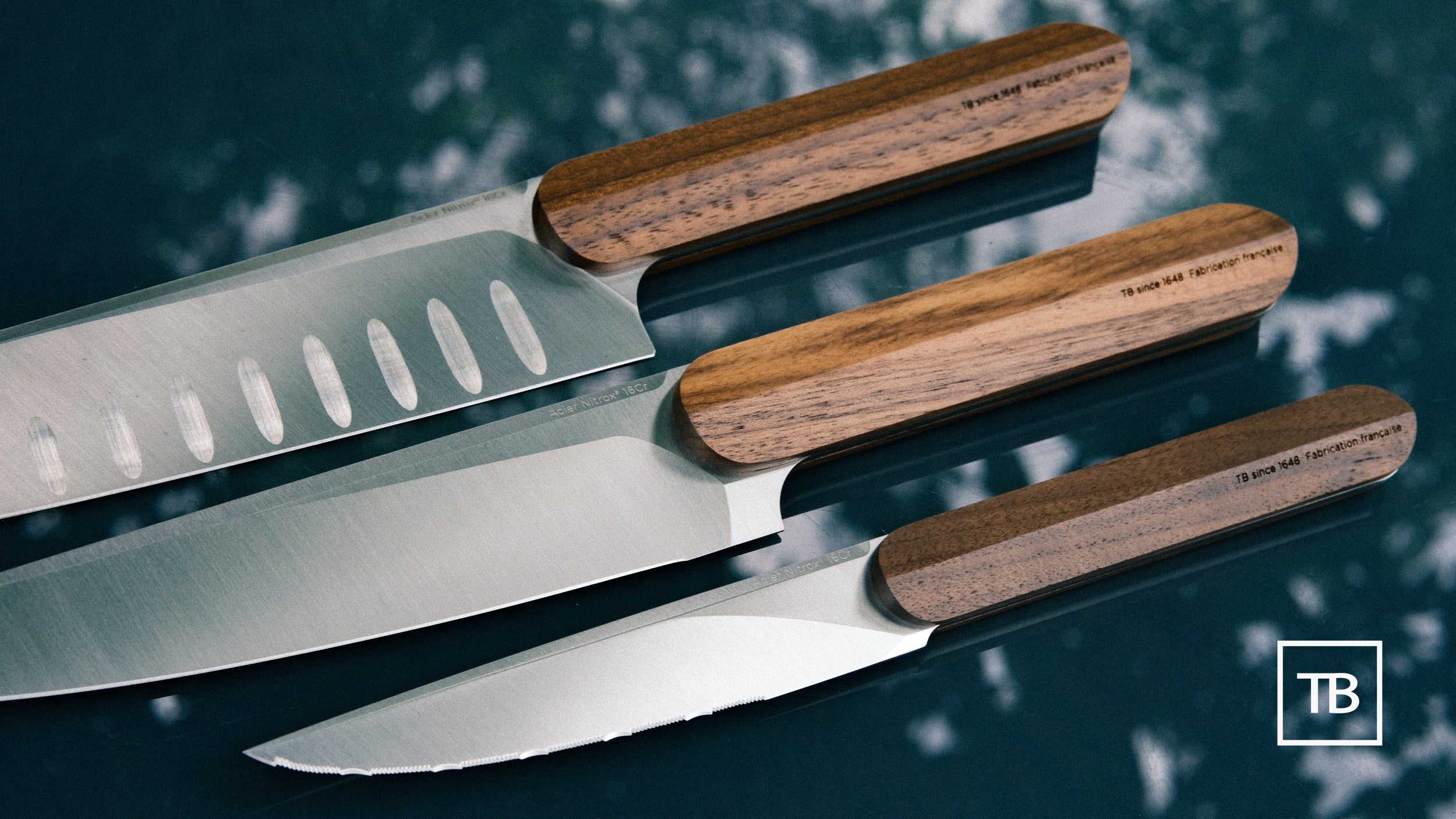
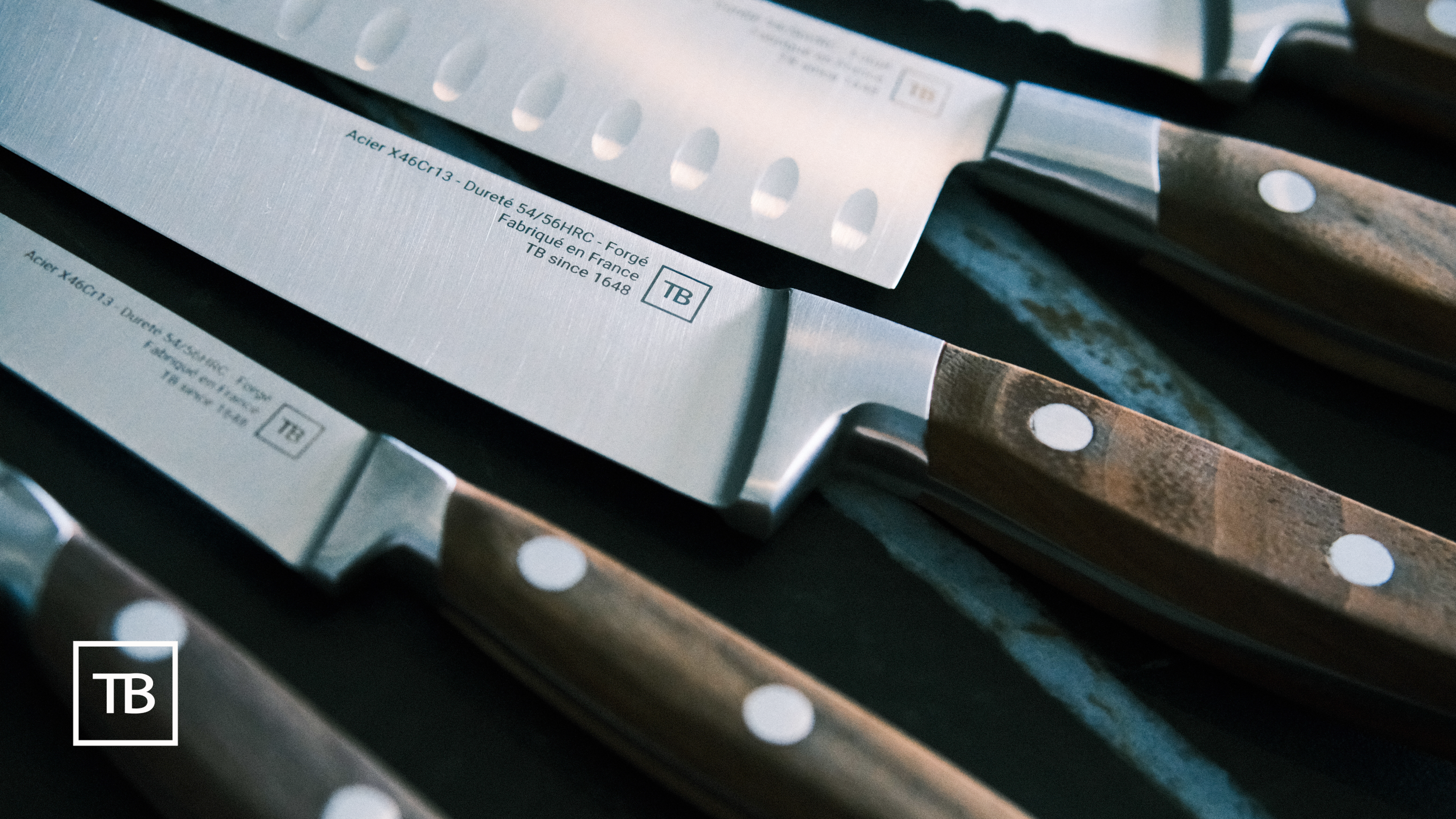
The Blade : As mentioned earlier, the Santoku blade is short and wider than that of a traditional chef's knife. This width allows for a better grip and optimal control while cutting. Its slightly rounded shape also facilitates the rocking motion during cutting.
-
The Grip : The Santoku is designed to be lightweight and balanced, with an ergonomic handle that ensures a comfortable grip and precise cutting. Its reduced weight allows for extended use without excessive fatigue, making it perfect for everyday kitchen tasks.
-
Versatility : The Santoku is an all-in-one knife, suitable for chopping, slicing, and dicing meats, fish, vegetables, and fruits. It is particularly effective for quick preparation tasks thanks to its high-quality edge, and its design allows for clean and precise cuts without excessive effort.
-
Damascus Steel Blades : Many Santoku knives feature Damascus steel or double-edged blades, allowing for an even smoother and cleaner cut. This also adds an aesthetic touch to the blade, often appreciated by chefs and knife enthusiasts.
The international influence of Santoku
Although the Santoku was designed to meet the needs of Japanese cuisine, its efficiency and practicality quickly spread worldwide. Today, it is commonly used in Western kitchens, particularly in Europe and the United States, where it has become a staple among professional kitchen knives. The Santoku is especially appreciated in modern kitchens and smaller cooking spaces, as it allows for a wide variety of cuts with a single tool.
The Santoku's popularity has also been fueled by cooking shows, cookbooks, and culinary influencers who have popularized this knife with the general public. Its reputation has thus spread far beyond Japan's borders, making it a symbol of modern cuisine and versatility in the kitchen.
Santoku today
Today, the Santoku knife is available in a variety of materials and finishes, ranging from stainless steel models to Damascus steel blades, with handles made of wood, plastic, or composite materials. Its sleek design and multiple uses make it a preferred choice for chefs and home cooks looking for a versatile, efficient, and aesthetically pleasing knife.
Furthermore, the Santoku is no longer limited to Japanese cuisine. It integrates perfectly into a variety of cooking styles, whether French, Mediterranean or even Asian, thanks to its ability to make precise cuts on a wide range of ingredients.
The Santoku knife is much more than just a kitchen tool; it reflects the evolution of Japanese culinary techniques and the adaptation of tradition to modernity. Its versatility, ergonomic design, and exceptional blade make it an indispensable ally in any kitchen. If you don't yet have this knife in your collection, perhaps it's time to discover its advantages and add it to yours. The Santoku will accompany you with efficiency and elegance in all your culinary creations.