

Owning a high-quality knife is a lifelong investment, but even the best blade eventually loses its edge with daily use. At TB-1648, we believe that maintenance is a natural extension of the art of cutlery. Knowing how to maintain your blade shows respect for the tool and guarantees surgical cutting precision in the kitchen.
What's the difference between sharpening and honing?
In professional jargon, these two terms are often confused. However, they correspond to two distinct stages in the life cycle of your blade:
- Honing: This is routine maintenance. The action consists of straightening the "edge" of the blade (the ultra-thin cutting part) which slightly bends with each impact against the cutting board. A honing steel is generally used.
- Sharpening: This is a more radical operation. Material (steel) is removed to create a new edge. It is used when the blade is dull or "rounded".
According to the definitions of sharpening on Wikipedia, the goal is to restore the geometry of the edge to minimize friction.
How do I know if my knife needs honing?
There's no need to wait until your knife has become a "butter knife". Two simple tests can diagnose the condition of the edge:
- The tomato test: If the blade slides over the skin of a ripe tomato without penetrating it immediately under its own weight, honing is necessary.
- The paper test: Hold a sheet of paper vertically and try to slice it from top to bottom. If the knife snags or tears the paper, it's time to act.
If, despite using a honing steel, the knife still struggles, it is likely that the cause is more profound. To find out more, read our article: Why won't my knife cut anymore?
What are the sharpening methods?
Whetstone
This is the preferred method for purists. Although TB-1648 does not directly sell whetstones, we strongly advise enthusiasts to purchase them from specialized sites to restore blades whose edges are too worn.
Honing steel
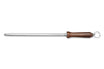
This is the essential tool that every cook should have close at hand. The honing steel removes almost no material; it realigns the steel molecules. At TB-1648, our honing steels are designed to provide optimal friction on our steels (54-56 HRC).
👉 Discover our range: TB-1648 Accessories and Honing Steels
Electric or manual sharpener
More accessible, the manual sharpener is ideal for those who fear missing their cutting angle. It is a quick solution for frequent domestic use.
| Tool | Main Action | Frequency | Difficulty Level |
|---|---|---|---|
| Honing Steel | Straightens the edge (maintenance) | Daily / Weekly | Intermediate |
| Whetstone | Resharpens the edge (abrasion) | 1 to 2 times a year | Advanced |
| Manual Sharpener | Quick sharpening | Monthly | Beginner |
What sharpening angle should I choose?
The angle is the determining factor for performance. For our collections (Cuisine Thiers, Laguiole Héritage®), we generally recommend an angle of 20°.
| Angle (per side) | Knife Type | Characteristic |
|---|---|---|
| 15° | Japanese knives / Fillet knives | Razor sharp, very fragile |
| 20° | Chef's knives / TB-1648 Standard | Optimal versatility and robustness |
| 25° | Pocket knives / Hunting knives | High shock resistance |
How often should I hone my knife?
There is no universal rule. It all depends on your use and the hardness of your cutting board. Honing before each cooking session is an excellent habit. For more tips on the longevity of your blades, read: Our expert tips for maintenance.
What mistakes should I avoid when honing?
- Variable angle: Changing the angle with each pass rounds the edge.
- Excessive pressure: Let the tool do the work to avoid altering the steel's temper (in compliance with NF EN 10088 standards).
- Neglecting cleaning: A honing steel clogged with steel residue loses its effectiveness.
Frequently Asked Questions
Can serrated knives be sharpened?
Yes, but with specific equipment (rat tail honing steel) and by working each tooth separately.
Should I wet my whetstone?
Most waterstones require prior immersion to prevent pores from clogging.
Cutlery Glossary
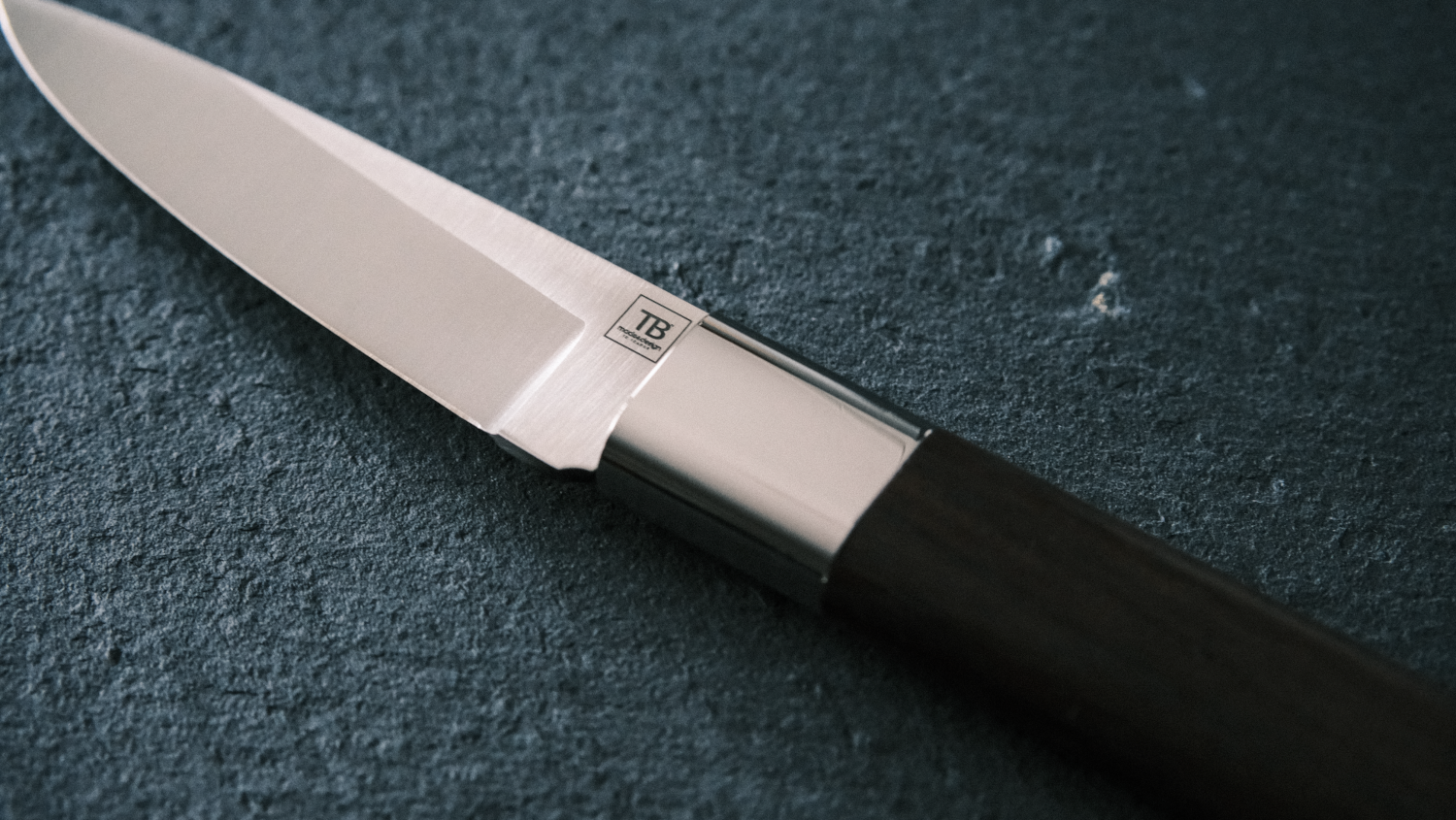
- Edge: The part of the blade that cuts.
- Bevel: The extreme tip of the edge that must be perfectly aligned.
- Micro-serration: Small teeth that facilitate the start of the cut on some models.