

Knives are essential tools in any kitchen, and their care is crucial to ensuring their efficiency and longevity. However, many users make the mistake of scraping the cutting board with the blade's edge, a habit that can damage your knives and compromise their performance over time. In this article, we explain why it's essential to avoid this practice and how to preserve the quality of your knives, especially those from TB 1648 , carefully crafted in Thiers, France.
1. Damage to the blade edge
The edge of the blade, that is, the sharp part of the knife, is designed to be as precise and sharp as possible. Scraping the cutting board with the blade can have several negative consequences for this edge. Constant contact with a hard surface, such as wood or plastic, can gradually dull the steel, thus reducing its sharpness and requiring more frequent resharpening.
With repeated use, this practice can also create micro-abrasions on the edge, affecting the knife's sharpness. The sharpening and resharpening process can be lengthy and expensive, especially for high-quality knives like those from TB 1648 , made from Nitrox steel or forged stainless steel.
2. Risk of blade deformation
Scraping a cutting board with the edge of the knife puts unwanted pressure on the blade. This action can cause the knife to lose its original shape, especially on thinner or more flexible blades. High-quality kitchen knives, like those in the TB 1648 Louis collection, are designed to offer a perfect balance of strength and flexibility. Scraping the board risks compromising this careful design.
3. Risks to the cutting board
In addition to damaging the blade, scraping the board with the knife edge can also harm the board itself. Wooden boards, for example, can crack or gouge from repeated contact with a sharp knife. A damaged cutting board can harbor bacteria and make your workspace less hygienic.
4. The art of using a knife properly
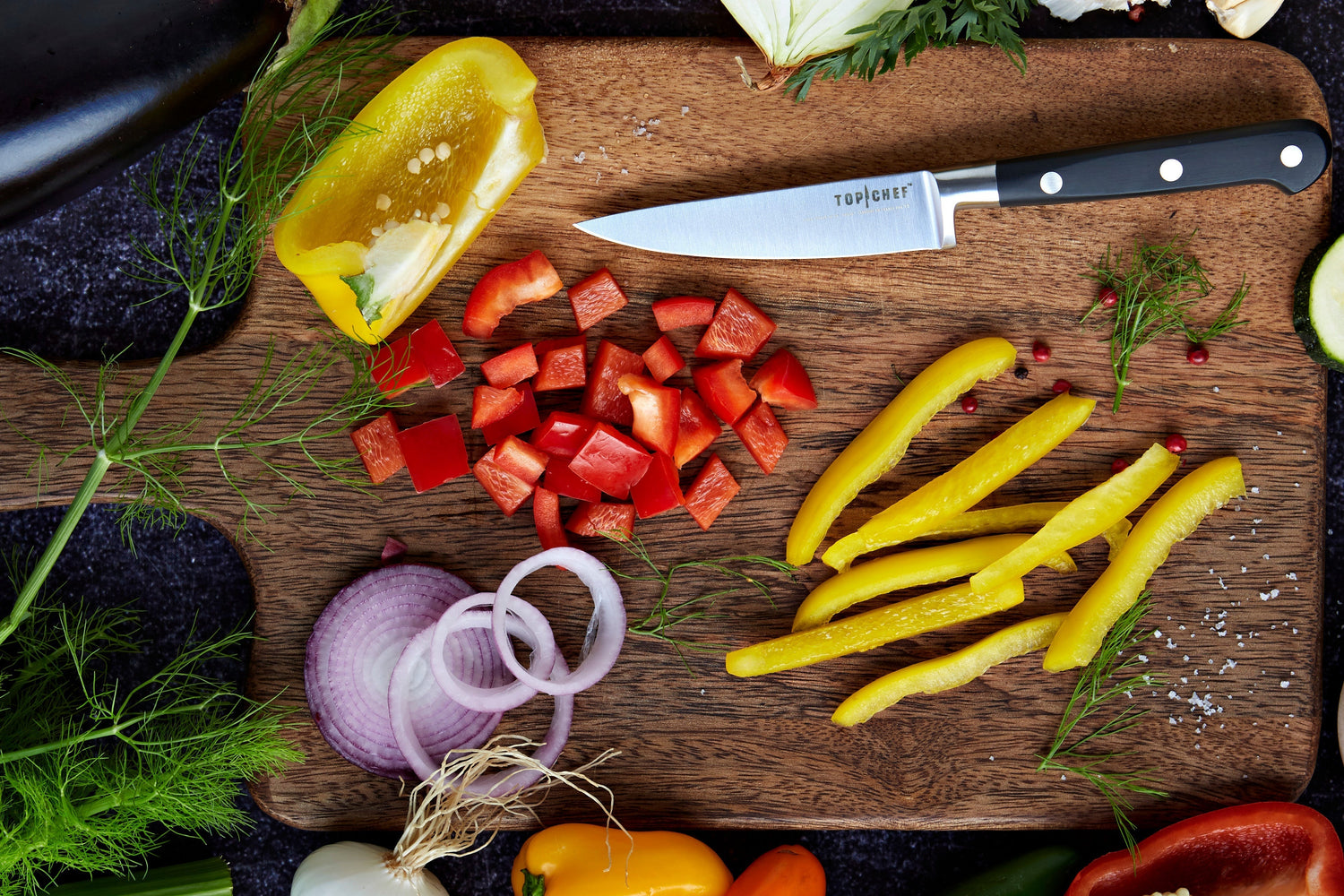
To preserve both your knife blade and your cutting board, it's important to use the correct cutting technique. Always use the knife with a slicing motion rather than scraping. This helps maintain the blade's sharpness and provides better food preparation.
It is also recommended to use cutting boards designed for knives. Wooden boards, like those from TB 1648 , are ideal because they protect both the blade and the work surface. Acacia, for example, is a robust wood that minimizes the impact of knife blows while remaining gentle on the blades.
5. Proper maintenance to maximize the lifespan of your knives
To keep your knives in optimal condition, here are a few additional tips:
- Sharpen your knives regularly : A sharp knife cuts more efficiently and requires less force, thus reducing wear on the blade edge.
- Use suitable cutting boards : Opt for wooden or flexible plastic boards which are less abrasive to the blades than glass or ceramic boards.
- Avoid scraping : If you need to gather chopped or cut food on the board, use the back of the blade (the flat of the blade) rather than the wire to push it towards a container.
Scraping the cutting board with the blade's edge is a habit to avoid if you want to prolong the life of your knives and maintain their performance. By adopting more tool-friendly cutting practices and using appropriate cutting boards, you will not only ensure the efficiency of your TB 1648 knives, but also safety and hygiene in your kitchen.
For superior quality knives, designed to last, trust TB 1648 , specialists in knives and kitchen accessories made in Thiers since 1648. An excellent blade starts with good maintenance.