
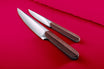
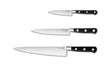
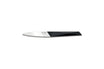

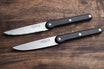

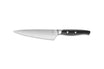
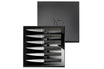
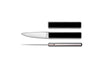
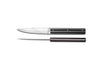
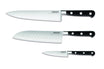
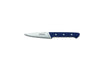


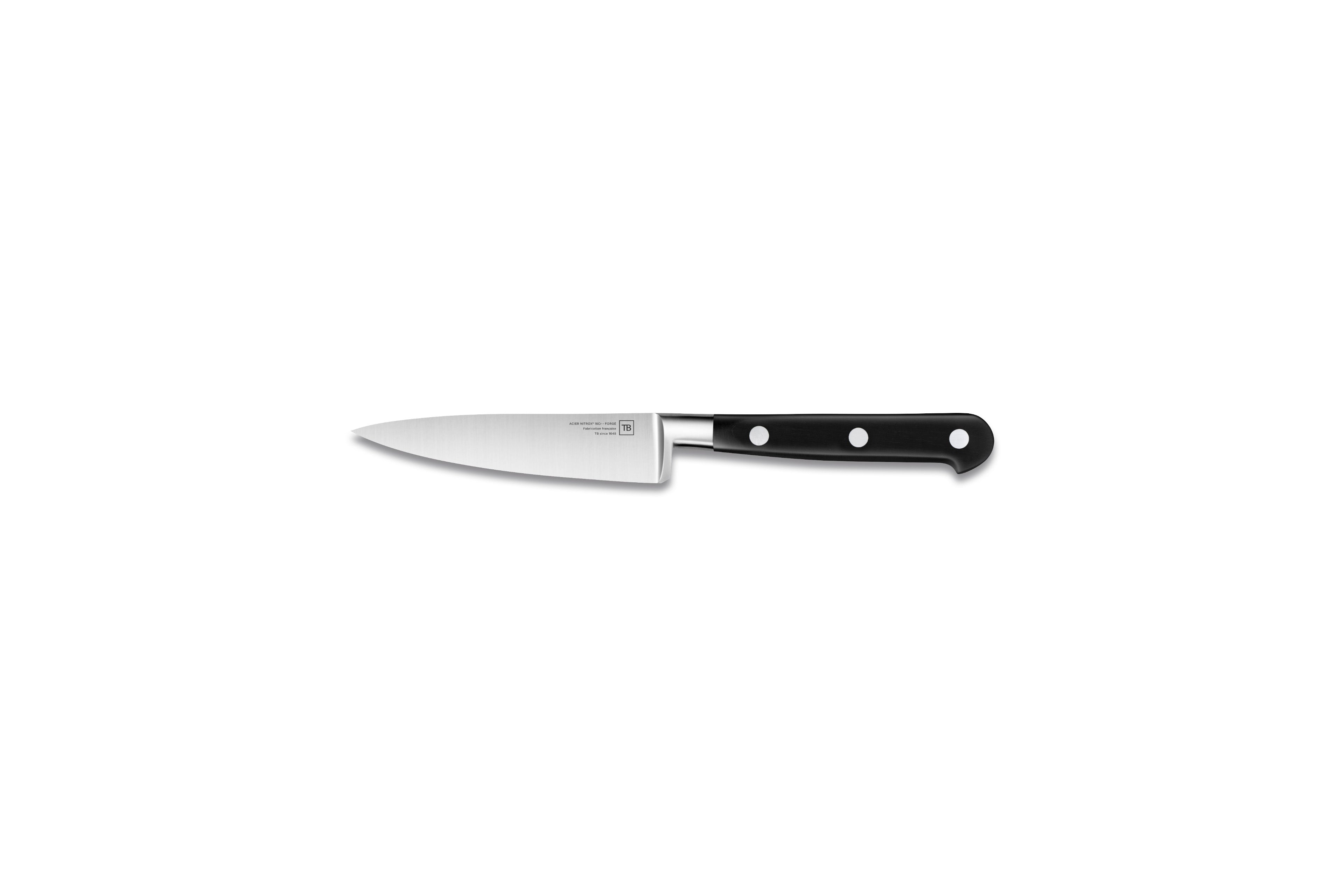
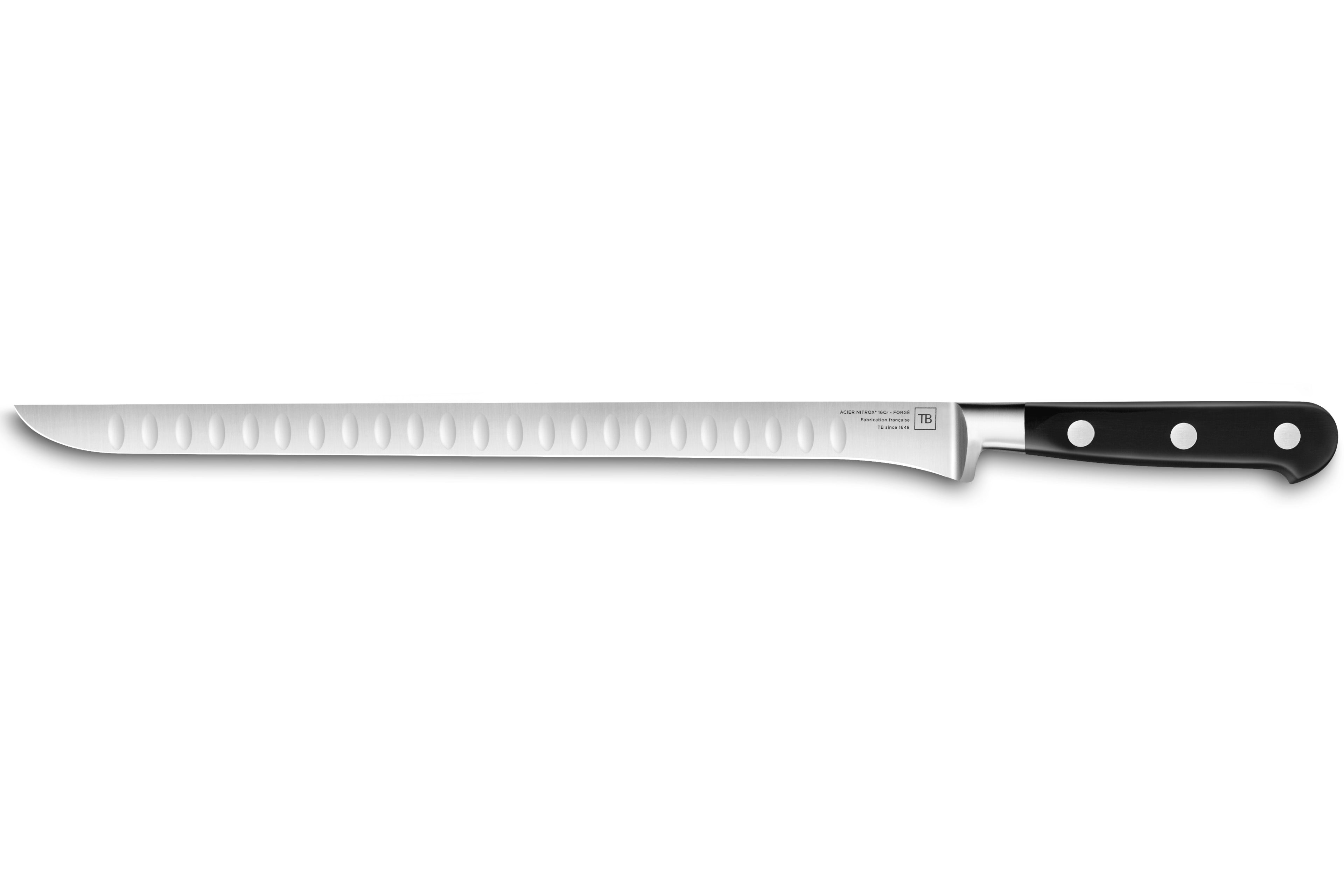
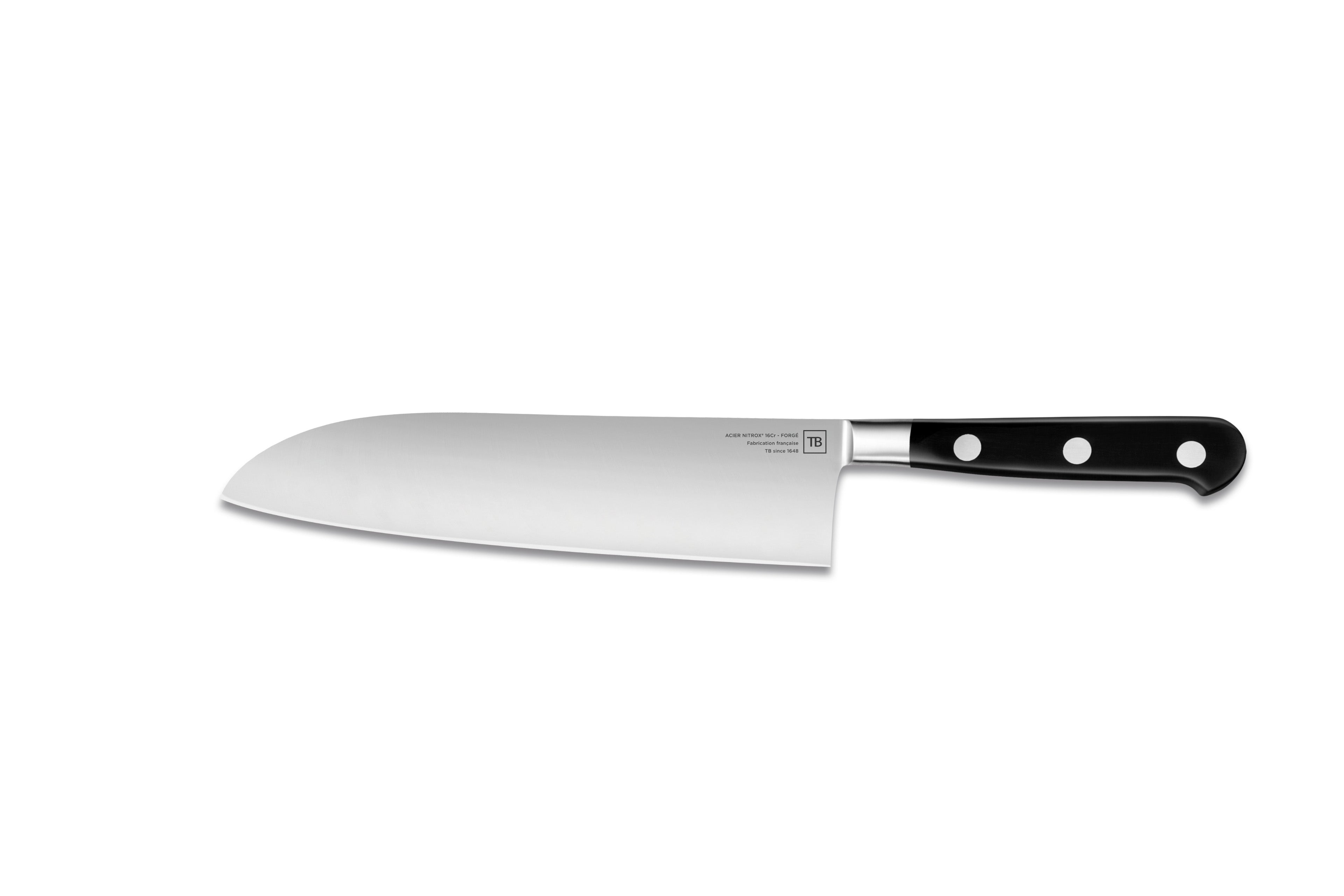
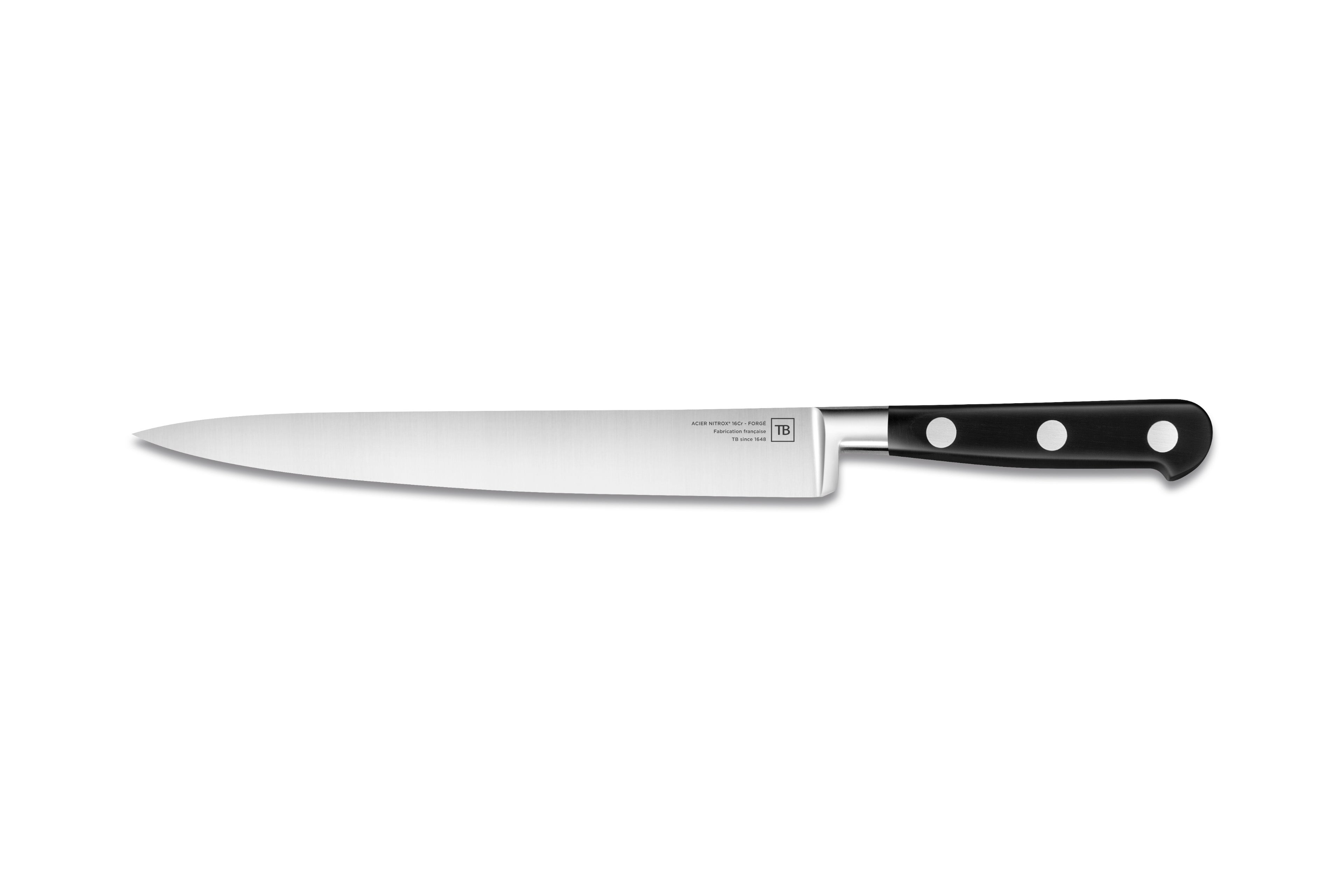
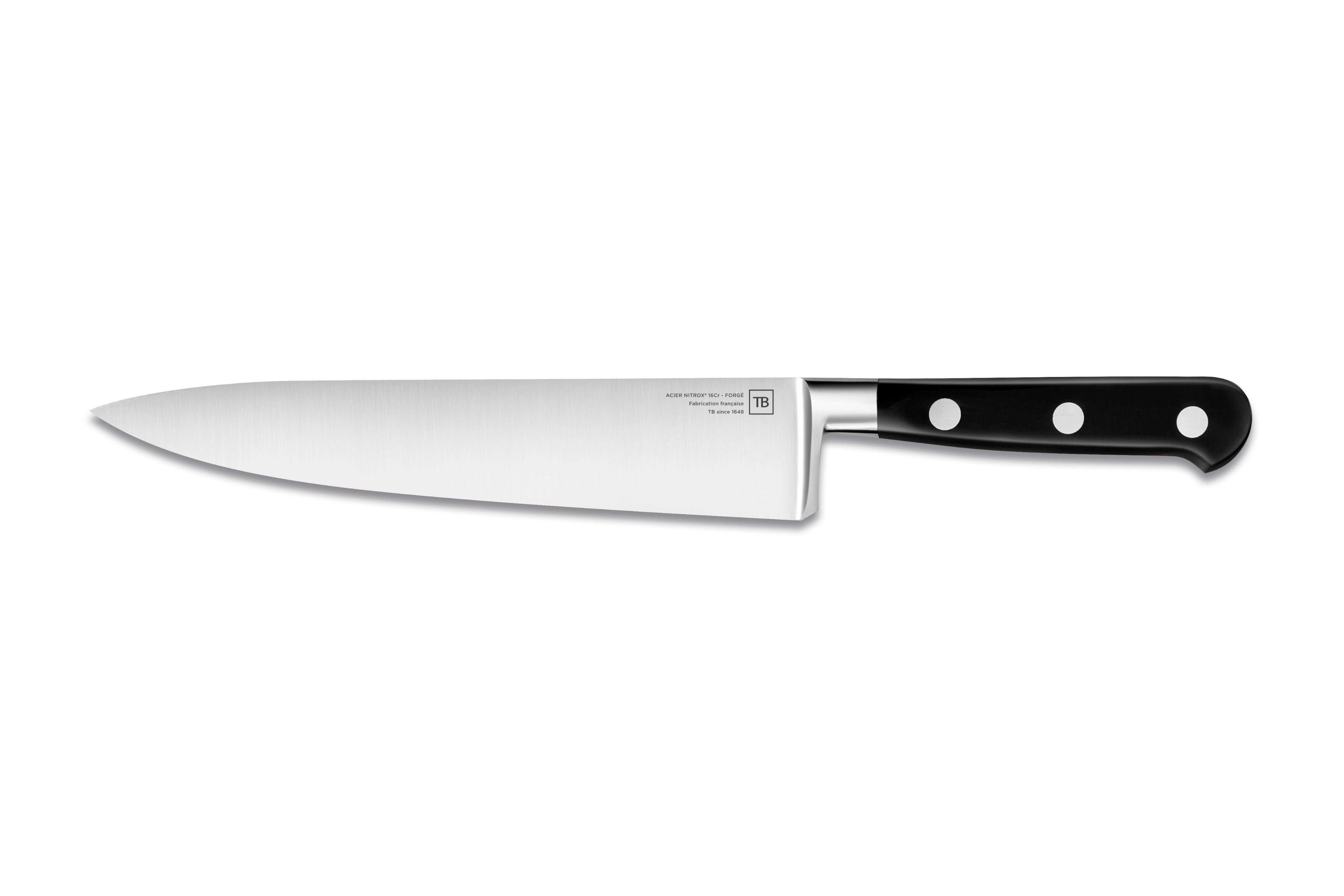
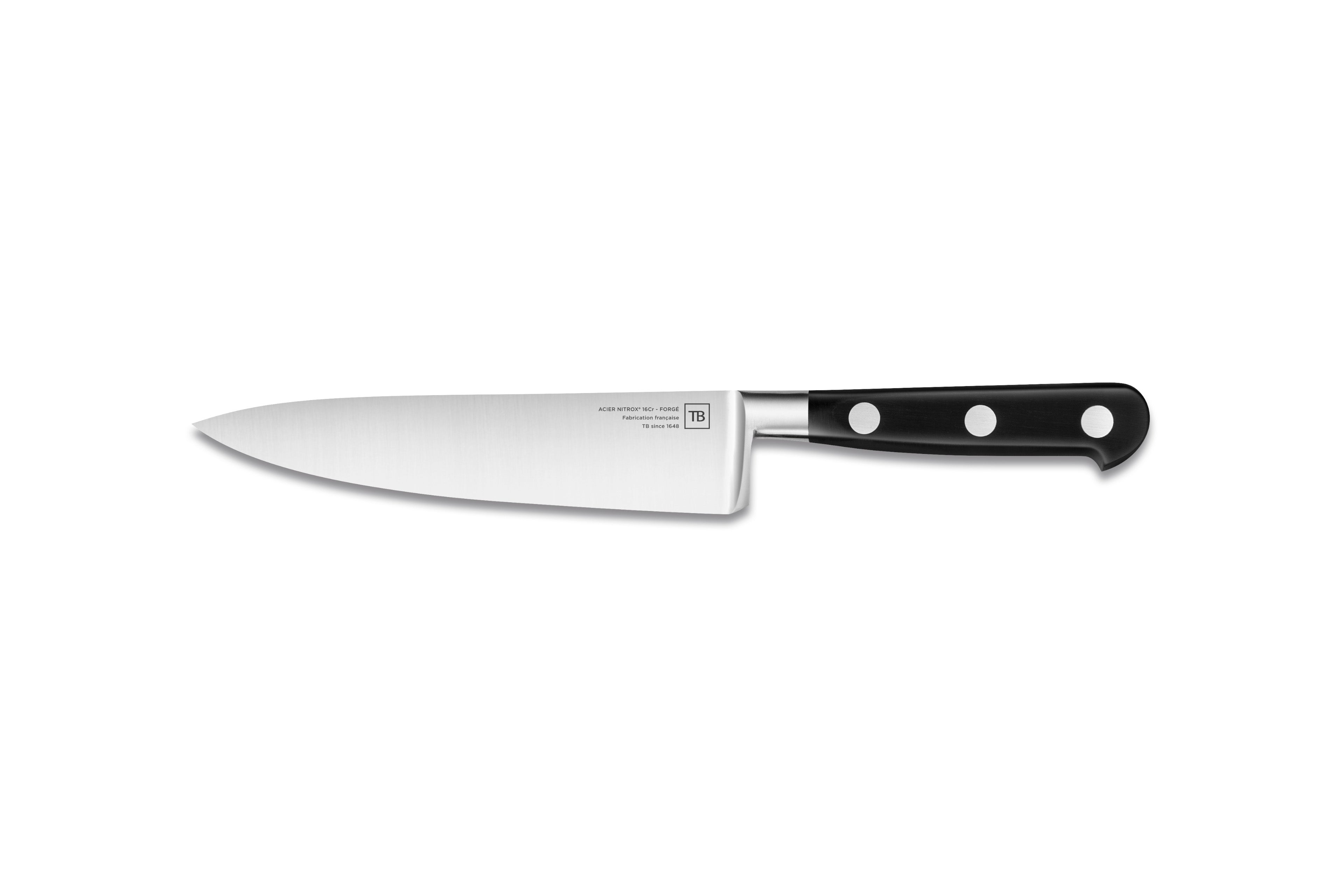
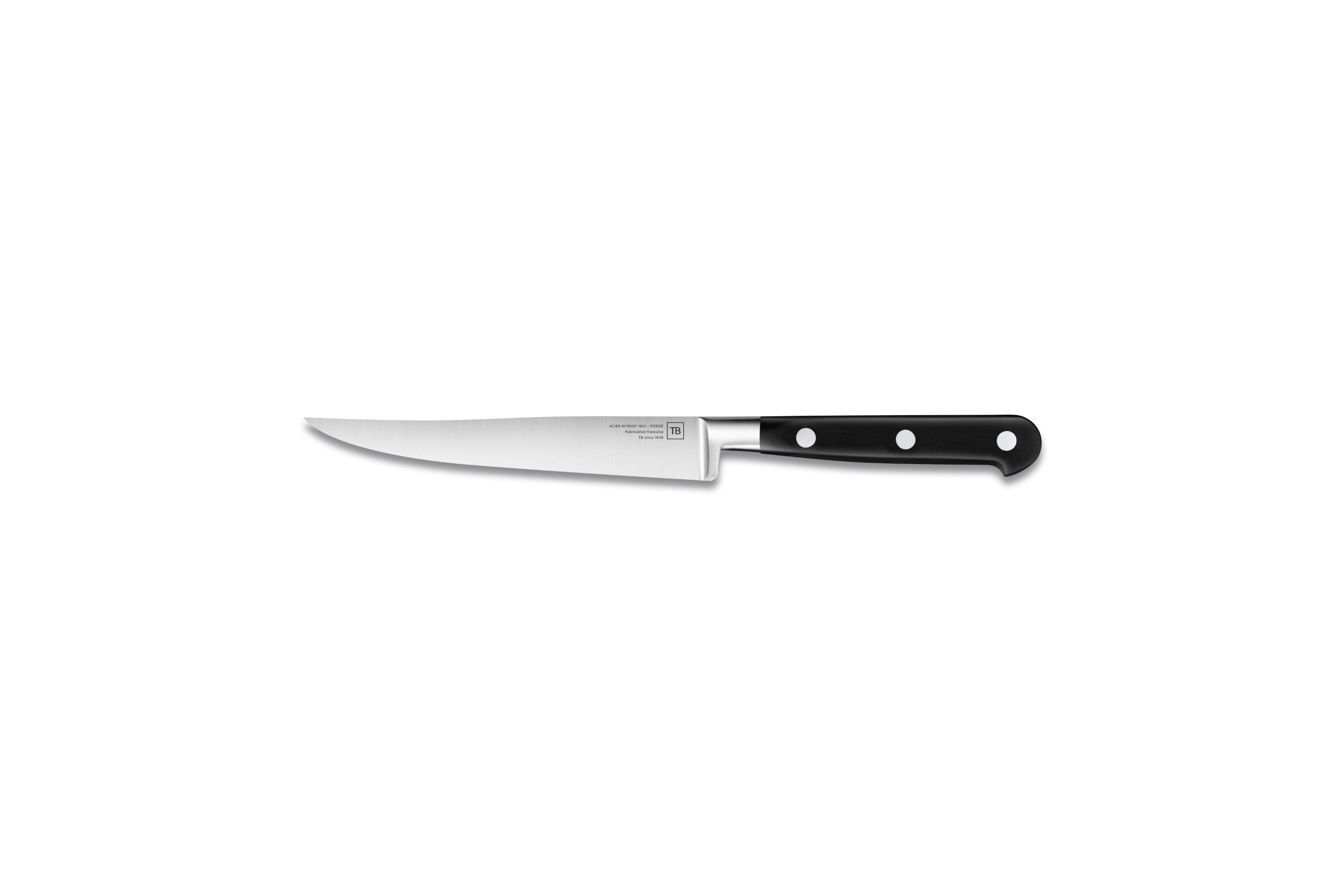
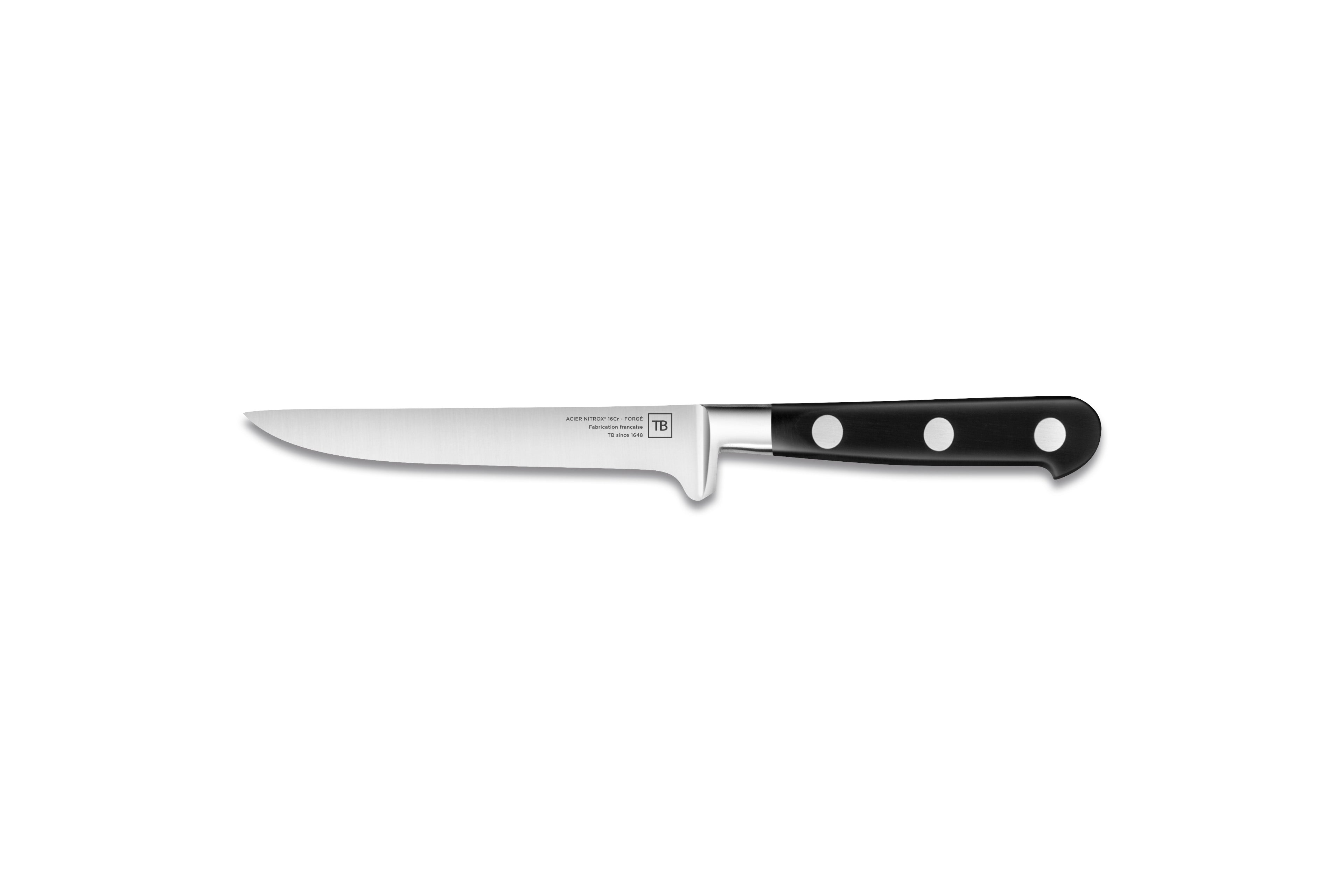
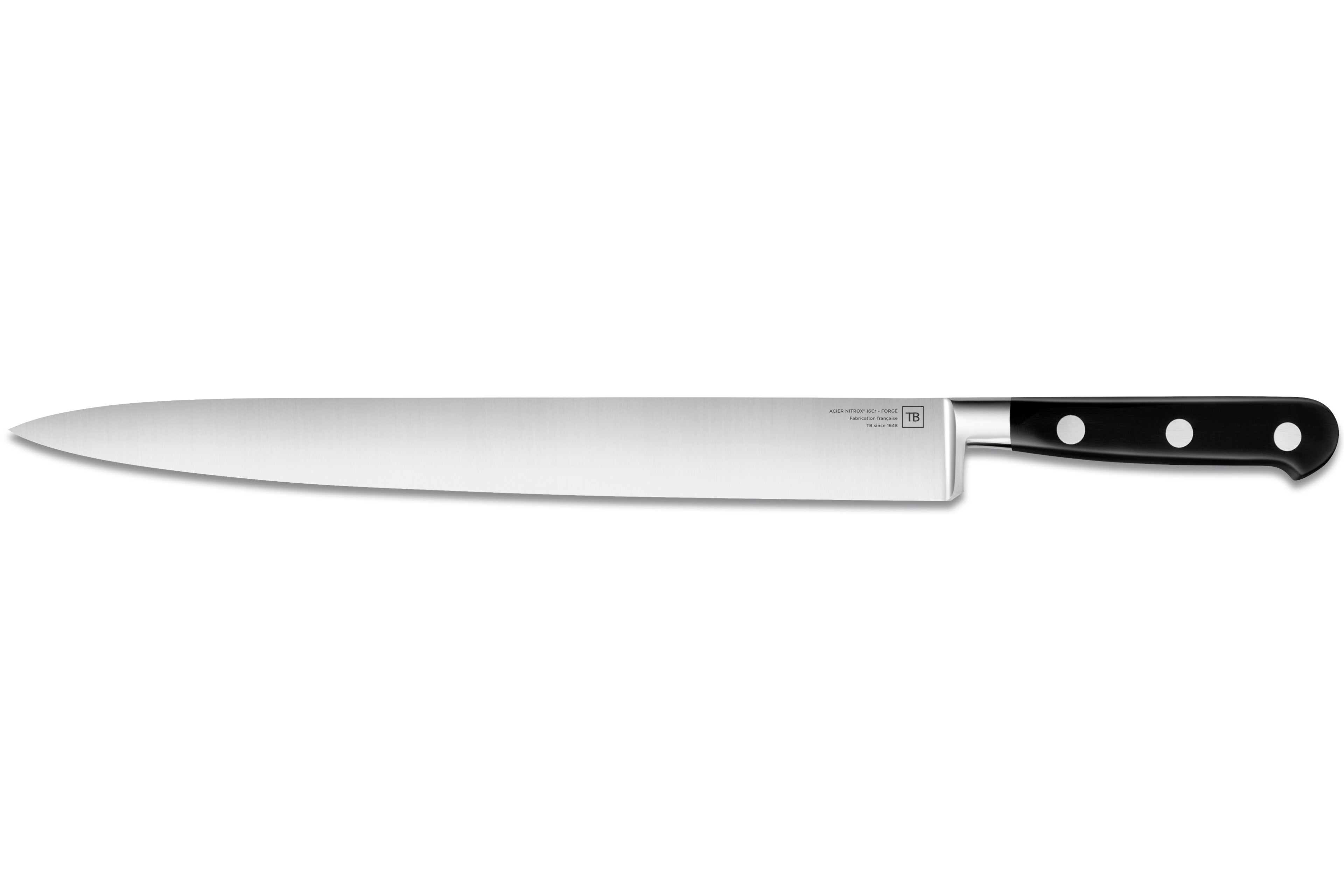
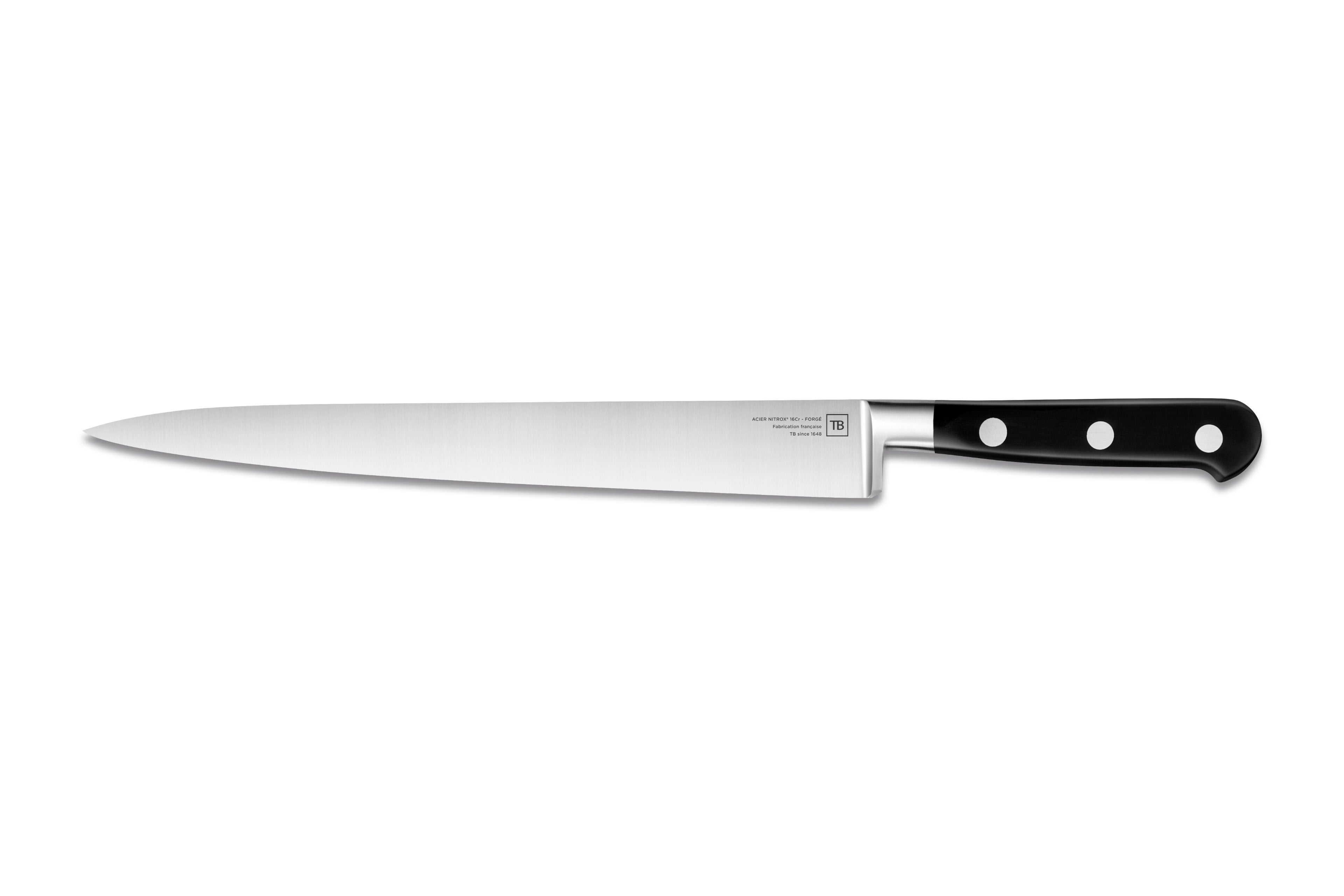
Maestro Collection: the French forged knife in its purest form
There are knives that cut, and there are those that inspire. The Maestro collection belongs to this second category. Born from the expertise of our master cutlers in Thiers, each piece is a promise: that of perfect balance, exceptional sharpness, and robustness that defies time.
Designed for passionate cooks and demanding professionals, the Maestro range of kitchen knives is more than just a set of tools; it's an extension of your hand and your creativity in the kitchen. A legacy of French cutlery tradition, crafted for the future.
What makes a Maestro knife exceptional
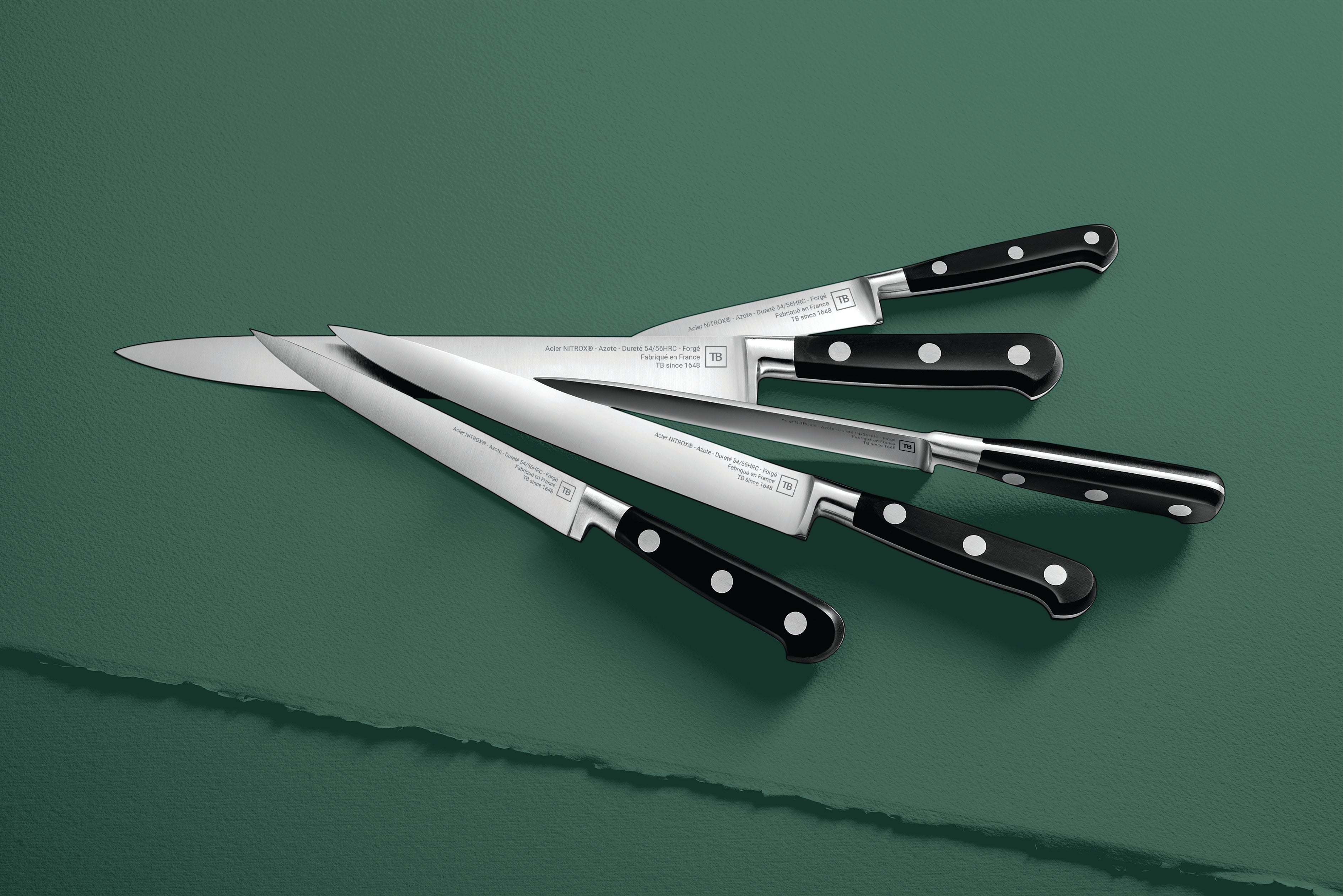
- 100% Forged: Each knife is forged from a single piece of steel for unmatched balance and strength.
- French Nitrox® Steel: A surgical-grade blade, offering a durable edge and high corrosion resistance.
- POM handle: Perfect ergonomics and impeccable hygiene thanks to this ultra-resistant material.
- Thiers know-how: The guarantee of French manufacturing, in the cradle of cutlery.
- Lifetime guarantee: An investment for today and for future generations.
Why does a forged knife make all the difference in the kitchen?
The difference between a standard knife and a Maestro knife is noticeable even before the first cut. It's a matter of weight, balance, and density.
Forging is an age-old method where the knife (blade, bolster, and tang) is shaped while hot from a single bar of steel. This process gives the blade an extremely fine and strong molecular structure. This is the soul of the knife, providing its robustness and its ability to maintain a razor-sharp edge for a long time.
What materials were chosen for such performance?
The excellence of a knife lies in uncompromising choices. For the Maestro collection, we have selected materials renowned for their performance and durability.
For the blade: French Nitrox® steel, a perfect balance
The blade is the heart of the knife. We use Nitrox® stainless steel, which is nitrogen-enriched. This alloy offers the best compromise between:
- Hardness (54-56 HRC): Hard enough for the edge to last a very long time, but flexible enough to be easily sharpened.
- Corrosion resistance: Your knife remains pristine, even with daily use.
- Cutting precision: The structure of the steel allows for a wire of surgical precision.
For the handle: POM, the ultimate in robustness
The handle is made of POM (polyoxymethylene), a high-density polymer used in professional applications. It is attached to the blade with three stainless steel rivets. Its advantages are clear: it is virtually indestructible, resistant to water, impacts, and detergents, ensuring perfect hygiene and a comfortable, secure grip.
Each use has its own Maestro knife: which one to choose?
The Maestro collection has been designed to cover all the essential tasks in the kitchen. Here's a guide to help you choose the one(s) for you.
| Knife type | Blade description | Ideal for... |
|---|---|---|
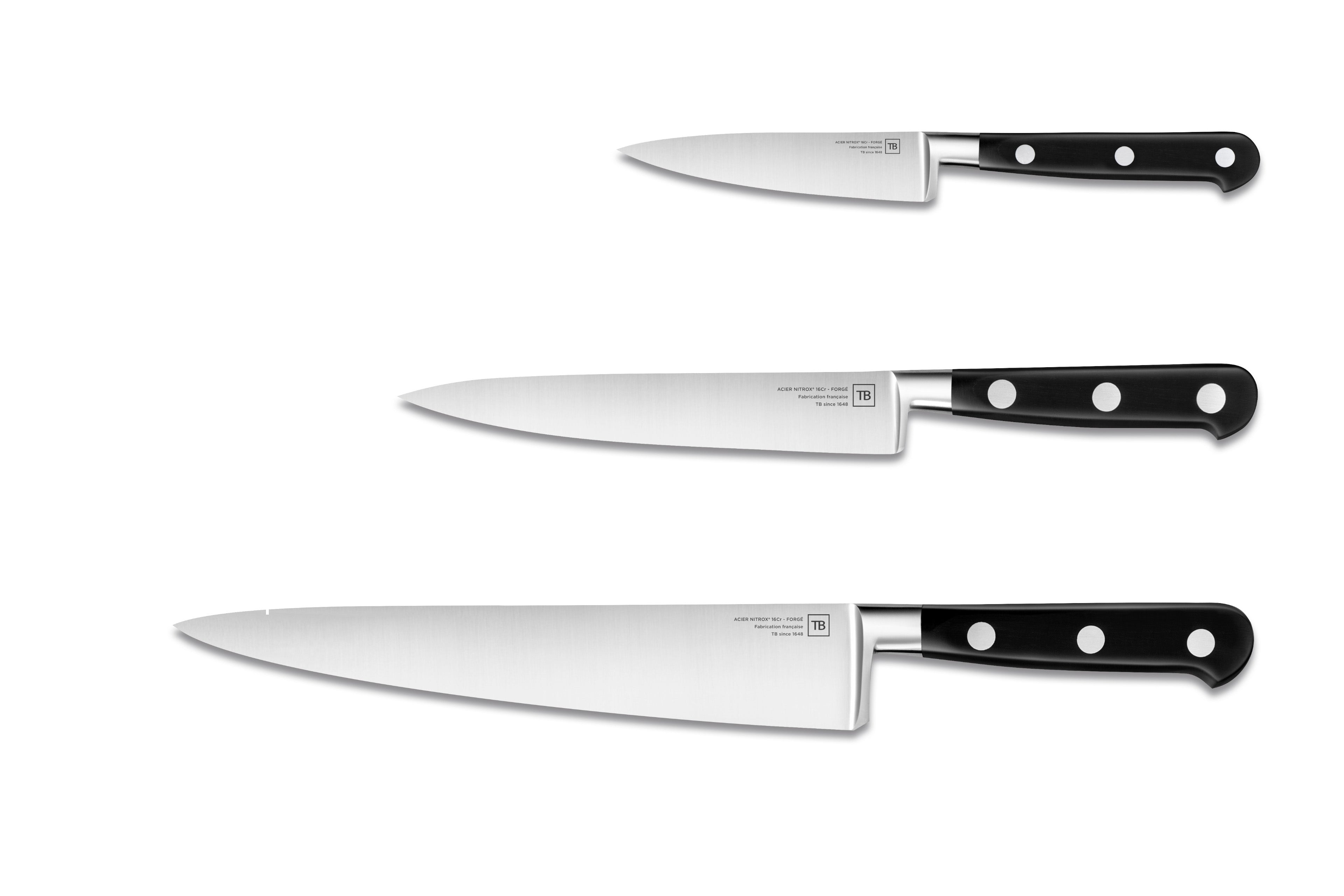
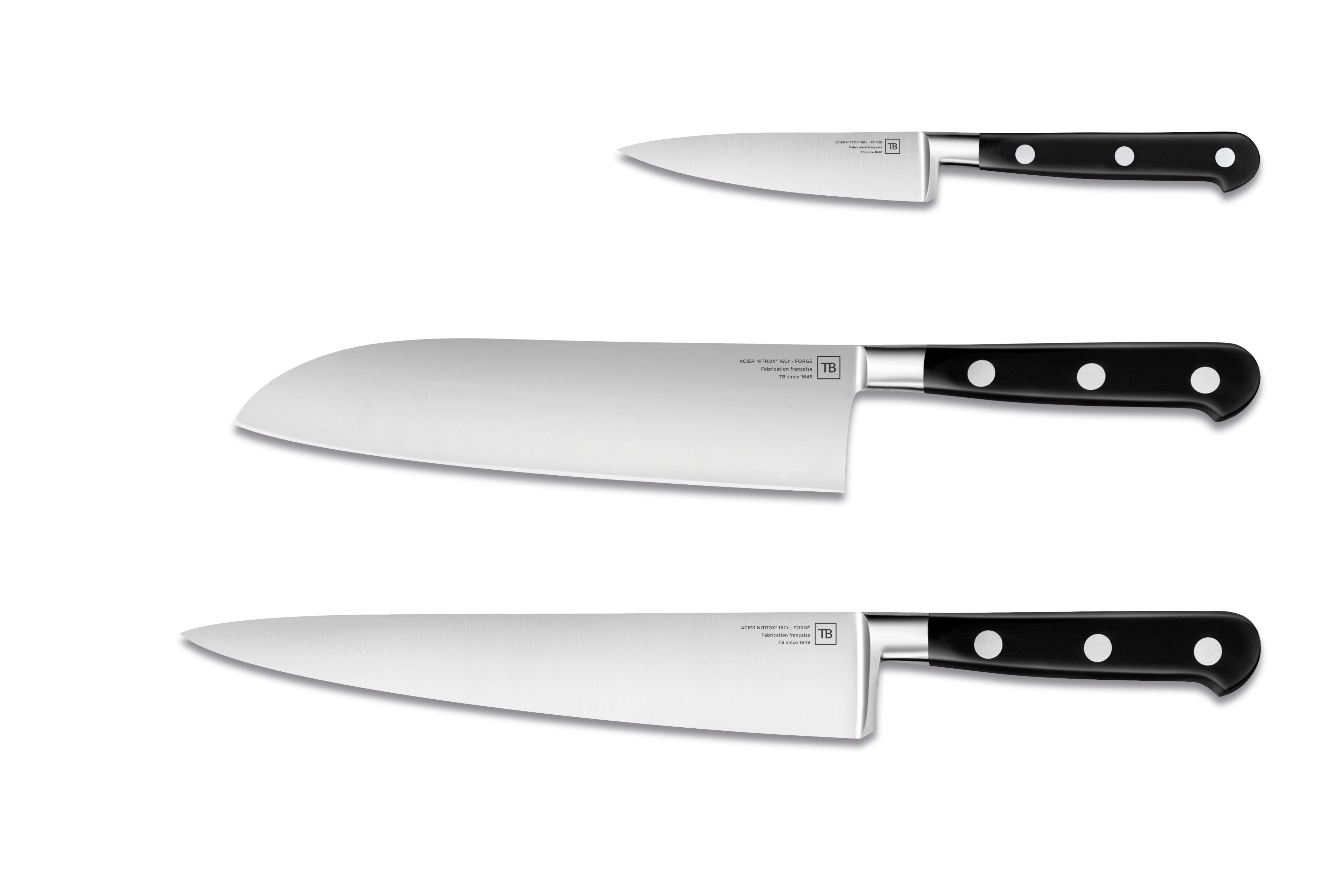
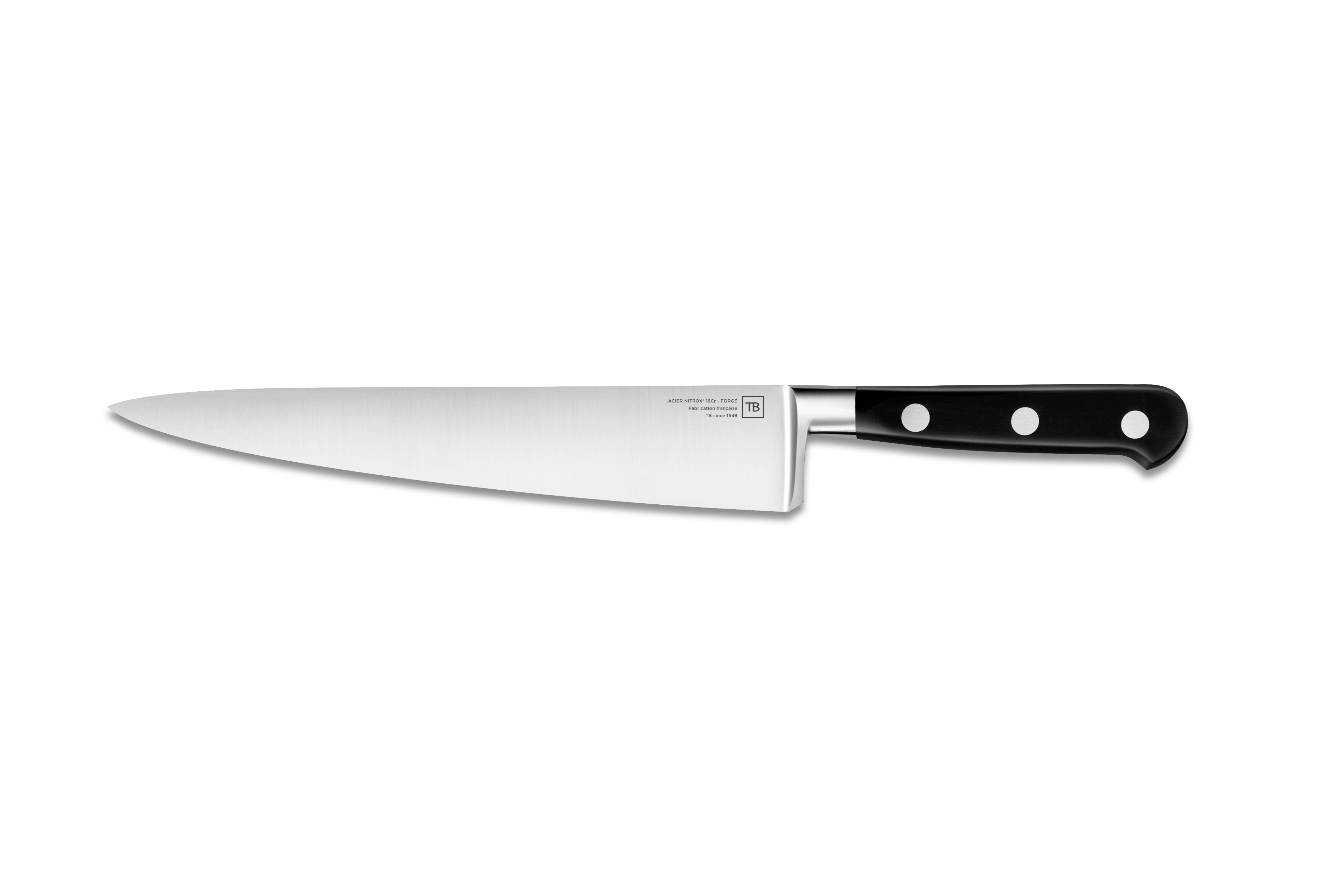
| Chef's Knife | Large, rigid and versatile | Chop herbs, slice vegetables, cut meat. The all-purpose knife. |
| Santoku knife | Shorter, wider, and often honeycomb-like | The fine and precise cuts of vegetables or fish. The indentations create air pockets so that food does not stick. |
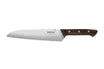
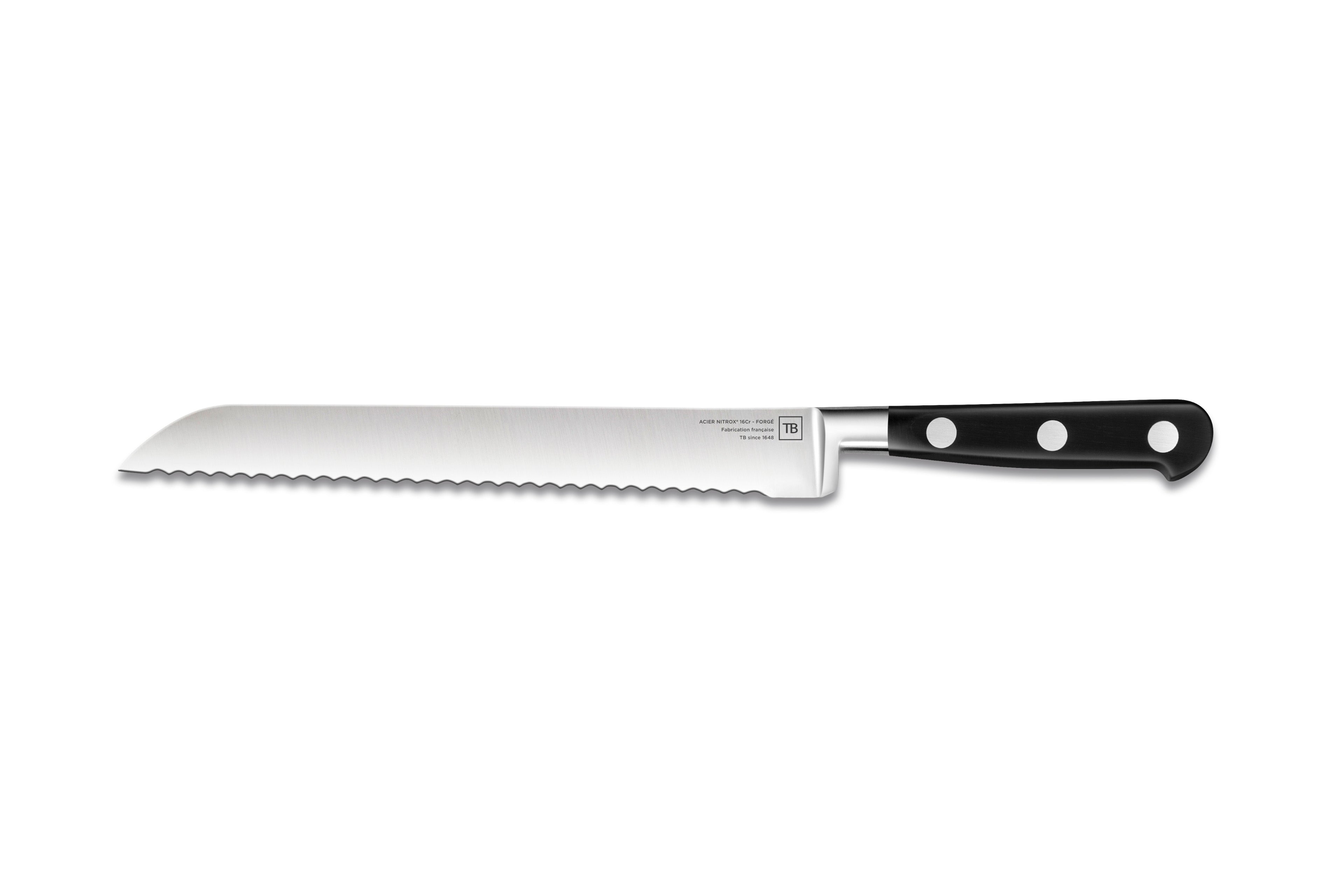
| Bread Knife | Long and toothy | Slice all breads (even hard-crusted ones) and pastries without crushing them. |
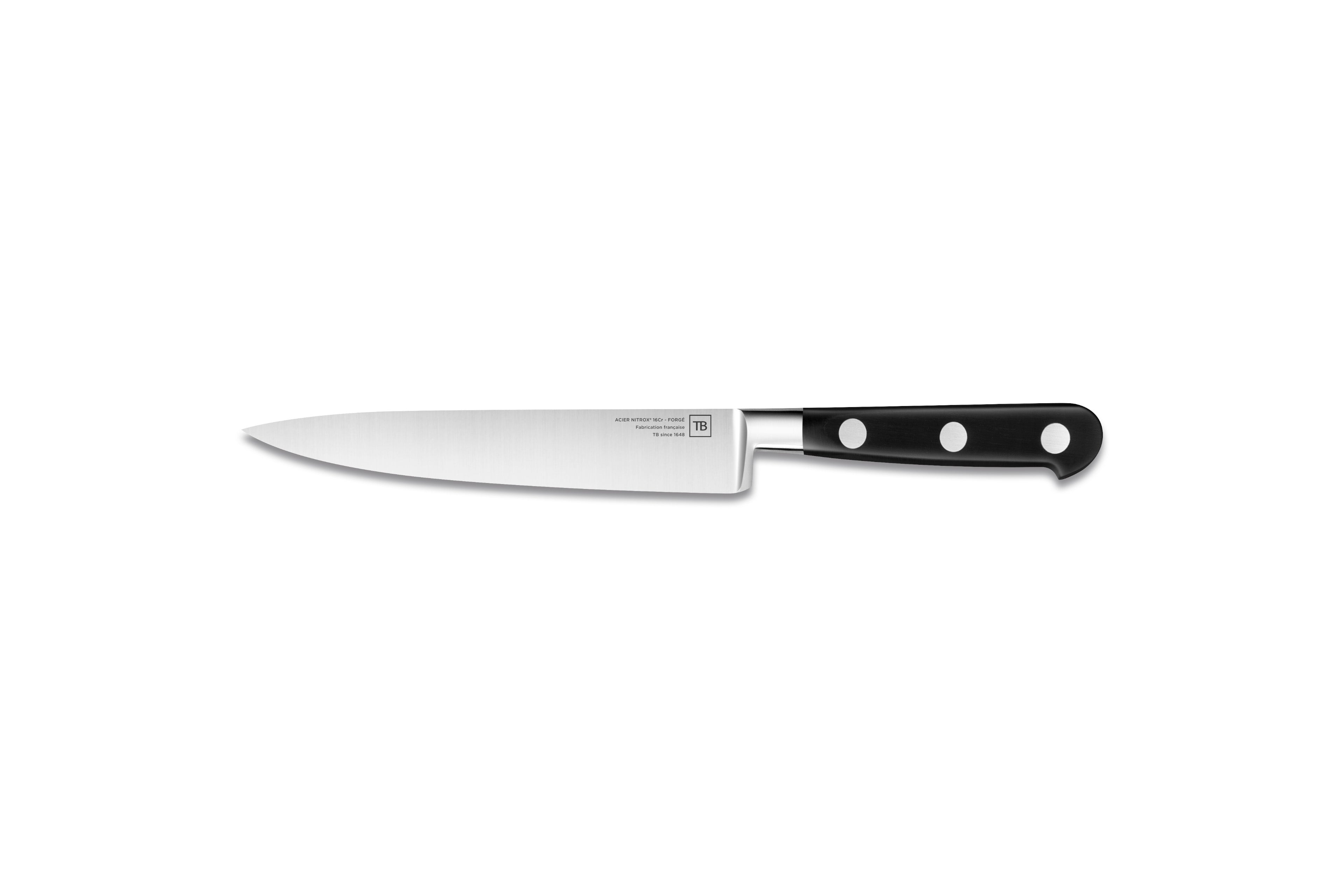
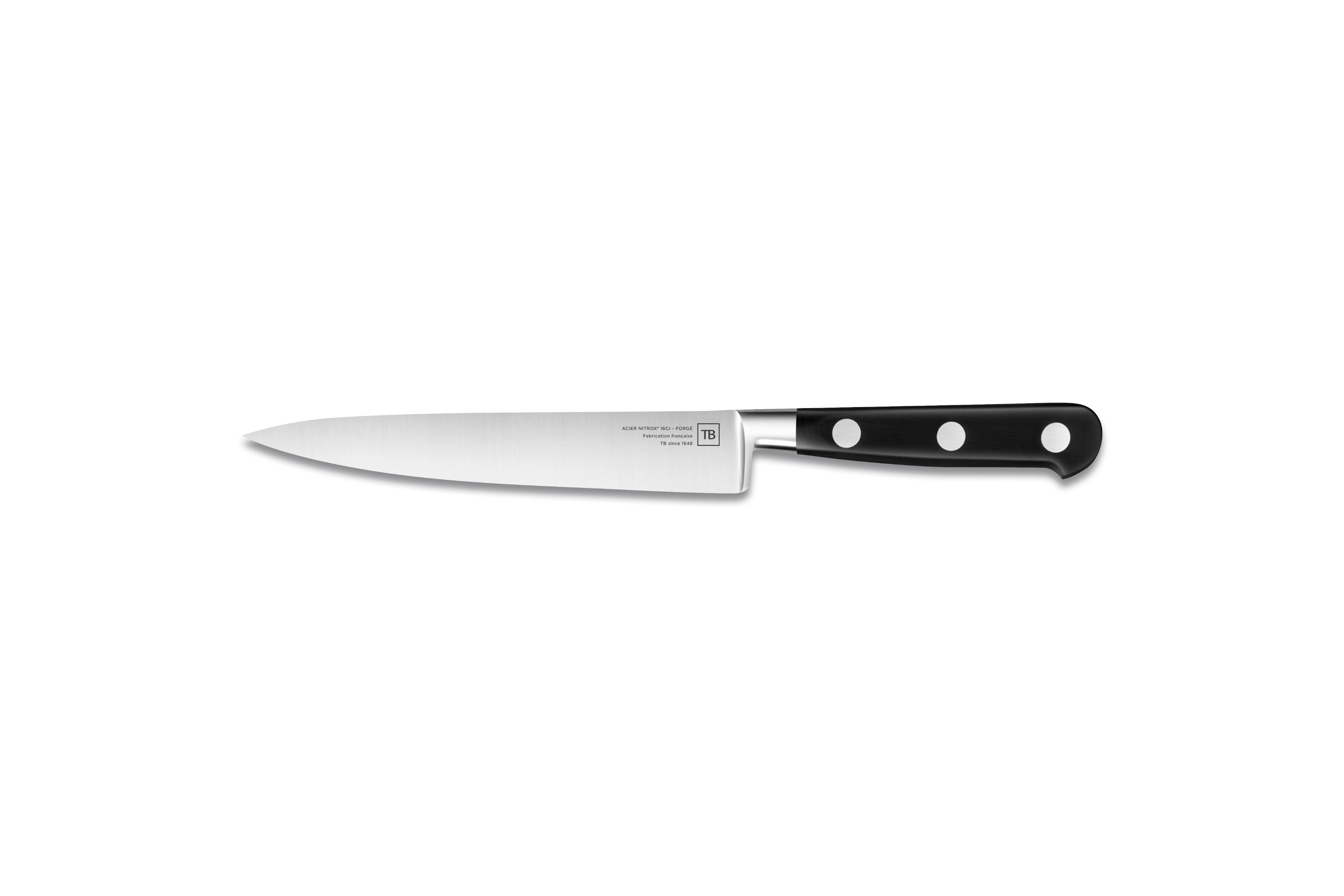
| Sole Fillet Knife | Long, thin and very flexible | Filleting fish with extreme precision or making thin slices of salmon. |
How do you care for your Maestro knives so they last a lifetime?
An exceptional knife is an heirloom. With a few simple steps, you can preserve its qualities for decades.
Washing: by hand, always
The golden rule: always opt for hand washing with a soft sponge, followed by immediate drying with a cloth. Why? Dishwashers are too harsh: the detergents attack the blade's edge, and impacts with other cutlery can damage it.
Sharpening: a regular practice
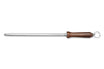
To maintain a razor-sharp edge, a simple pass over a sharpening steel before each use is all it takes. This quick action straightens the blade's edge. A deeper sharpening with a whetstone can be considered once or twice a year.
Storage: safety first
Never leave your knives loose in a drawer. To protect the blade (and your fingers), use a wooden block, a magnetic wall bar, or keep them in their original sheath.
Your questions, our answers about the Maestro collection
What is the real difference between a chef's knife and a Santoku knife?
The chef's knife has a rather rounded blade that allows for a natural rocking motion, ideal for chopping. The Santoku knife has a straighter edge and is often lighter, favoring a vertical cutting motion, perfect for very thin slices. It's often a matter of personal preference.
Is the "100% forged" label really that important?
Yes, it's the main guarantee of quality and robustness. Unlike so-called "cut" knives where the blade is simply cut from a sheet of metal, a forged knife has a bolster (the thick part between the blade and the handle) which ensures perfect balance and much greater strength.
Is it difficult to sharpen Nitrox® steel?
No, quite the opposite. That's the advantage of this steel: it holds its edge well. It's also easy to maintain with a honing steel or a sharpening stone. You don't need to be a professional to keep a perfect edge.