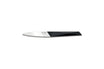
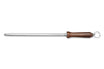

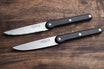

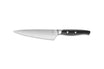
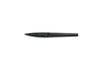
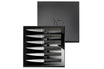
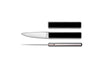
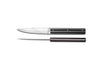

An indispensable part of any kitchen, the paring knife is the ultimate tool for surgical precision. At TB-1648, we see this small module as a natural extension of the cook's hand, whether they are a passionate amateur or a Michelin-starred professional. This comprehensive guide aims to help you choose this daily ally, exploring the nuances between our emblematic collections such as Thau, Georges or the innovative Evercut®. We detail here the technical criteria, from HRC hardness to handle ergonomics, so that every action in the kitchen becomes a demonstration of mastery. Precision is the key word for this tool, whose small blade, ranging from 7 to 11 cm, allows for the most meticulous daily tasks.
Key points for choosing your paring knife
- Maneuverability: A short blade for total control and meticulous work.
- Precision: The ideal tool for peeling, hulling, incising, and sculpting fruits and vegetables.
- Materials: Choice between traditional forged steel, Evercut technology, or technical ceramic.
- Maintenance: Manual washing is essential and immediate drying to preserve the edge and materials.
What is a paring knife used for?
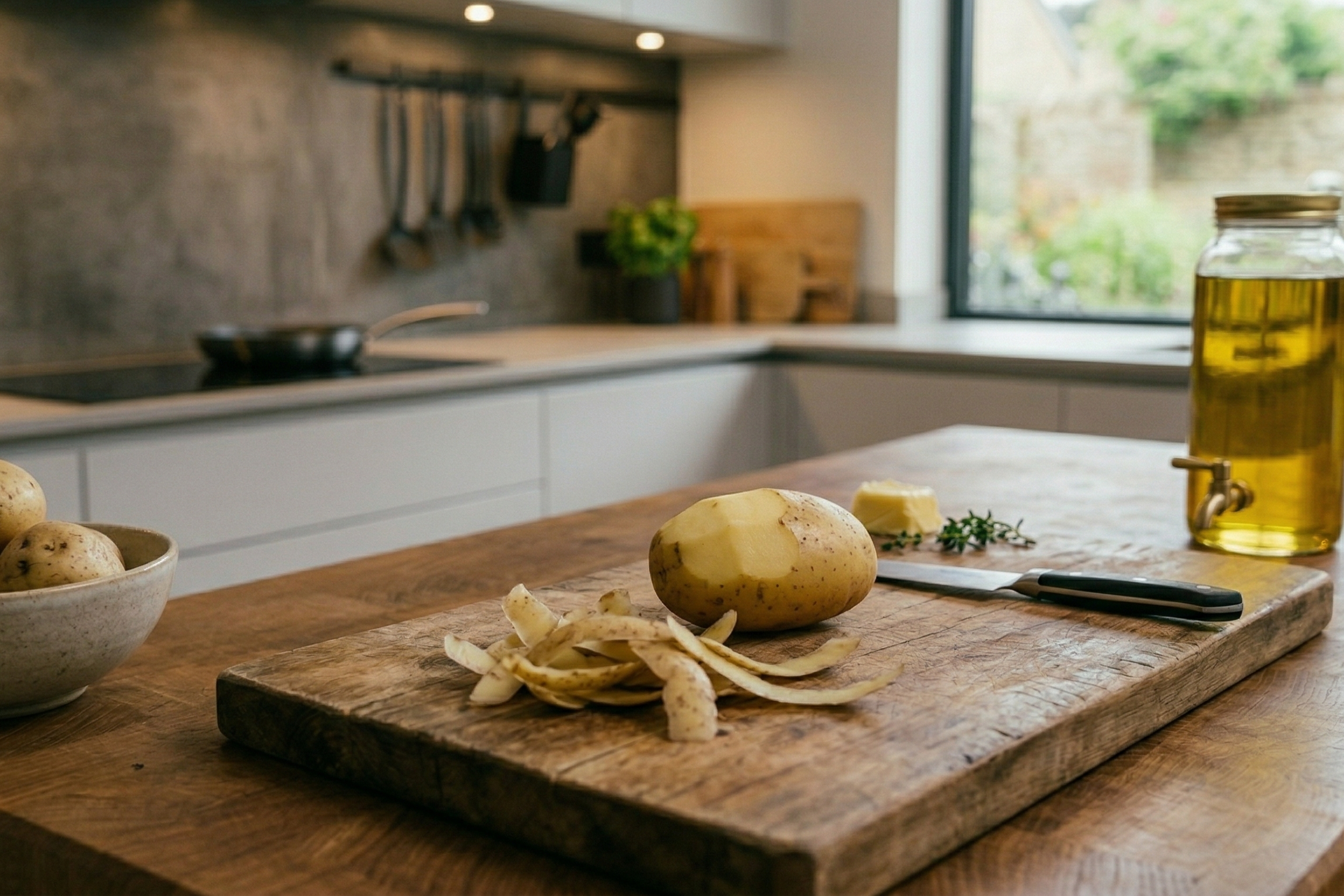
The paring knife is the smallest of kitchen knives, but its importance is inversely proportional to its size. Its blade, generally between 7 and 11 cm, offers a maneuverability that a chef's knife cannot match for intricate work. It is the tool you instinctively reach for to remove an eye from a potato, peel an apple in the air, or delicately score the skin of a tomato before blanching it. It is specifically designed to offer precision above all else, making it the cook's inseparable companion for peeling and sculpting.
Beyond peeling, it excels in preparing aromatics. Slicing garlic, degerming a shallot, or removing the veins from a chili pepper requires a fine tip and a responsive blade. At TB-1648, we forge our blades so that they retain sufficient rigidity to cut through dense vegetables while maintaining an exemplary cutting fineness. Its small size also allows for "in-hand" use, without a cutting board, for quick and precise movements, making this model essential for everyday versatility.
Why choose this specific model?
- Exceptional maneuverability thanks to a perfectly balanced small size.
- Surgical precision for all meticulous tasks in the kitchen.
- Ideal for peeling, hulling, coring, and sculpting with ease.
- Durable edge allowing for effortless, clean cuts.
Essential criteria
To choose the instrument that will accompany you for years, you need to understand the anatomy of a knife. Cutting performance does not depend solely on the initial sharpening, but on the synergy between the blade geometry, the quality of the alloy, and the ergonomics of the handle. The development of the history of blade shape and forging techniques is essential to appreciate the value of a quality paring knife.
Blade size
The standard length is generally between 7 and 11 cm. A short blade promotes a short lever movement, ideal for "turning" vegetables. The choice of size depends directly on the size of your hand and your grip habit. A small blade ensures that the center of gravity remains close to the palm, thus increasing the sense of control during incision or peeling.
Type of steel
At TB-1648, we use different types of steel depending on the intended use. Stainless steel rich in chromium offers perfect corrosion resistance. HRC hardness is a key indicator of edge retention: the higher it is, the longer the knife stays sharp. For example, our forged models aim for a balance between hardness and ease of re-sharpening, while the Evercut range offers state-of-the-art hardness for extreme longevity.
| Model | Blade Length | Steel Type | HRC Hardness | Handle Material |
|---|---|---|---|---|
| Georges Collection | 9 cm | Forged Steel | 56-58 HRC | Beech wood / POM |
| Evercut Furtif | 9 cm | Titanium Fusion Steel | > 90 HRC | ABS Soft Touch |
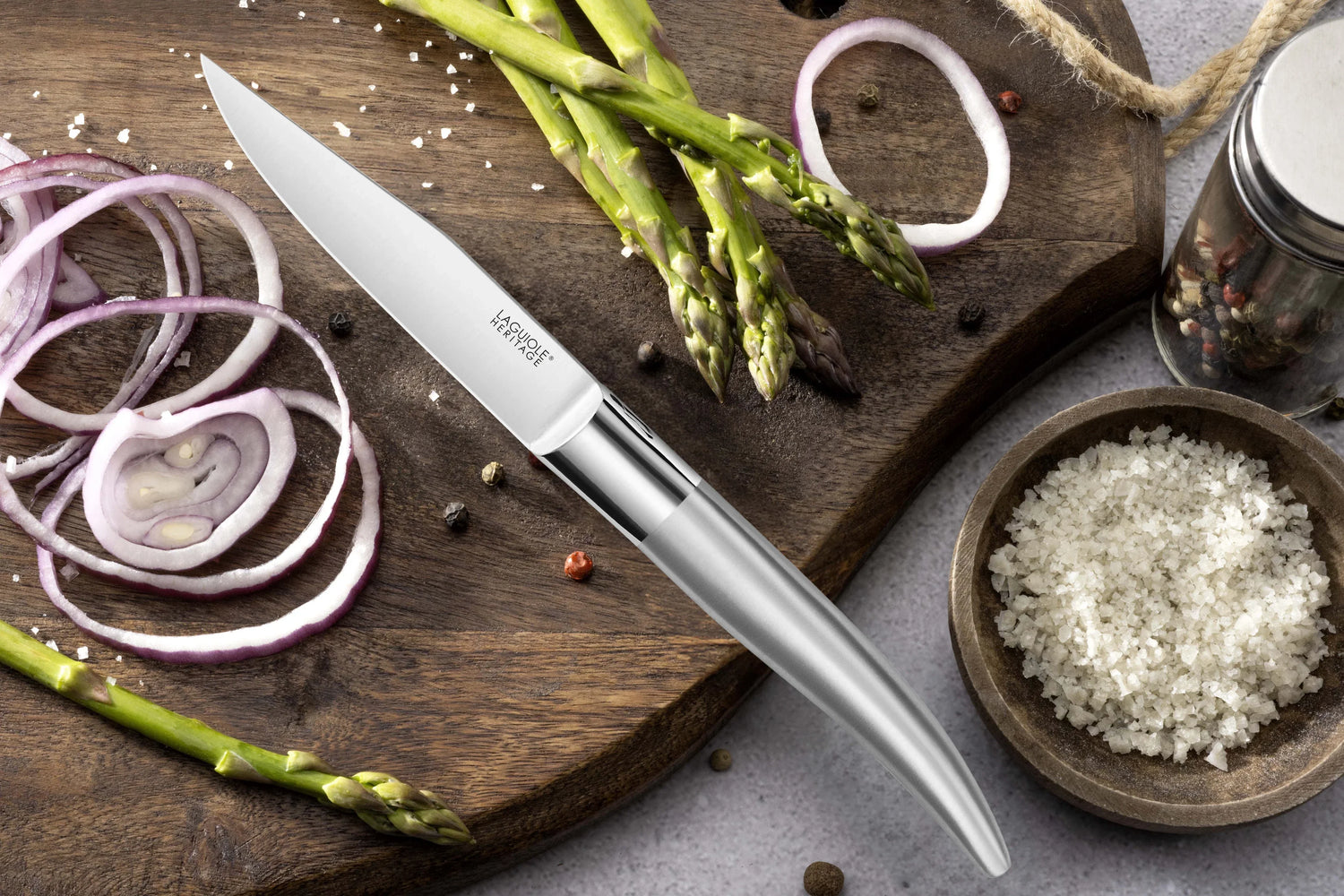
| Thau n°1 | 9 cm | High Quality Stainless Steel | 58 HRC | Ergonomic Stainless Steel |
| Métalis | 8 cm | White Ceramic | N/A | Ergonomic |
Handle
The ergonomics of the handle are paramount for a paring knife. Since it is often used in hand, it must fit the shape of the palm without creating pressure points. Whether made of wood for warmth, POM for professional robustness, or polymer for design, the handle must ensure perfect balance with the blade. The bolster and tang play a crucial role in weight distribution and the structural solidity of the tool.
In the kitchen: What to cut with this knife?
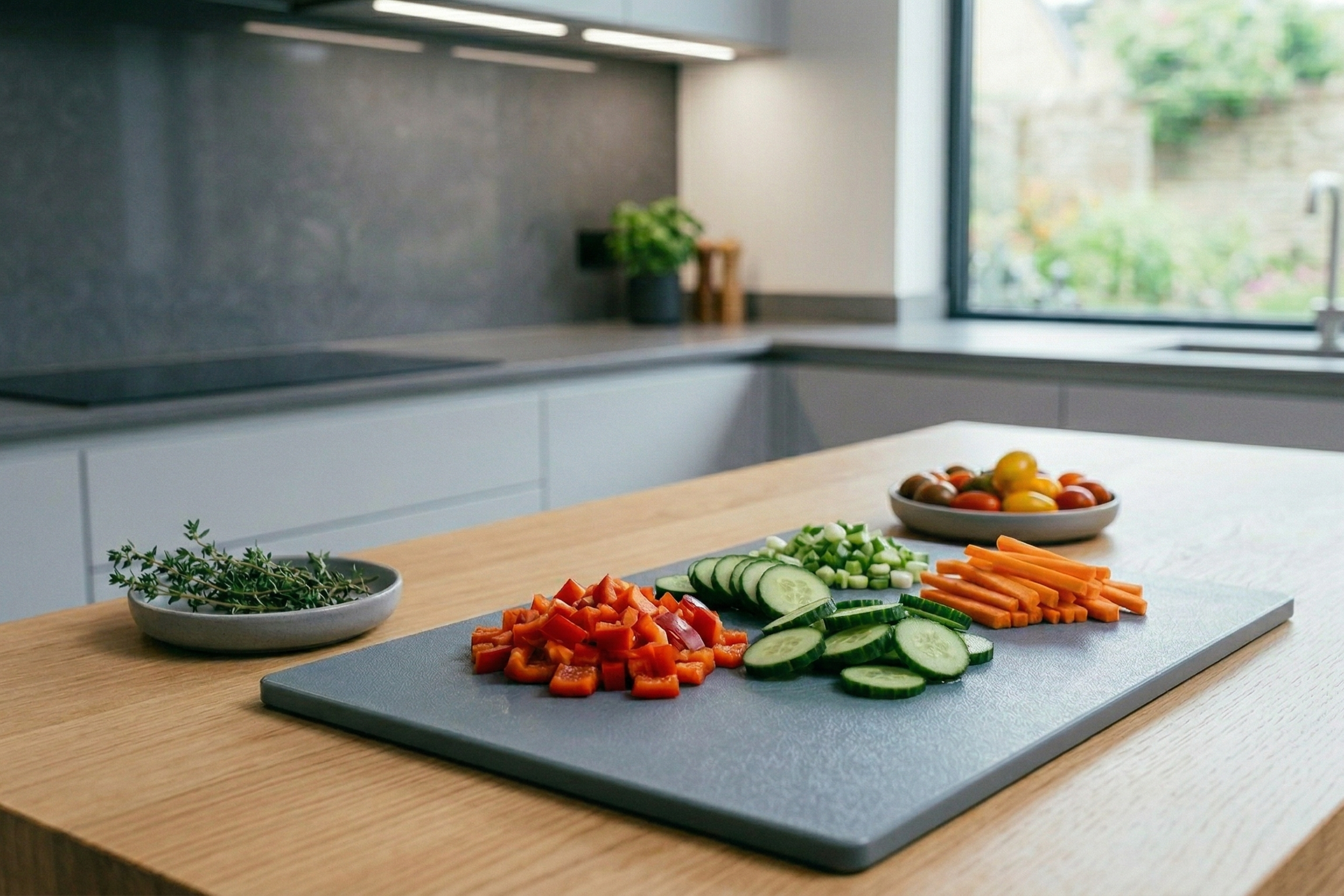
The paring knife is the king of the workbench for all vegetable preparations. Its ability to get into nooks and crannies and follow the curves of fruits makes it chefs' favorite tool for mise en place. It allows for a clean cut that preserves the visual aspect of food and limits its oxidation.
Ideal foods for the paring knife
- Fruits to peel: Apples, pears, peaches, kiwis.
- Small vegetables to prepare: Radishes, garlic, shallots, mushrooms.
- Precision tasks: Hulling strawberries or deveining meats.
- Carving: Creating decorations on citrus fruits or turned vegetables.
Our recommendations based on your profile
The traditionalist: For those who cherish the French art of living, the Georges collection with its wooden handle is a must-have. It embodies perfect balance and ancestral Thiers craftsmanship.
The innovator: The Evercut Furtif model suits those looking for performance without the frequent maintenance of sharpening. It is a design piece that redefines longevity in the kitchen.
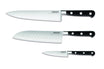
The minimalist: The set of 3 Easy paring knives is perfect for daily use without frills, offering formidable efficiency for all quick peeling tasks.
| Blade Type | Maintenance Frequency | Recommended Method | Sharpening Angle |
|---|---|---|---|
| Standard Steel | Regular (monthly) | Whetstone or honing steel | 15 - 20 degrees |
| Professional Forged Steel | Before each use | Quality honing steel | 15 degrees |
| Ceramic Blade | Rare | Professional service | Factory specific |
| Evercut | Exceptional | TB sharpening service | N/A |
How to care for your paring knife?
For a TB-1648 paring knife to last a lifetime, maintenance is the determining factor. Good steel reacts to its environment, and a few simple steps guarantee the longevity of its edge and aesthetics.
Cleaning and care instructions
- Hand washing is mandatory: dishwashers prematurely alter the edge and handles.
- Immediate drying with a soft cloth to prevent oxidation or limescale stains.
- Separate storage (block or magnetic strip) to prevent blades from knocking against each other.
- Regular sharpening to maintain an effortless and safe cut.
Usage precautions and safety
- Never cut bones or frozen foods with a thin paring knife blade.
- Avoid glass or marble cutting surfaces that destroy the edge.
- Do not use the knife as a lever or screwdriver, as this may break the tip.
- Always cut away from yourself and keep the fingers of your free hand curled.
Conclusion
Choosing a paring knife is a personal decision that impacts every moment spent in the kitchen. At TB-1648, we put our heart into designing tools that combine ergonomics, aesthetics, and technical performance. Whether you opt for the precision of the Thau model or the robustness of the Louis range, you are choosing a trusted partner. A quality paring knife doesn't just cut; it enhances your technique and respects the raw ingredients you work with.