
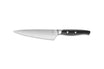
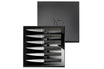
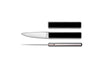
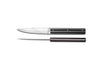
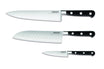
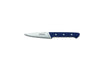
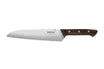

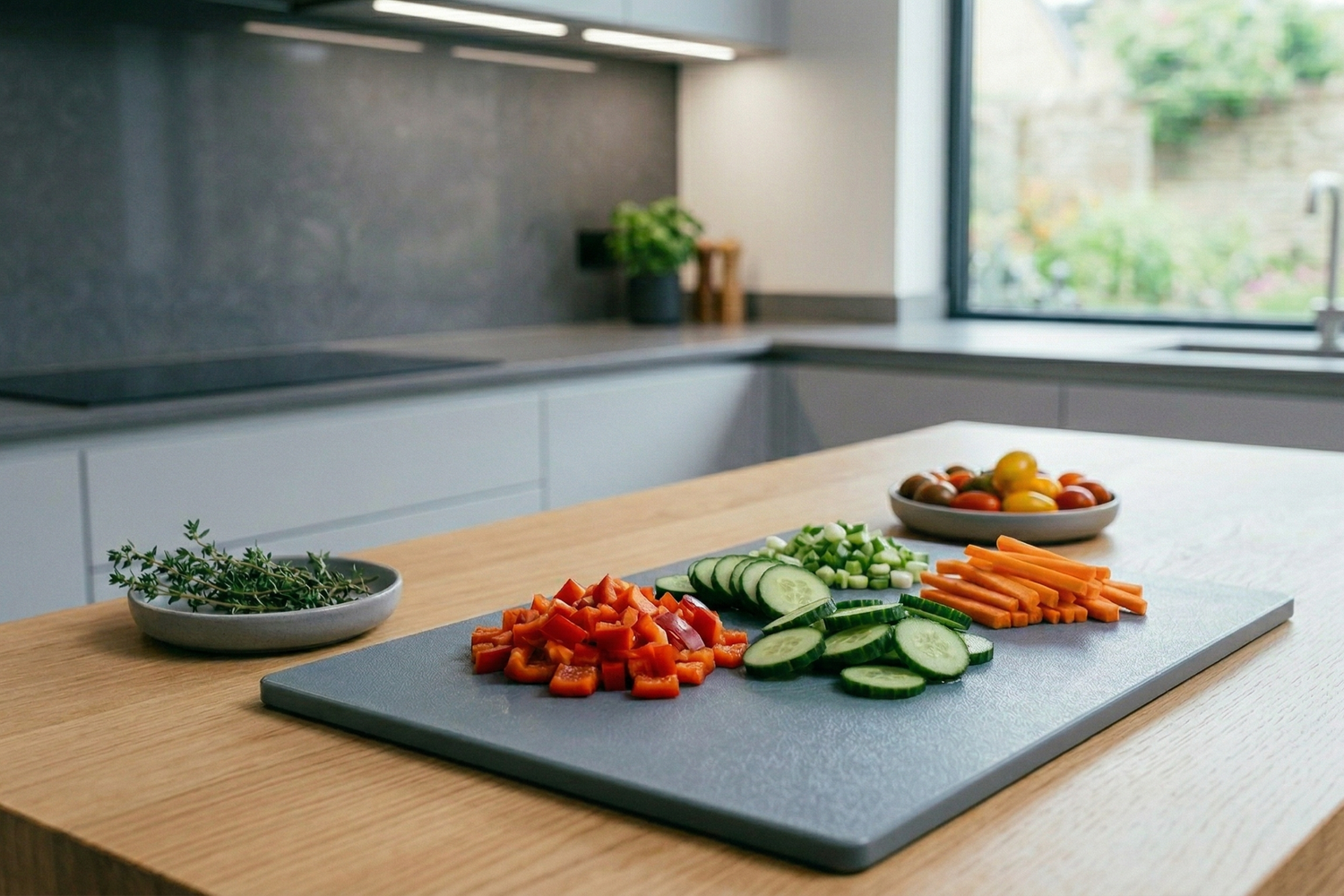
Welcome to the world of precision cutting. At TB-1648, we forge excellence in Thiers to transform every culinary gesture into a moment of pure pleasure. Choosing the right tool for preparing vegetables is not a minor detail, but a matter of technical mastery. Whether you're preparing a fine brunoise of carrots or slicing a robust pumpkin, the geometry of the blade and the quality of the steel determine the sharpness of the cut and the preservation of flavors. This comprehensive guide explores the specifics of the Santoku knife, the versatility of the chef's knife, and the agility of the paring knife. We're here to help you equip your kitchen with durable Thiers craftsmanship.
The Essentials for Vegetable Cutting
- The Santoku is the vegetable expert thanks to its hollow-ground blade and perfect balance.
- The Chef's Knife offers maximum versatility for large volumes of vegetables.
- The Paring Knife ensures surgical precision for peeling and sculpting.
- Maintenance with a whetstone guarantees the longevity of your TB-1648 edge.
What are the different cutting techniques?
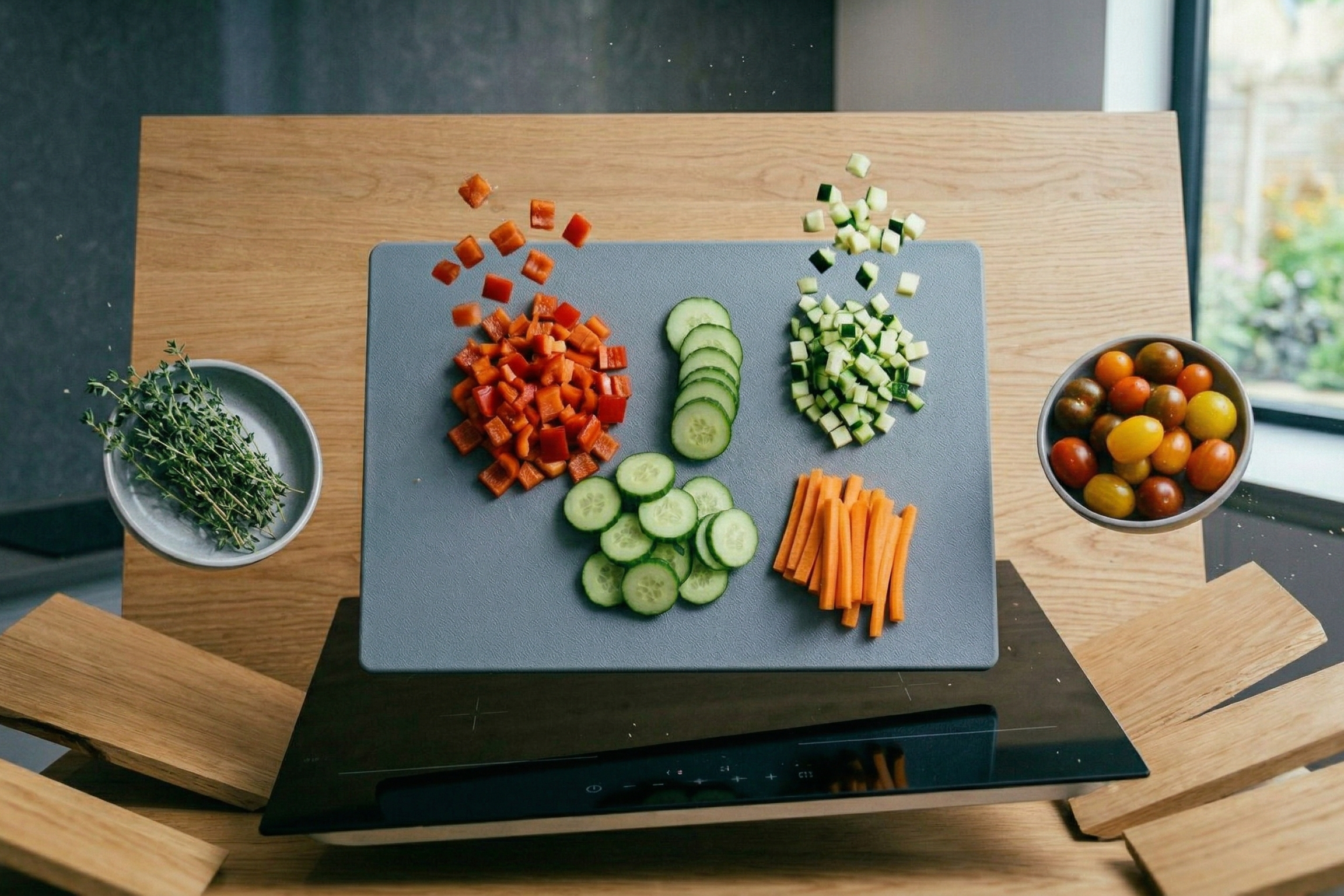
Cutting vegetables is an art that demands rigor. Before choosing your tool, it's essential to understand the movements you'll be making. Classic French cuisine, much like Japanese gastronomy, relies on precise codes. Brunoise involves cutting tiny 2 mm cubes. For a macédoine, we go up to 4 mm. These tasks require a thin blade and impeccable edge geometry.
Julienne cutting requires very thin sticks, while ciselage (mincing) applies particularly to shallots and onions. For these operations, the hand movement differs. Some prefer the rocking motion characteristic of European knives, others the clean vertical cut favored with Japanese blades. At TB-1648, we design ergonomic handles that reduce muscle fatigue, regardless of the adopted style.
The density of the food must also be considered. A tomato requires a razor-sharp edge to avoid crushing the flesh, while a celeriac needs a rigid blade capable of splitting a fibrous structure without deflecting. The steel's ability to penetrate material without excessive resistance is what defines a professional knife. Our blacksmiths work on progressive grinds to optimize this penetration factor.
| Cutting Technique | Type of Movement | Ideal Knife | Difficulty |
|---|---|---|---|
| Brunoise / Julienne | Precision / Linear | Santoku or Chef | High |
| Peeling / Turning | Manual / Close to body | Paring | Medium |
| Mincing (herbs/onions) | Rocking | Chef (Gyuto) | Medium |
| Slicing large vegetables | Vertical pressure | Robust Chef | Low |
What are the best knives for vegetables?
Investing in a quality knife is a promise of durability. In our factory, we select stainless alloys to ensure optimal Rockwell hardness (HRC). A good vegetable knife must remain sharp for a long time despite repeated contact with the cutting board, often made of wood or dense polymer.
Why choose the Santoku?
The Santoku, whose name means "three virtues," is the favorite tool of vegetable enthusiasts. Its blade, typically between 16 and 18 cm, is flatter than that of a chef's knife. This shape favors an up-and-down cutting motion, extremely effective for quickly mincing vegetables.
One of the major advantages of our TB-1648 models is the presence of indentations on the blade. These small depressions create air pockets between the steel and the food. The result: slices of potato or cucumber do not stick to the side. This saves considerable time and effort during large preparations. The balance of a Santoku is often located at the bolster, offering a sensation of lightness and exceptional maneuverability.
What are the advantages of the Chef's knife?
Also known as Gyuto, the chef's knife is the centerpiece of any kitchen brigade. With a blade ranging from 20 to 25 cm, it asserts its power. Its characteristic curvature allows for the rocking technique: the tip remains in contact with the board while the heel of the blade descends to slice.
It is the ideal choice for chopping fresh herbs in a bunch or for tackling voluminous vegetables such as cabbage, squash, or watermelon. Its robustness allows it to pass through dense flesh without risk of blade torsion. At TB-1648, we pay particular attention to the tang (the part of the blade that extends into the handle) to guarantee unwavering solidity during heavy-duty tasks.
What is the use of the Paring knife?
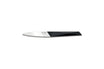
Don't be fooled by its small size (7 to 11 cm). The paring knife is a direct extension of your hand. It intervenes where large knives become cumbersome. It is the tool of meticulousness. For hulling strawberries, removing potato eyes, or peeling thin-skinned fruits, it is irreplaceable.
Its short blade allows for total control of the tip. It is often used "in the air," without support on a board. For aesthetic finishes, such as sculpting radishes or scoring citrus fruits, its lightness is its greatest asset. A coherent kitchen set always begins with an excellent forged paring knife.
- Precision: Ideal for delicate tasks and small cuts.
- Versatility: The chef's knife handles 80% of kitchen tasks.
- Specialization: The Santoku excels in rapid, non-stick slicing.
- Durability: Steels selected for prolonged edge retention.
- Ergonomics: Handles designed for a natural grip.
How to choose based on your cooking practice?
The final choice depends on your eating habits. If your diet primarily consists of salads, woks, and crisp vegetables, the Santoku will quickly become your best ally. Its compact design is particularly appreciated by those with limited counter space. Conversely, if you cook large quantities for a big family and process various products (meats, fish, vegetables), the chef's knife offers reassuring universality.
The anatomy of the blade also affects the feel. A wide blade allows you to scoop up cut food to transfer it directly into the pan, acting like a small shovel. This is a practical detail found on both Santoku and Chef knives. The quality of the handle is equally crucial. At TB-1648, we offer noble materials such as walnut wood or high-density composites for impeccable hygiene and a pleasant feel.
| Feature | Paring Knife | Santoku | Chef's Knife |
|---|---|---|---|
| Blade Length | 9 cm | 17 cm | 20 cm |
| Average Weight | 80g | 150g | 210g |
| Sharpening Angle | 15° per side | 15° per side | 20° per side |
| Main Use | Peeling, sculpting | Slicing, mincing | Chopping, versatility |
How to care for your vegetable knives?
The longevity of a TB-1648 knife depends on the care you give it. Even the best steel eventually dulls if mistreated. A vegetable knife must remain perfectly sharp: a dull edge forces you to exert more pressure, increasing the risk of slipping and injury. Moreover, a dull blade tears vegetable fibers instead of cutting them cleanly, which accelerates food oxidation.
- Fleshy tomatoes and firm-skinned peppers.
- Fresh herbs (basil, parsley, cilantro).
- Root vegetables (carrots, turnips, parsnips).
- Onions, shallots, and garlic cloves.
- Seasonal fruits for your desserts or salads.
Cleaning should be immediate and manual. Harsh dishwasher detergents and thermal shocks are enemies of steel and wooden handles. We recommend rinsing the blade under lukewarm water with a little mild soap, then immediately wiping it dry with a cloth. Never leave a knife soaking in a sink.
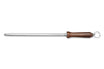
For sharpening, prefer a whetstone. It allows you to restore the edge with surgical precision without heating the steel. A butcher's steel is useful for daily maintenance (straightening the edge), but it does not replace periodic sharpening on a stone. Store your tools on a magnetic bar or in a wooden block to prevent the blades from clashing in a drawer.
- Hand wash required after each use.
- Immediate drying with a soft cloth from tip to heel.
- Protected storage to preserve sharpness.
- Regular sharpening on a fine-grit stone.
There are classic mistakes to absolutely avoid. Using a vegetable knife to cut bones or frozen products can cause irreparable chipping of the edge. Similarly, avoid glass or marble cutting boards, which are far too hard for steel and destroy the edge in a few passes.
- Never put in the dishwasher.
- Do not cut on hard surfaces (glass, steel, stone).
- Do not use as a lever or screwdriver.
- Do not store loosely in a drawer without protection.
Why trust the TB-1648 manufacturer?
Choosing a knife for cutting vegetables from TB-1648 means embracing a centuries-old history. Every blade that leaves our workshops in Thiers is the result of a fusion between technological modernity and ancestral gestures. We don't just create simple utensils, but lifelong companions. Whether you are a Michelin-starred chef or a passionate home cook, you deserve tools that respect your work and your ingredients.
In conclusion, the choice of the ideal knife depends on your affinity with the product. The Santoku for Japanese grace, the Chef for European power, and the Paring knife for artisan precision. Equip yourself with discernment and take care of your equipment: it will repay you at every meal, for decades.