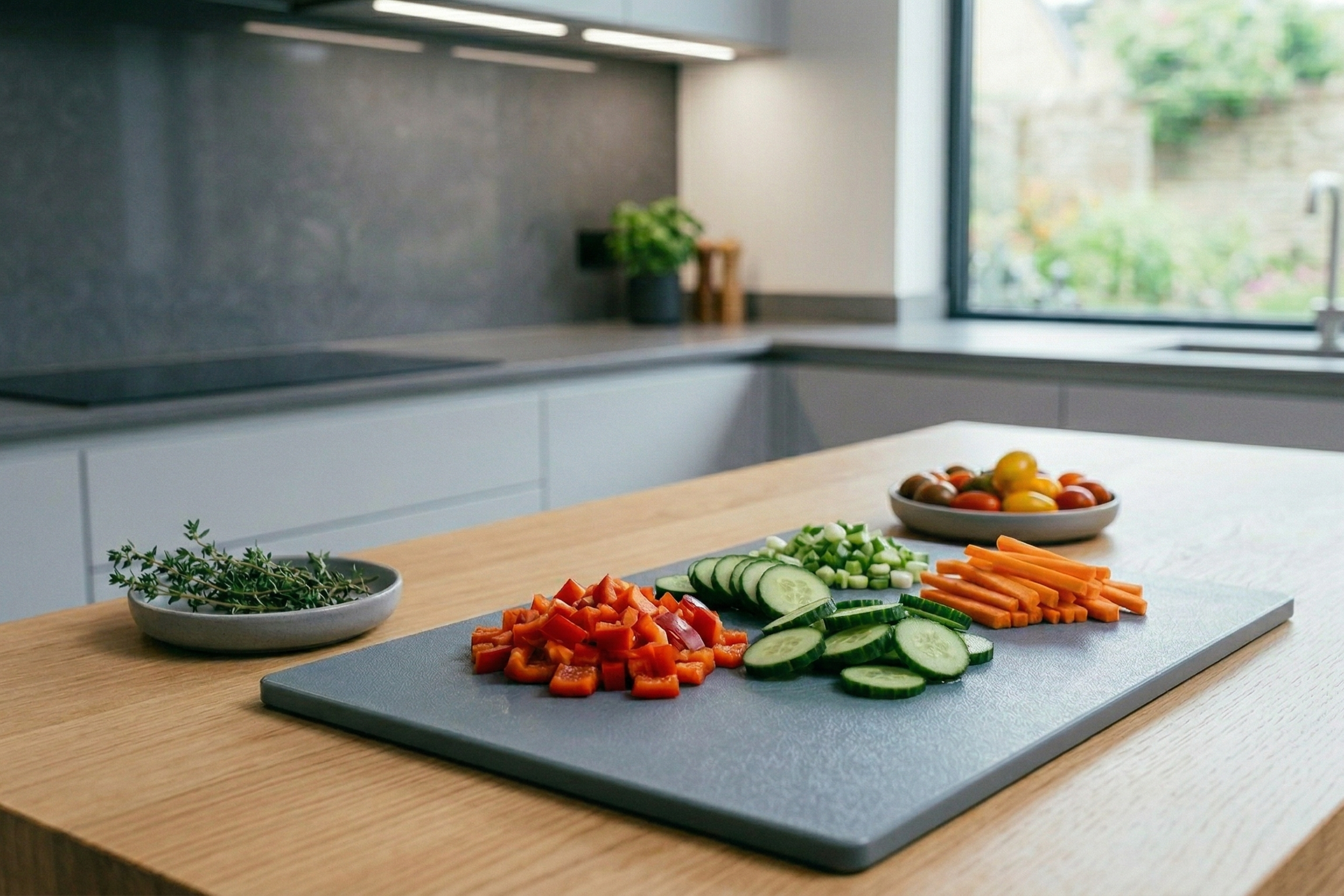


Entering the world of gastronomy invariably begins with choosing your first cutting tool. At TB-1648, we believe that a knife is not a simple accessory, but an extension of the chef's intent. For a beginner, the abundance of shapes, steels, and prices can be intimidating. Yet, the success of a recipe often relies on the precision of a cut or the neatness of a slice. Choosing a knife rooted in the cutlery tradition of Thiers ensures a solid technical foundation for progress. This guide aims to support you in acquiring your first tools, focusing on versatility and durability. Together, we will explore why a thoughtful investment in a quality blade radically transforms your daily kitchen experience, saving you from the frustrations of low-end tools that dull prematurely.
What are the classic mistakes beginners make when buying?
The most frequent mistake is buying cheap knife blocks containing a dozen blades, half of which will never be used. As a TB-1648 manufacturer, we always advise prioritizing quality over quantity. Poor quality steel will force the novice to apply pressure on the blade, which is the main cause of domestic kitchen accidents. Paradoxically, a knife that does not cut is far more dangerous than a razor-sharp blade.
Another common mistake is neglecting ergonomics in favor of aesthetics. An poorly balanced handle will fatigue the wrist after just a few minutes of work. Finally, many beginners ignore the importance of maintenance. Buying a piece of high-end cutlery only to run it through the dishwasher is a fatal mistake that destroys the blade's edge and alters the handle materials.
Here are the unique advantages of investing in a TB-1648 model right from the start:
- Perfect balance between the handle and the blade for effortless handling.
- Exceptional initial sharpness allowing you to learn the correct technical movements.
- Steel that offers great ease of sharpening for novices.
- Durability inherited from the craftsmanship of Thiers, guaranteeing a tool that can be passed down.
- Increased versatility allowing you to perform 90% of tasks with a single tool.
Why is the chef's knife the ideal single knife?
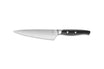
If you could only own one tool, it would undoubtedly be the chef's knife, also known as a Gyuto. With a blade generally ranging between 15 and 25 cm, it embodies absolute versatility. Its characteristic curved shape allows for a rocking motion on the cutting board, ideal for chopping herbs or dicing onions quickly and safely.
At TB-1648, we pay special attention to the robustness of this centerpiece. It must be able to tackle both cuts of meat and dense vegetables like pumpkins. Its blade width also protects your knuckles during cutting on a board, serving as a natural guide against your tucked fingers.
What are the 3 essentials to start your collection?
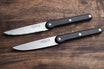
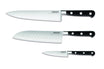
Once the chef's knife is mastered, two other blades complete the beginner cook's arsenal to cover all needs. The paring knife is its direct partner: where the chef's knife shines through power, the paring knife excels with surgical precision on small surfaces. Finally, the bread knife, with its serrated blade, is essential to avoid crushing hard crusts or ripe tomatoes.
A utility knife can also bridge the gap between these two worlds for those who find a chef's knife too imposing at first.
List of ideal foods to practice your skills with this trio:
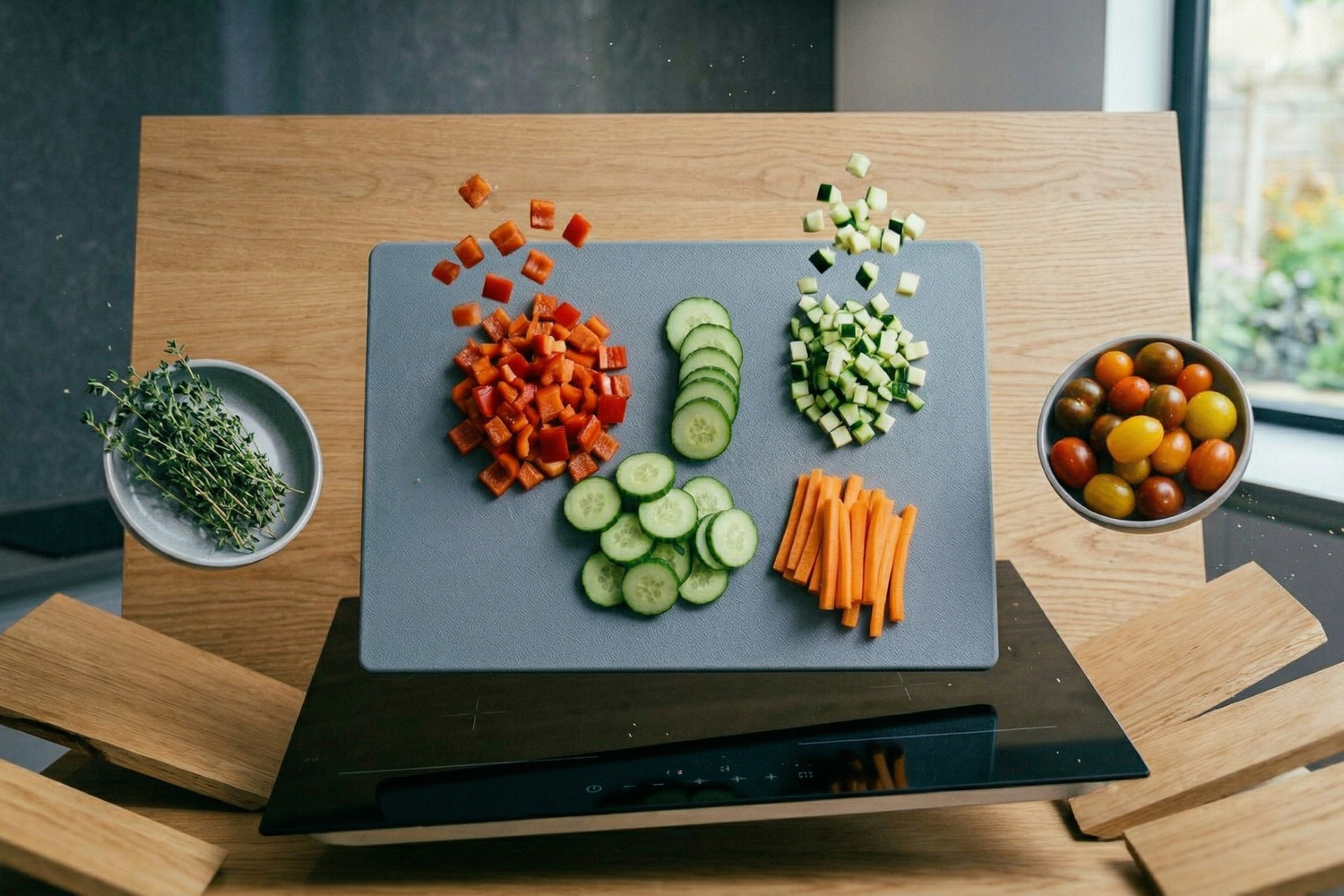
- Root vegetables (carrots, potatoes) to practice brunoise cuts with the chef's knife.
- Fresh herbs (parsley, basil) to master the rocking motion.
- Delicate fruits (strawberries, kiwis) for the precision of the paring knife.
- Poultry and roasts to test slicing capacity.
How to manage your budget without sacrificing quality?
The price of a TB-1648 knife reflects the time spent by our artisans and the quality of the materials used. For a beginner, it is better to buy one excellent chef's knife for €80 rather than a case of 10 knives for the same price. A quality tool from Thiers will stay by your side for thirty years, whereas an industrial product will need to be replaced every two years.
Consider the purchase of a knife as a long-term investment. The cost per use becomes negligible over the years. Furthermore, the ability of a TB-1648 blade to be resharpened many times ensures that your "sharpness" capital remains intact.
| Maintenance Tool | Usage | Frequency |
|---|---|---|
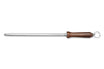
| Honing steel | Realign the blade's edge | Before each use |
| Whetstone (1000 Grit) | Standard sharpening | Every 3 to 6 months |
| Finishing strop | Polishing the edge | After sharpening on a stone |
How to maintain your knives so they last a lifetime?
The longevity of your first TB-1648 knife depends strictly on your post-preparation habits. Steel, even stainless, is sensitive to prolonged exposure to harsh elements. Respecting simple rules allows you to preserve the mechanical properties of the blade and the integrity of the handle.
Imperative cleaning instructions:
- Exclusive manual washing with warm soapy water.
- Immediate drying with a dry cloth, from the heel to the tip.
- Secure storage on a magnetic strip or in a blade protector.
- Occasional oiling of the blade if it is not used for a long time.
Usage precautions to protect your investment:
- Never cut on glass, marble, or ceramic surfaces.
- Do not use the knife to pry open things or open packaging.
- Avoid direct contact with bones or frozen products (risk of chipping).
- Never leave the knife sitting at the bottom of a sink filled with water.
Why does choosing a forged knife change the game?
For a beginner, the feeling of weight and stability is reassuring. A forged knife, crafted from a single piece of steel running from the tip to the tang, offers optimal force transmission. At TB-1648, we perpetuate this technical standard. The presence of a bolster (the thick part between the blade and the handle) acts as a shield for your fingers while perfectly balancing the tool. Learning with a balanced piece helps establish the right muscle memory right from the start.
Conclusion: The first step toward culinary excellence
Starting out in the kitchen with a TB-1648 knife is not a luxury, it is a pragmatic choice for anyone wishing to progress with pleasure and safety. By choosing the versatility of a chef's knife or the precision of a Thiers paring knife, you give yourself tools that will forgive your first hesitations and elevate your future successes. Remember that a good knife is a traveling companion: maintain it with care, and it will reward you with every cut. It is now time to step into the kitchen and let the steel of Thiers speak in your hands.