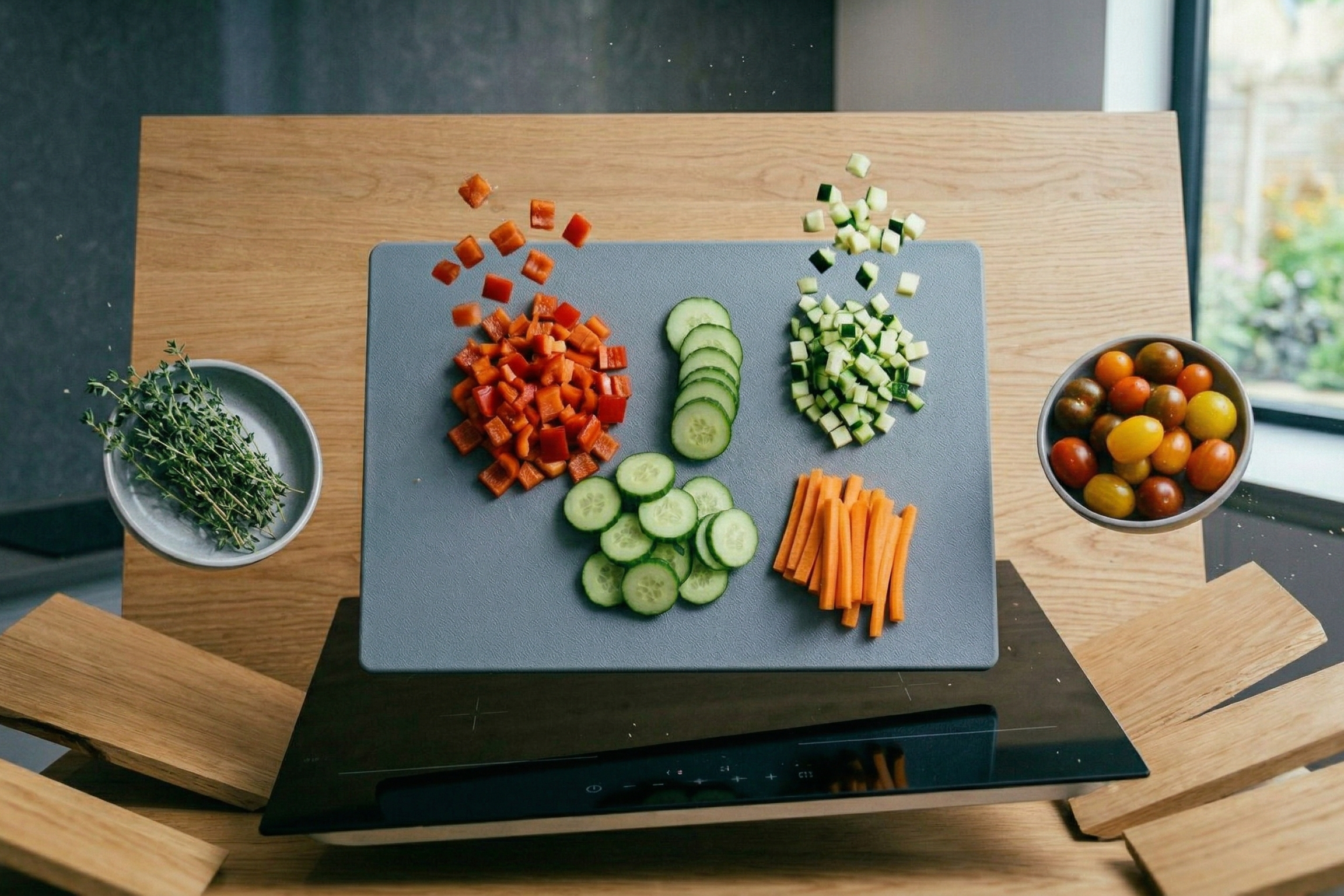

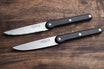

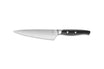
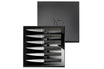
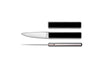
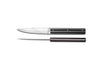
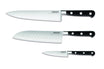


The choice of a tool for daily cooking defines your relationship with the product and the pleasure you take in the kitchen. At TB-1648, we design blades that are not just instruments, but extensions of the cook's hand. For frequent use, the question is not just whether the knife cuts, but how long it will retain its edge and how comfortable it will be when preparing a complete meal. Between the forged kitchen knife and the traditional Santoku, each geometry corresponds to a precise movement. This guide explores the necessary balance between robustness, maneuverability, and technicality to enhance your daily actions, from cutting fresh herbs to preparing denser pieces of meat.
Essentials for your daily kitchen
- The versatility of a blade between 11 cm and 15 cm to cover 80% of tasks.
- The importance of balance between the tang and the blade to prevent muscle fatigue.
- The choice of steel (HRC hardness) to extend the time between sharpening sessions.
- The ergonomic handle for optimal safety even with wet hands.
What are the real constraints of everyday cooking?
Cooking every day involves repetitive movements that strain both the tool and the body. The reality of a family or passionate kitchen implies rapid changes in products: you switch from a clove of garlic to an onion, then to a chicken fillet or a robust squash. An unsuitable knife slows down preparation and alters food quality by crushing rather than clean cutting. At TB-1648, we analyze these usage cycles to ensure our blades maintain an effective cutting geometry despite repeated impacts on the cutting board.
Durability is the second challenge. A knife used daily is subjected to the acidity of fruits, constant humidity, and frequent cleaning cycles. The steel must therefore demonstrate impeccable corrosion resistance without sacrificing its ability to be easily re-sharpened. Ergonomics also plays a crucial role. A poorly designed handle creates uncomfortable pressure points after only a few minutes of intensive work. Our workshops in Thiers work on mass distribution so that the balance point is precisely at the bolster, thus offering a feeling of lightness and total control over the blade's trajectory.
Why is the utility knife the ultimate versatile tool?
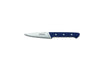
Often called a "utility knife," the kitchen knife holds a central place in the TB-1648 range. With a blade typically between 11 and 15 cm, it sits at the perfect intersection between the surgical precision of a paring knife and the striking power of a chef's knife. This intermediate size allows for meticulous tasks like peeling medium-sized vegetables, while being long enough to mince herbs or slice sausage with great fluidity.
The anatomy of this blade is designed for versatility. Its profile, often thinner than a chef's knife, allows it to penetrate delicate meats without tearing them. It's the tool you instinctively reach for when preparing a quick lunch or an appetizer board. Here's why this model is so popular with our customers:
- Exceptional maneuverability: Its lightness allows for quick movements without excessive wrist effort.
- Compact size: Ideal for kitchens where workspace is limited on the cutting board.
- Hybrid blade profile: Allows for both precision work at the tip and clean cuts at the heel.
- Technical accessibility: Less intimidating than a large chef's knife, it reassures amateur cooks.
- Easy maintenance: Its reduced blade surface makes cleaning and wiping almost instantaneous.
| Model | Steel Type | HRC Hardness | Blade Length | Main Use |
|---|---|---|---|---|
| Premium Kitchen Knife | Forged X50CrMoV15 Steel | 56-58 HRC | 13 cm | Total versatility |
| Evercut Furtif V2 | Steel with titanium carbide coating | > 90 HRC (Edge) | 11 cm | Extreme longevity |
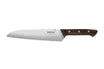
| Santoku Georges | Nitrox® Steel | 55-57 HRC | 18 cm | Slicing vegetables/fish |
| Absolu Slicer | Forged Stainless Steel | 58 HRC | 15 cm | Precision work/Compact Chef |
How to choose between durability and pure performance?
The cook's dilemma often lies in the choice of steel. Very hard steel (high HRC) will offer a durable razor edge but may prove more fragile against impacts or more complex to sharpen for a novice. Conversely, softer steel better absorbs daily stresses but requires more frequent honing. At TB-1648, we favor intelligent compromises. Our forged ranges use alloys rich in chromium and molybdenum, ensuring a clean cut and essential oxidation resistance for domestic use.
The Santoku, for example, introduces a different philosophy. Its dimpled blade creates air pockets that prevent starchy or watery foods from sticking. This is a considerable time saver when preparing large quantities of vegetables. The chef's knife (Gyuto), with its curved blade, promotes a rocking motion to quickly chop bunches of parsley or cilantro. Your choice should depend on your predominant diet: very vegetable-based (Santoku), carnivorous (Slicer/Carving knife), or completely mixed (Kitchen knife).
- Vegetables and root vegetables: Prefer a wide blade to guide the fingers and a flat edge.
- Boneless meats: A thin, long blade allows for a single-pass cut to preserve the fibers.
- Small fruits and citrus: The paring knife or small 11 cm utility knife remains king.
- Quick preparations: The Evercut Furtif offers peace of mind with no sharpening needed for years.
What are the secrets of simple yet effective maintenance?
Contrary to popular belief, maintaining a high-quality knife only takes a few seconds a day. The greatest enemy of steel and natural handle materials (such as wood or some high-end polymers) is the dishwasher. Excessive heat and aggressive detergents tarnish the blade and create micro-cracks on the knife's edge. A simple rinse under warm water with a soft sponge is more than enough to maintain your tool's hygiene and shine.
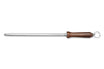
Regular sharpening is also key to comfort. Using a honing steel regularly helps to "straighten" the blade's edge before it actually dulls. For a complete refresh, using a whetstone is recommended two to three times a year, depending on your frequency of use. A sharp knife is a safe knife: you don't need to force it, which drastically reduces the risk of accidental slips.
| Maintenance Action | Frequency | Tool Needed | Benefit |
|---|---|---|---|
| Cleaning | After each use | Warm water + Mild soap | Prevents oxidation and stains |
| Drying | Immediate | Soft cloth/Dish towel | Protects handle and blade |
| Honing | Every 2-3 uses | Honing steel | Maintains edge alignment |
| Full sharpening | Every 6 months | Whetstone (Grit 1000/3000) | Restores initial cutting power |
- Never leave a knife soaking in a sink full of water.
- Avoid storing knives loosely in a drawer (use a block or magnetic strip).
- Always cut on a wooden or soft plastic board (never on glass or stainless steel).
- Occasionally oil wooden handles with a neutral mineral oil.
What precautions to ensure safety and longevity?
Kitchen safety begins with respecting the tool. A kitchen knife is not a lever, a screwdriver, or a bone cleaver. Using a thin blade to force a poultry joint or open rigid plastic packaging can cause chips on the steel, especially on high-carbon models or those with high hardness treatment. Each knife has its purpose, and respecting that use is the primary factor for longevity.
Furthermore, cutting technique influences edge wear. The movement should be fluid, using the full length of the blade rather than vertically crushing the food. This preserves not only the blade's edge but also your joints. By following these simple rules, you will make your TB-1648 knife a companion capable of lasting for decades without weakening.
- Strict prohibition: Never cut frozen foods with a thin blade.
- Cutting surfaces: Ban marble, ceramic, and steel which instantly destroy the edge.
- Storage: Protect the tip, it is the most vulnerable part of the instrument.
- Concentration: A TB-1648 edge is extremely sharp; handling requires total attention.
Why trust TB-1648 manufacturing?
Choosing a TB-1648 knife means opting for a Thiers heritage that combines technological innovation and artisanal tradition. Whether you are attracted by the modernity of the Evercut range or the authenticity of a forged knife from the Georges collection, you are investing in a tool designed to last. Daily cooking should never be a chore, and having the right tool is the first step to transforming every preparation into a serene moment of creation. Our blades are the result of constant research into ergonomics and metallurgy, ensuring that every cut is as precise as the first. Equip your kitchen with the excellence of French craftsmanship and feel the difference from the very first slice.