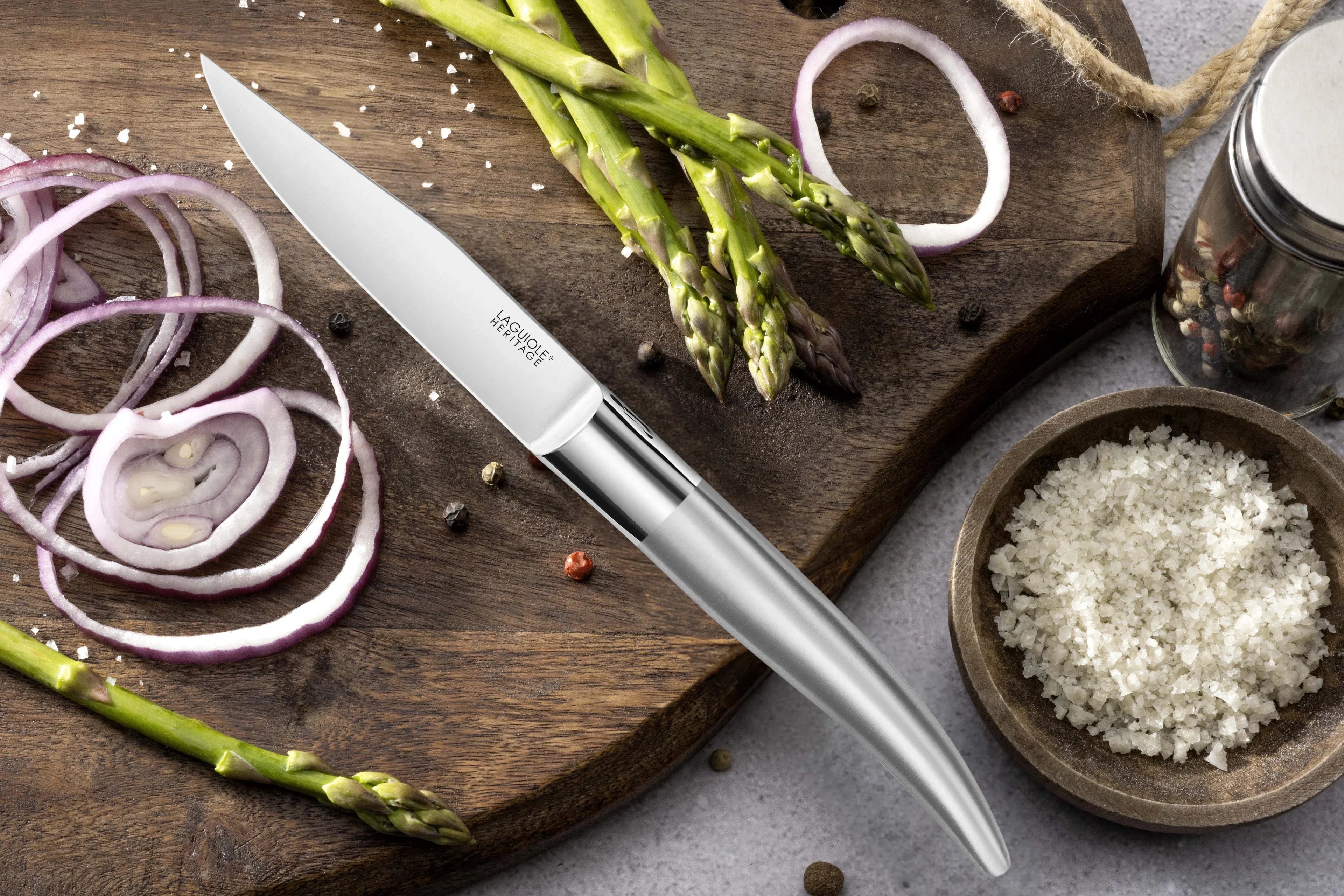
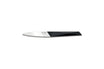
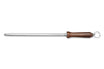

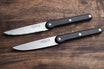
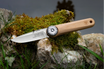
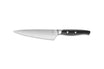
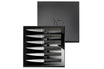
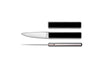
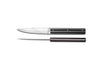
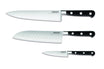
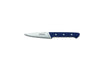
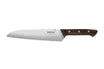

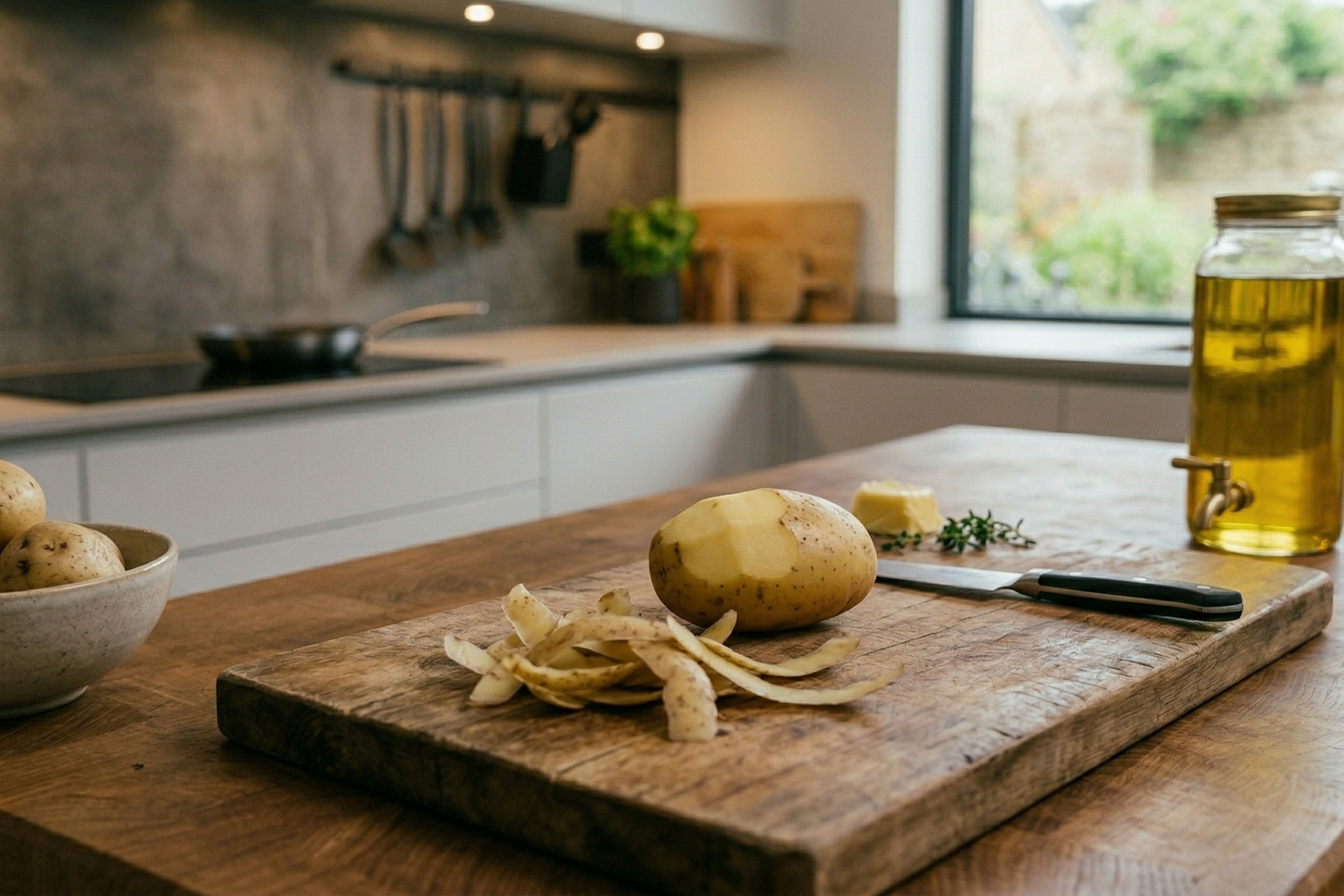
Choosing the right tool to prepare your vegetables is a decision that defines your ease in the kitchen. At TB-1648, we perpetuate a forging tradition where every millimeter of blade serves a precise function. Peeling, a daily task if there ever was one, requires a perfect symbiosis between hand and steel. A knife that is too long becomes cumbersome and dangerous, while a blade that is too short lacks leverage. This guide explores the technical nuances of paring knives, these indispensable allies of Thiers cutlery, to help you find the balance between maneuverability and efficiency. Whether you are a weekend enthusiast or a seasoned professional, understanding the geometry of a 7 to 11 cm blade will transform your perception of precision cutting.
Why is blade size crucial for peeling?
Peeling is not just a simple act of removing skin. It is an exercise in surgical precision that repeatedly engages the hand and wrist muscles. At TB-1648, we analyze ergonomics as a science. An ill-suited blade forces the cook to compensate with excessive pressure, increasing the risk of slipping and premature muscle fatigue.
The length of the blade determines the tool's center of gravity. For a paring knife, this center must be very close to the bolster, allowing total fingertip control. When you peel an apple or carve a vegetable, the movement often starts from the thumb. A short blade allows the thumb to remain in immediate proximity to the cutting edge, ensuring optimal safety and minimal peel thickness.
Here are the key advantages of an appropriately sized blade from TB-1648:
- Increased precision for removing imperfections without wasting flesh.
- Exceptional maneuverability for in-hand tasks (without a cutting board).
- Drastic reduction of joint fatigue during long preparation sessions.
- Total control of the attack angle for even peeling.
- Versatility for small fruits and vegetables (shallots, garlic, strawberries).
What are the recommended standard sizes (7 to 11 cm)?
The world of Thiers cutlery generally defines three segments for the paring knife. The 7 cm blade, often curved (bird's beak), is specialized in turning vegetables. It adapts to round shapes with natural ease. Conversely, the 11 cm blade offers a versatility that borders on that of a utility knife, allowing you to switch from peeling to small cutting on a board without changing tools.
In between, the 9 cm format represents the historical standard of the TB-1648 manufacture. It's the all-purpose knife, capable of hulling a tomato with the tip while peeling a potato with the body of the blade. The choice is not just a matter of taste, but of culinary technique.
| Blade Model | Length (cm) | Main Use |
|---|---|---|
| Small Paring | 7 - 8 cm | Turning, peeling round fruits |
| Standard Paring | 9 cm | Versatility, garlic, shallots |
| Long Paring | 10 - 11 cm | Peeling and small cutting |
To choose wisely, you should list the foods you prepare most often:
- Potatoes and carrots (9 cm recommended).
- Garlic cloves and aromatic herbs (7-8 cm for precision).
- Stone fruits or citrus fruits (9-10 cm for penetration).
- Small charcuterie or cheese (11 cm for cutting length).
How to choose according to your hand morphology?
Ergonomics is at the heart of TB-1648's philosophy. A large hand will often feel "lost" with a 7 cm knife, with fingers risking extending over the blade. Conversely, a small hand may find the leverage of an 11 cm blade difficult to manage for precision work.
The handle plays a predominant role here. At TB-1648, we design handles that extend the arm. The balance must be neutral. If the knife tips forward, wrist fatigue will quickly appear. If the handle is too heavy, you will lose sensitivity. The grip must be natural, whether you hold the knife by the handle or advance your index finger on the spine of the blade for more control.
| Hand Size | Ideal Size | Sharpening Frequency | Recommended Tool |
|---|---|---|---|
| Small / Medium | 7 to 9 cm | Every 2 weeks | 1000 grit whetstone |
| Large / Extra Large | 10 to 11 cm | Every 2 weeks | Ceramic honing steel |
What mistakes to avoid when choosing your knife?
The biggest mistake is to think that one large knife can do everything. Using a chef's knife to peel an onion is not only inefficient but dangerous. The lack of control over a wide and long blade increases the risk of deep cuts. Conversely, using a paring knife on foods that are too dense or too large (like a squash or a bone) will irremediably damage the edge of the TB-1648 steel.
Maintenance is the second pillar of longevity. A paring knife, because it is small, is often mistakenly thrown into the dishwasher. This is sacrilege for quality cutlery. Heat and aggressive detergents destroy the heat treatment of the steel and alter the wood or polymer of the handle.
Here are the crucial steps for maintaining your tool:
- Always wash your knife by hand with lukewarm water and mild soap.
- Immediately dry the blade with a soft cloth to prevent oxidation.
- Store the knife on a magnetic block or in a sheath to protect the edge.
- Never use the knife on hard surfaces such as glass or marble.
Similarly, observe these usage precautions:
- Never attempt to cut frozen foods.
- Do not use the blade as a lever to open jars.
- Avoid cutting bones, even small ones, with a paring blade.
- Never leave the knife soaking in the sink.
How to maintain a razor-sharp edge durably?
The longevity of a TB-1648 knife depends on the regularity of its maintenance. A paring knife dulls faster than a chef's knife because it performs more movements per minute. We recommend regular honing to straighten the edge, supplemented by sharpening on a whetstone when the edge no longer bites into a tomato's skin without pressure.
The sharpening angle for our models is generally 15 degrees on each side. This narrow angle allows for exceptional penetration into plant tissues. A wider angle would make the blade more robust but less effective for fine peeling. It is this attention to technical detail that makes our Thiers manufacture renowned.