

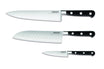

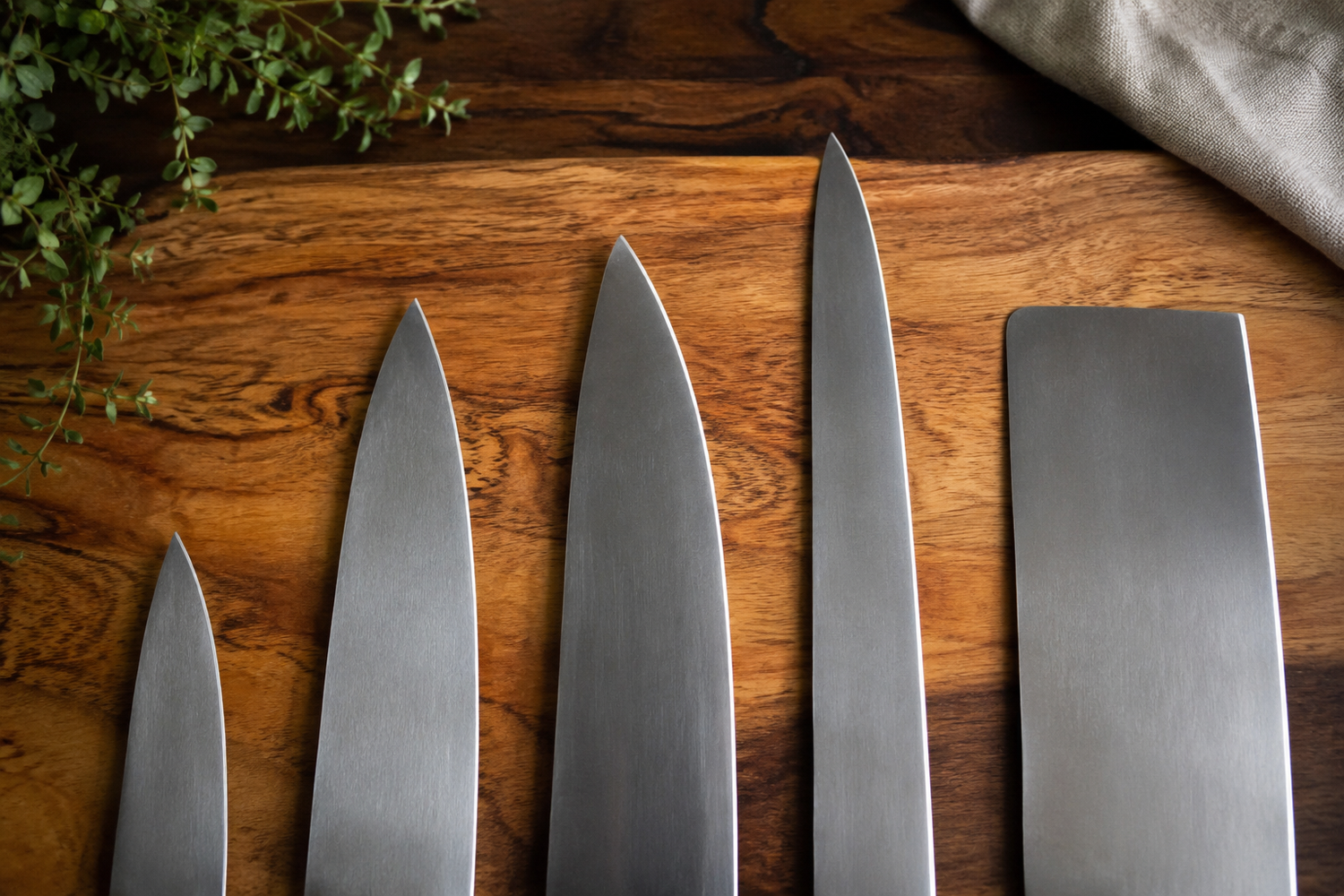
The geometry and shape of the blade define a knife's primary function. From a short blade designed for precision to a wide profile intended for slicing, each shape meets specific cutting and ergonomic requirements in the kitchen.
Key points of the article
- The curvature of the blade determines whether the cutting motion is linear or a rocking motion.
- Hollow-ground blades prevent sticky ingredients from adhering to the metal.
- A versatile kitchen set should combine complementary blades to cover all needs.
Why blade shape changes everything
The blade's profile influences how force is applied to food. A blade with a large, curved belly makes it easy to chop herbs and vegetables, while a rigid, narrow blade ensures a clean penetration of flesh and fibers.
The metal's resistance to torsion stresses depends on the grind geometry. To learn more about metal characteristics, you can consult the definition of stainless steel on the Wikipedia page on stainless steel.
Comparison of different blade shapes
| Blade Shape | Main Movement | Advantage | Recommended Use |
|---|---|---|---|
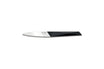
| Straight (Paring) | Straight and precise | Maneuverability | Peeling and trimming |
| Curved (Chef's) | Rocking | Versatility | Slicing and chopping |
| Hollow-ground (Santoku) | Vertical chopping | Non-stick | Vegetables and meats |
The main blade shapes
Each profile is the result of centuries of cutlery evolution to meet precise preparation and cutting needs.
Straight blade (Paring)
The straight, short blade is an indispensable tool for precision work. For more details on choosing this essential knife, you can consult our article which paring knife to choose.
Curved blade (Chef's)
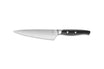
The chef's knife blade is characterized by its tapered tip and pronounced curve. This geometry allows for a fluid rocking motion on the cutting board, ideal for preparing large quantities of ingredients.
Hollow-ground blade (Santoku)
The dimples on the sides of the blade create air pockets that prevent starchy or wet foods from sticking to the metal during cutting.
Long and thin blade (Slicing/Carving)
This blade is designed to make clean, even cuts in a single pass, which avoids tearing the fibers of meat or fish.
Serrated blade
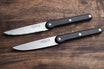
The knife's teeth allow it to grip hard surfaces without crushing the soft material inside, such as the crust of bread.
Which blade for which food
Adapting the tool's shape to the food's nature ensures clean cutting without unnecessary wrist effort.
Vegetables
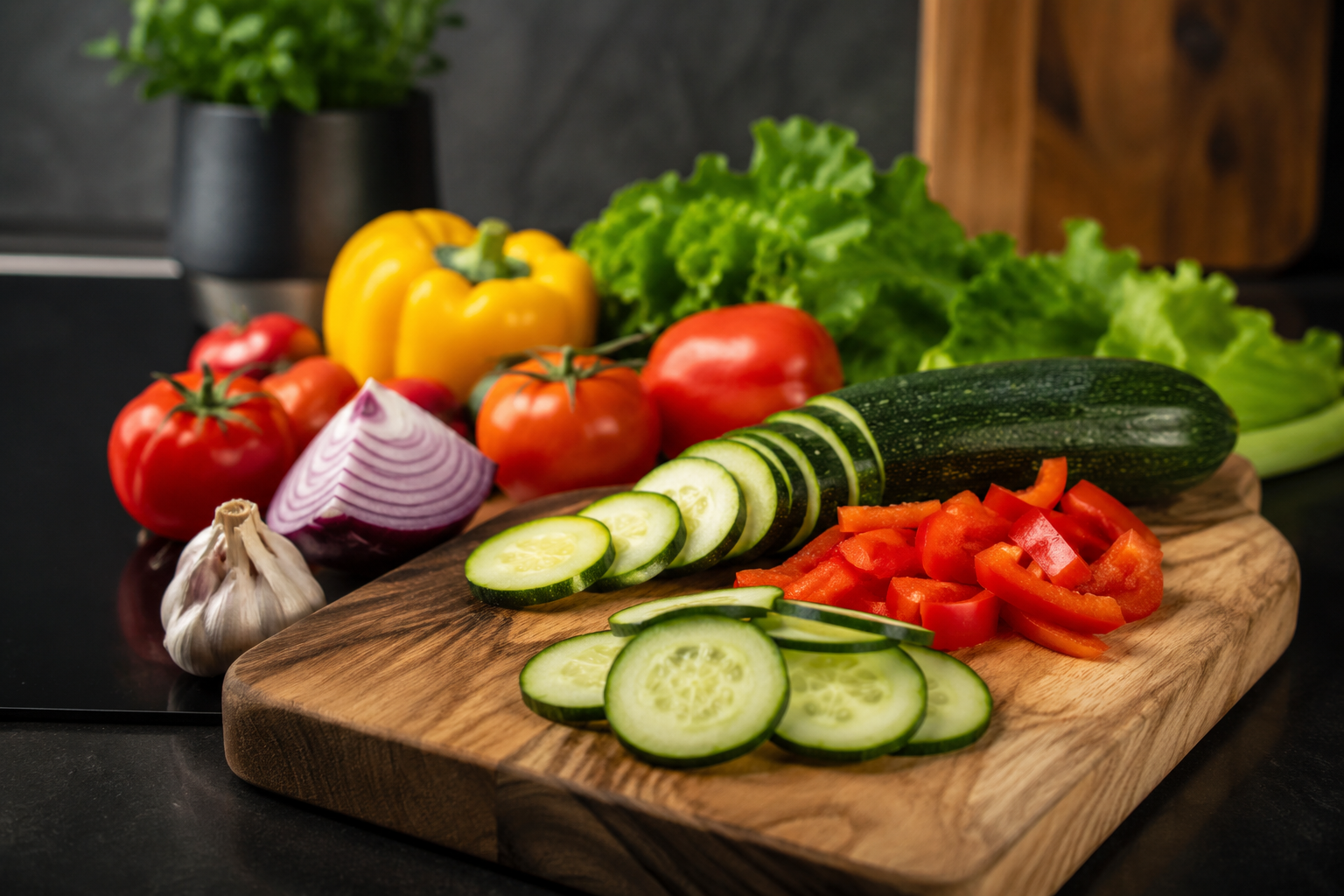
Vegetables require varied cuts. The santoku and chef's knife offer the surface and thickness needed for dense vegetables like squash or carrots.
Meat
Cutting meat requires a thin, rigid blade. A carving knife or a large utility knife allows for effortless slicing of pieces.
Fish
To fillet or remove skin, a sole fillet knife or a salmon knife with a flexible, elongated blade is required.
Bread
The serrated blade is essential for slicing thick crusts while maintaining a light and airy crumb.
General kitchen equipment
To find all our preparation ranges, we invite you to visit our collections on kitchen equipment.
The most frequent selection errors
The most common mistake is using a blade that is too long for precision work or, conversely, trying to cut a large vegetable with a paring knife.
Consequences of selection errors
- Using a blade not suitable for the ingredient's hardness.
- Blade torsion, which can lead to micro-fractures.
- Lack of control and increased fatigue during cutting.
| Selection Error | Consequence | Recommended Correction |
|---|---|---|
| Paring knife for large vegetables | Loss of control and danger | Use a chef's knife |
| Rigid blade for filleting | Torn flesh and material loss | Use a flexible fillet knife |
| Smooth blade for bread | Crushed crust and compact crumb | Use a serrated blade |
How to build a knife set
To cook efficiently, a basic set does not require a large number of utensils. It should consist of blades with distinct shapes that cover different cutting needs.
Everyday essentials
For everyday needs, the selection should include a paring knife, a chef's knife or santoku, and a bread knife. To discover the utensils adapted to your daily preparations, visit our Everyday collections.
Precision blades
For more technical work and professional precision, you can enhance your equipment with models from the Excellence collections range.
Frequently Asked Questions
Why do santoku blades have dimples?
The dimples create air pockets that prevent wet or sticky ingredients from adhering to the metal, thus facilitating quick and even cutting.
Which knife to use to slice an onion?
The chef's knife or the santoku are the ideal tools. Their large blade allows for quick slicing thanks to the rocking motion on the cutting board.
What is the difference between a carving knife and a chef's knife?
A carving knife has a longer and narrower blade, designed for slicing meat in a single pass, while a chef's knife is wider and more versatile.
Glossary
Edge: The sharpened part of the blade that penetrates food to ensure a clean and even cut.
Blade edge: The microscopic edge of the knife, subject to mechanical stresses when cutting through different materials.
Micro-fractures: Small alterations invisible to the naked eye that can appear during impacts on overly hard materials.