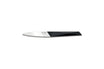

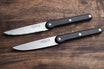

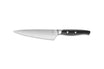
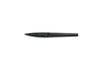
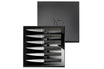
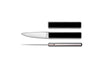
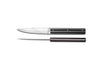

Most table knives are never considered on this scale. We talk about design, steel, sometimes hardness - but rarely about what happens on the last microns of the edge. This is precisely where Nanocut® technology, developed by TB-1648 in Thiers, begins.
What "nanometric" changes on a blade's edge
A classic sharpening works at the micron scale, with grinding wheels or abrasives that leave micro-serrations on the surface of the edge. These irregularities are not visible to the naked eye - yet they are responsible for a large part of the degradation of the cutting edge with use. With each pass, these asperities flatten, wear away, or tear off. The knife gradually loses its bite.
Nanometric sharpening works differently. The edge is worked at a much lower resolution, which eliminates these micro-serrations and produces an almost geometrically perfect edge surface. Concretely, this results in a clean cut from the first contact - without a sawing effect, without unnecessary pressure - and a significantly superior edge retention over time compared to what is obtained with conventional sharpening on the same steel.
Asymmetric geometry and 18° angle: the calculation behind the edge
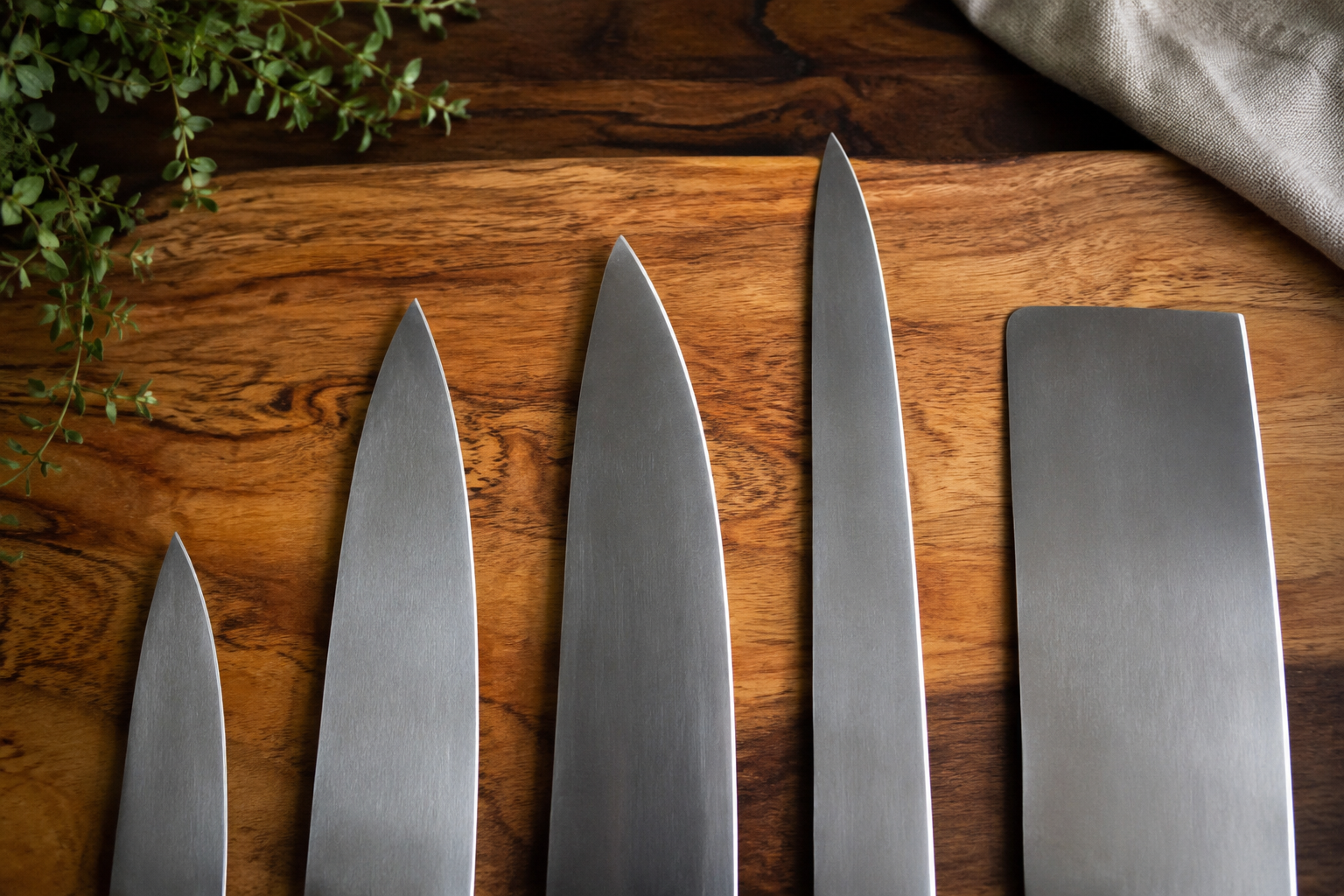
The total cutting angle of the Joseph Nanocut® is 18°. This is a sharp angle, reserved for knives whose specifications require finesse on food products - cooked meats, fish, vegetables, cheeses. Below 15°, the strength of the edge becomes an issue on many steels. At 18°, with Nitrox®, the compromise is relevant.
The bevels are asymmetrical: the two sides of the blade do not form the same angle with respect to the plane of the edge. This geometry, common in high-end Japanese cutlery, improves the blade's cutting behavior by guiding the food to one side rather than compressing it equally from both sides. It complicates manufacturing - adjusting an asymmetrical bevel requires more precision than a standard symmetrical profile - but it is consistent with the ambition of an edge of this quality.
Edge retention × 2: a matter of geometry, not magic
TB-1648 announces edge retention up to twice that of a conventional table knife made from the same Nitrox® steel. This assertion deserves to be understood for what it is: not a mysterious property of the steel, but the logical consequence of the geometric quality of the edge.
A nanometric edge degrades less quickly because it starts from a more stable state. The micro-serrations of ordinary sharpening are points of fragility - they wear away quickly, and it is this rapid initial wear that explains why a new knife seems to lose its edge in a few weeks. When the initial edge is more homogeneous, degradation progresses more slowly and more uniformly. The knife remains effective longer between passes with a sharpening steel.
Nitrox® steel - a high-performance stainless steel developed by TB-1648, heat-treated to 54-56 HRC - contributes to this equation. Its hardness is calibrated to accept fine sharpening without weakening the edge, while offering the corrosion resistance expected of a table knife. At a lower hardness, an 18° angle would be risky. At too high a hardness, the edge would become brittle. Nitrox® at 54-56 HRC is in the useful range for this type of geometry.
The acetate handle: a material that embraces its character
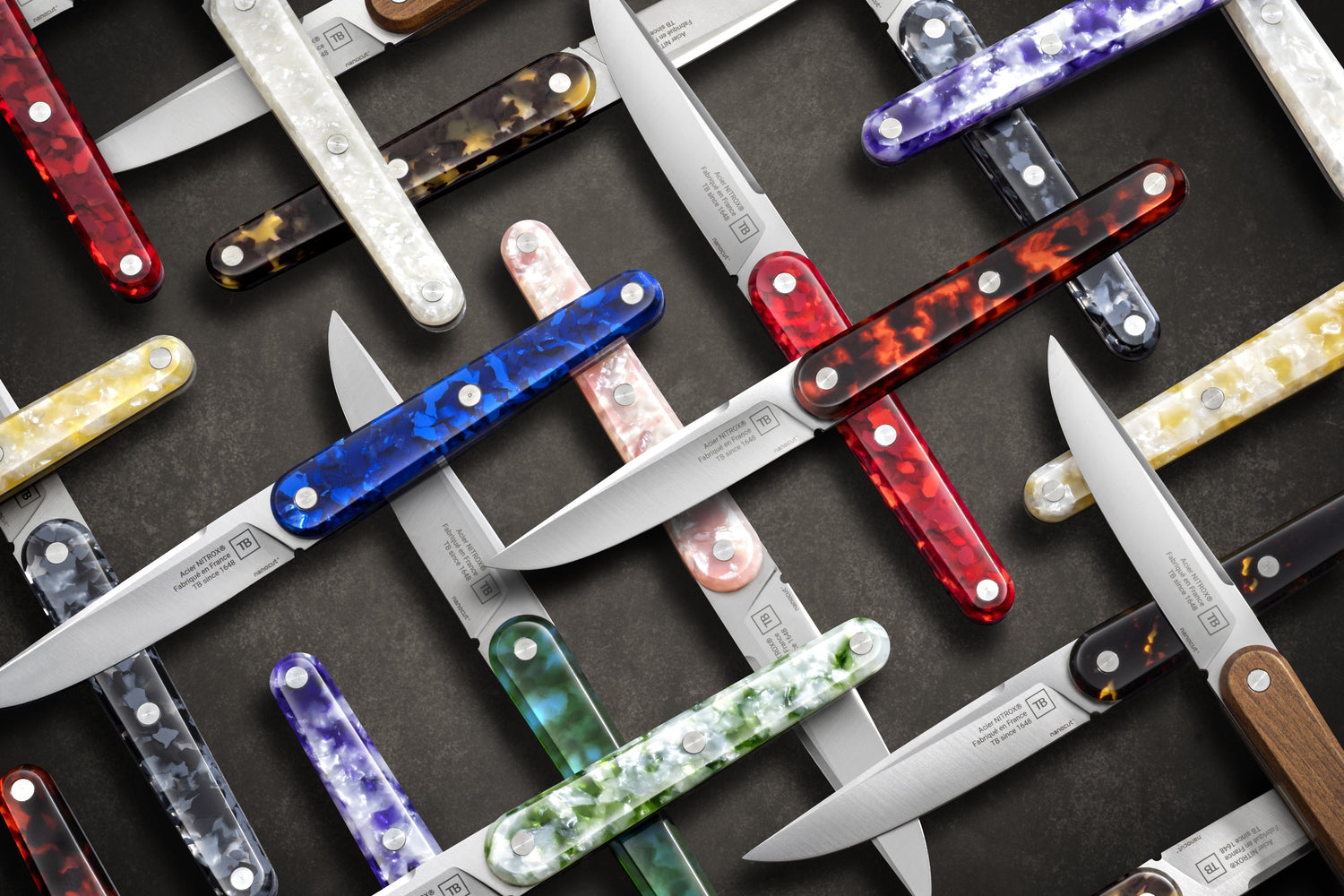
The blade is 110 mm Nitrox®, full tang. The handle is made of cellulose acetate, available in eight colors: Black, Grey, Orange, Blue, Red, Green, Brown, Pearl.
Cellulose acetate is a noble material, derived from the transformation of natural cellulose. It is distinguished from technical plastics by its visual depth - the colors have a translucency and internal reflections that injected materials do not reproduce. And because each handle is cut from a block, the natural variations of the material mean that two identical knives are never quite the same. This is not a defect: it is the signature of a handcrafted piece, not a reference from a mold.
Maintenance: what an edge of this precision requires
A nanometric edge with asymmetrical geometry is not resharpened like an ordinary knife. Re-sharpening with a V-shaped abrasive rod or a roller sharpener is excluded: it recreates exactly the symmetrical profile that Nanocut® geometry seeks to avoid, and destroys in a few passes the work done during sharpening.
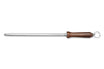
The correct method is to use a sharpening steel, passed along the back of the edge - the non-cutting side of the blade - to straighten the edge without removing significant material. Hand washing is recommended: the dishwasher, with its aggressive detergents and repeated thermal shocks, accelerates superficial corrosion and carries a risk of micro-cracks on acetate handles. Store on a magnetic strip or in a knife block: never loosely, where impacts between blades precisely damage the edges we seek to preserve.
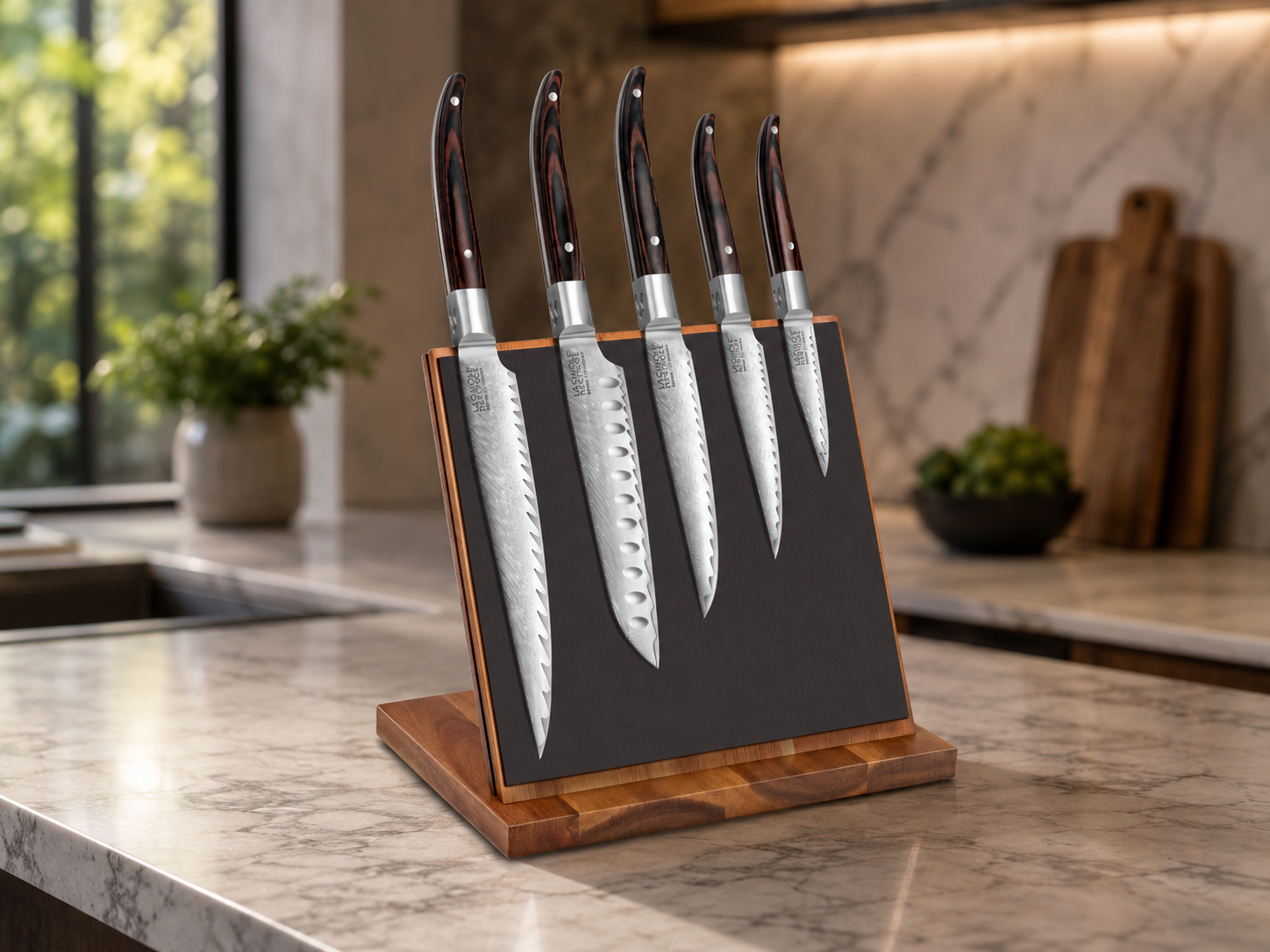
The Joseph Nanocut® is offered in a set of 4 knives for €290. In the TB-1648 catalog, it represents the entry into the technical range - where table cutlery ceases to be a plating accessory and becomes a tool designed with the same rigor as professional knives manufactured in Thiers for over a century.