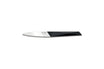
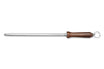

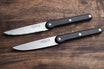

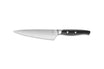
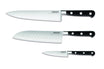

The choice between a stainless steel blade and a carbon steel blade is the original debate in cutlery, a dilemma that fascinates Thiers' blacksmiths as much as it does chefs. At TB-1648, we master both alloys, as each carries a different cutting philosophy. Stainless steel embodies modernity, resilience, and daily ease of use, while carbon is often perceived as the soul of tradition, offering surgically fine sharpness at the cost of constant attention. Understanding the molecular structure of your knife is essential to align your tool with your culinary temperament. Whether you seek the unalterable brilliance of a contemporary collection or the historic patina of an authentic blade, this 1467-word technical guide deciphers the nuances of steel and the influence of Rockwell hardness on your cutting experience. Let's dive into the secrets of fire and iron to determine which blade will conquer your countertop.
What are the fundamental technical differences between these steels?
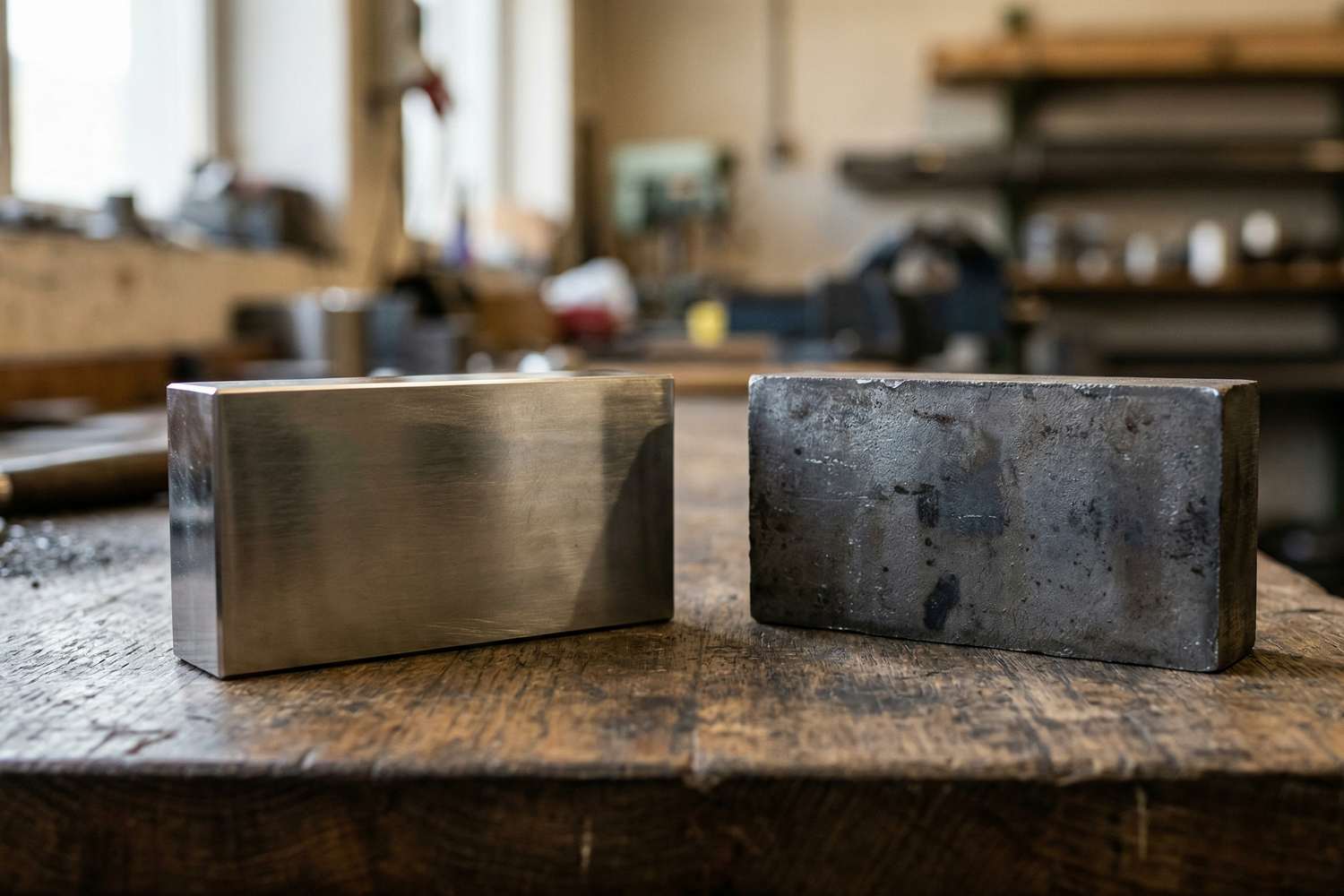
At the heart of the TB-1648 forge, the difference lies in the chemical composition. Steel is, by definition, an alloy of iron and carbon. What defines "stainless" steel is the significant addition of chromium. The latter creates a passive layer of chromium oxide on the surface, protecting the iron from oxygen and moisture. Conversely, "carbon" steel (or unalloyed steel) foregoes this protection to favor a more homogeneous and dense molecular structure.
Technically, the absence of large chromium carbides in carbon steel allows for a much sharper sharpening angle without weakening the edge. Where a standard stainless steel blade might chip if sharpened too finely, a carbon blade accepts "razor-sharp" finishes with disconcerting ease. However, this purity comes at a cost: chemical vulnerability. In the presence of acidic foods (lemon, onion, tomato), the carbon blade reacts instantly.
| Property | Stainless Steel | Carbon Steel |
|---|---|---|
| Oxidation Resistance | Very high | None (requires oil) |
| Ease of Sharpening | Medium to difficult | Very easy |
| Edge Fineness | Excellent | Exceptional |
What are the undeniable advantages of the stainless steel blade?
The stainless steel blade is the queen of modern kitchens and intensive use. Its main asset is the peace of mind it provides. With a TB-1648 stainless steel knife, you don't have to worry about leaving your tool on the cutting board for a few minutes while answering the phone. It will not rust, stain your food, or impart any metallic taste to your delicate preparations.
For families or cooks who share their tools, stainless steel is a sensible choice. It tolerates maintenance approximations better (even if we always prohibit dishwashers). Moreover, recent advances in powder metallurgy now allow TB-1648 to offer stainless steels whose edge retention rivals the best carbon steels of yesteryear.
Here are the strengths of a TB-1648 stainless steel knife:
- Perfect hygiene: no porosity or flavor transfer.
- Durable aesthetics: the blade remains shiny as new.
- Resilience: the alloy is often less brittle against lateral impacts.
- Total versatility: from cutting citrus to trimming meats.
- Reduced maintenance: a simple wipe is enough after washing.
Why do purists still prefer carbon blades?
If stainless steel is practical, carbon is passionate. For a craftsman or a connoisseur, nothing replaces the "bite" of a carbon blade. Due to its very fine granular structure, carbon steel penetrates plant and meat tissues with almost zero resistance. It is the tool of pure sensation.
Another paradoxical advantage is its ease of maintenance... for those who know how to sharpen. Carbon quickly "returns" its edge on a whetstone. A few passes are enough to restore a blade capable of splitting a hair in two. Finally, there is the romantic aspect: the patina. A carbon blade changes color, turns blue, gray, telling the story of the meals prepared. At TB-1648, we see this evolution as the signature of a living tool.
List of uses where carbon excels:
- Cutting raw fish (Sashimi) for a clean section of fibers.
- Precision work on root vegetables.
- Extreme mincing of aromatic herbs without crushing them.
- Learning traditional whetstone sharpening.
How to care for your knife according to its alloy?
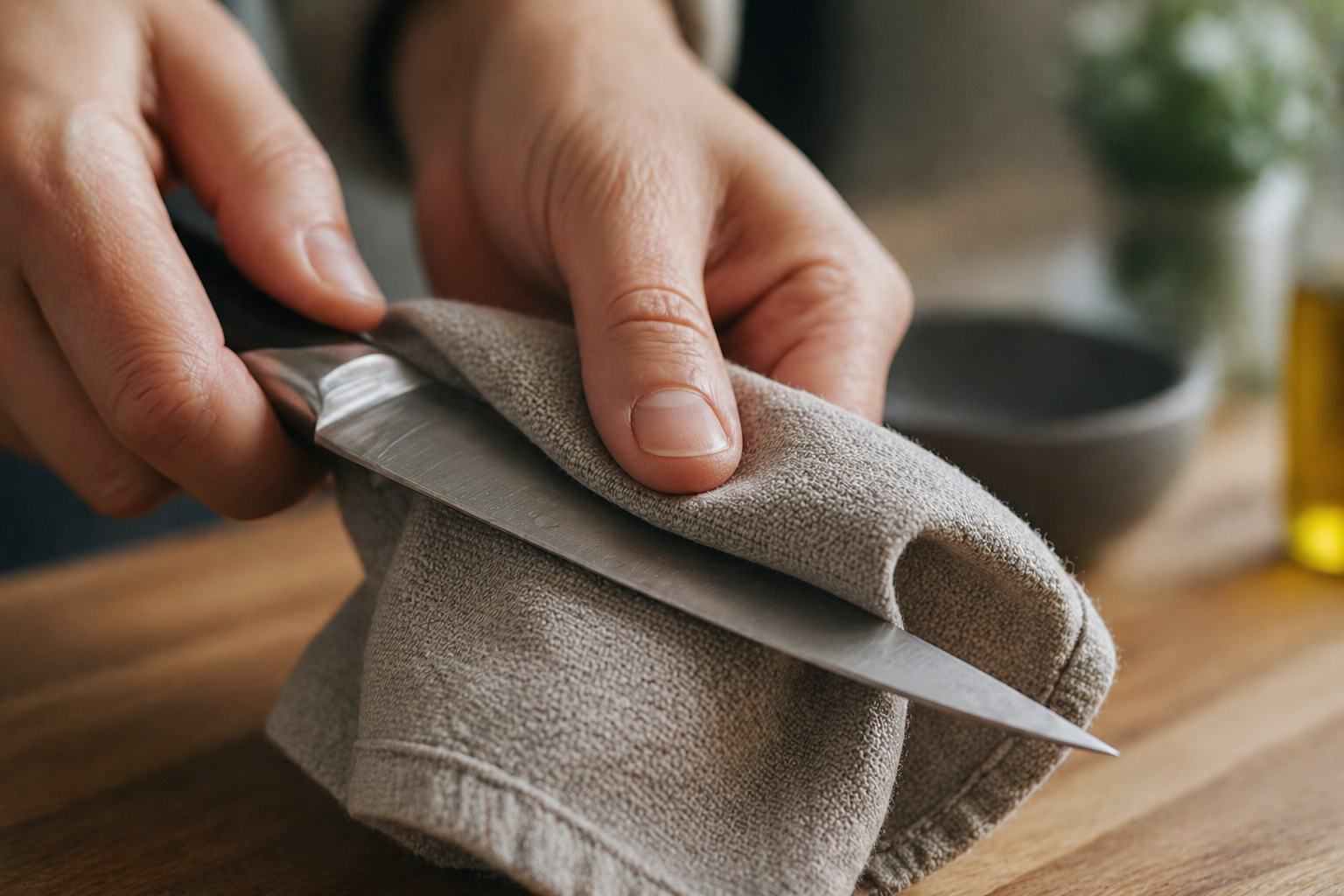
Maintenance is the breaking point between these two worlds. A TB-1648 stainless steel blade requires rigor, but a carbon blade demands devotion. For carbon, humidity is the sworn enemy. It's not about washing it at the end of the meal, but wiping it between each cut ingredient to stop acidic oxidation.
| Action | Stainless Steel Protocol | Carbon Steel Protocol |
|---|---|---|
| Washing | Warm water + mild soap | Clear water, no soaking |
| Drying | Immediate with a cloth | Instant + air drying |
| Storage | Block or magnetic strip | Food-grade oil (if long-term storage) |
| Sharpening | Ceramic honing steel or stone | Whetstone exclusively |
Cleaning instructions for your knife (Stainless Steel or Carbon):
- Never use the abrasive side of the sponge.
- Absolute prohibition of dishwashers (heat and shocks).
- Drying from the spine of the blade towards the edge to avoid cuts.
- Use a neutral, chlorine-free soap.
Usage precautions to prevent breakage:
- Do not cut frozen foods (risk of chipping, especially on carbon).
- Avoid glass or stone cutting boards (edge destroyers).
- Do not use the tip as a screwdriver or lever.
- Always store the knife out of reach of children in a protective sheath.
Conclusion: Which steel for which cook?
The final choice depends on your relationship with the object. If you consider the knife a performance partner that should be ready for use without constraint, TB-1648 stainless steel is your solution. It is the choice for peace of mind, ideal for 95% of domestic and professional users seeking efficiency without ritual. If, on the other hand, you view cooking as a sacred ritual and the maintenance of your tools is part of your pleasure, carbon will offer you unparalleled cutting sensations. At TB-1648, we forge excellence in both camps. Our Thiers artisans inject the same precision into a Louis stainless steel blade as into a traditional carbon piece. Whatever your choice, you take with you a piece of French cutlery history, designed to transform every gesture into a demonstration of technical precision.