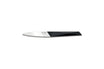
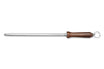

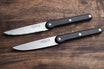

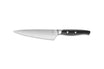

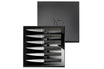
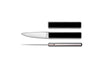
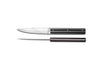
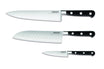

At the heart of Thiers' cutlery tradition, the TB-1648 factory perpetuates a heritage of excellence where each smooth blade is a promise of precision. Whether it's your Georges paring knife or a prestigious Santoku, the longevity of your tool depends solely on the rigor of its maintenance. A kitchen knife is not just an utensil; it's an extension of the chef's hand, a piece of engineering made of Nitrox or X46Cr13 steel that demands meticulous care. In this comprehensive guide, we share our artisan expertise to preserve the razor-sharp edge and integrity of your wooden or POM handles.
Summary of Maintenance Art
- Mandatory Hand Washing: Dishwashers are the mortal enemy of steel and handles.
- Immediate Drying: Preserves the appearance of X46Cr13 steel and the health of wooden handles.
- Regular Honing: Using a honing steel or stone maintains the Nitrox edge.
- Secure Storage: Protect the edge on a magnetic bar or in a block.
- Respect for the Cutting Surface: Use only wooden or polymer cutting boards.
How to Clean Your Smooth Blades Daily?
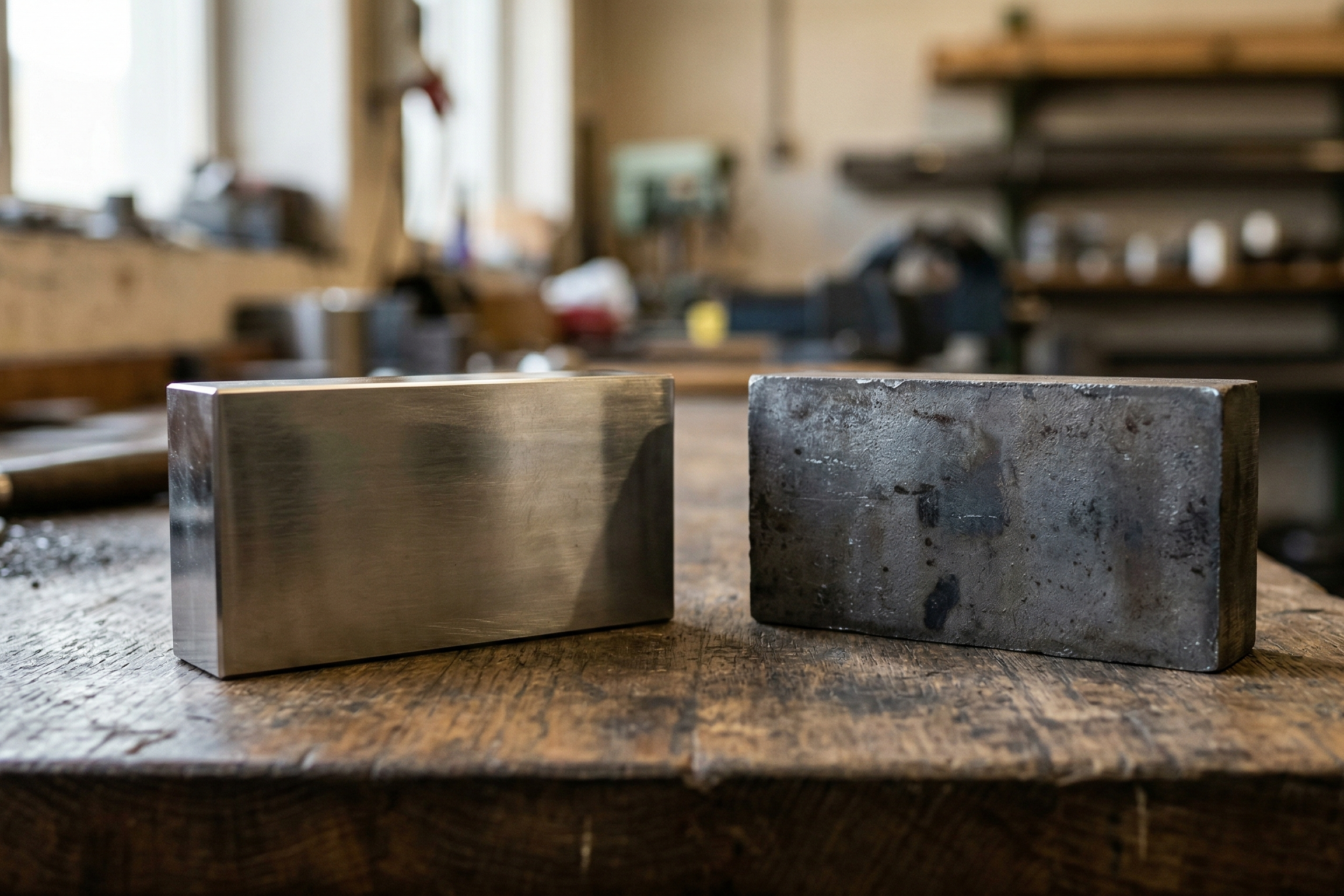
Cleaning is the most crucial step for the longevity of your cutting instruments. At TB-1648, we forge our blades from high-tech steels like Nitrox. This nitrogen-enriched steel offers exceptional corrosion resistance, but it should not be subjected to prolonged chemical aggression. After each use, we advise you to rinse the blade under lukewarm water with a mild soap. The abrasive side of a sponge is strictly forbidden, as it scratches the satin or polished finish of the steel, creating micro-cavities where bacteria can lodge.
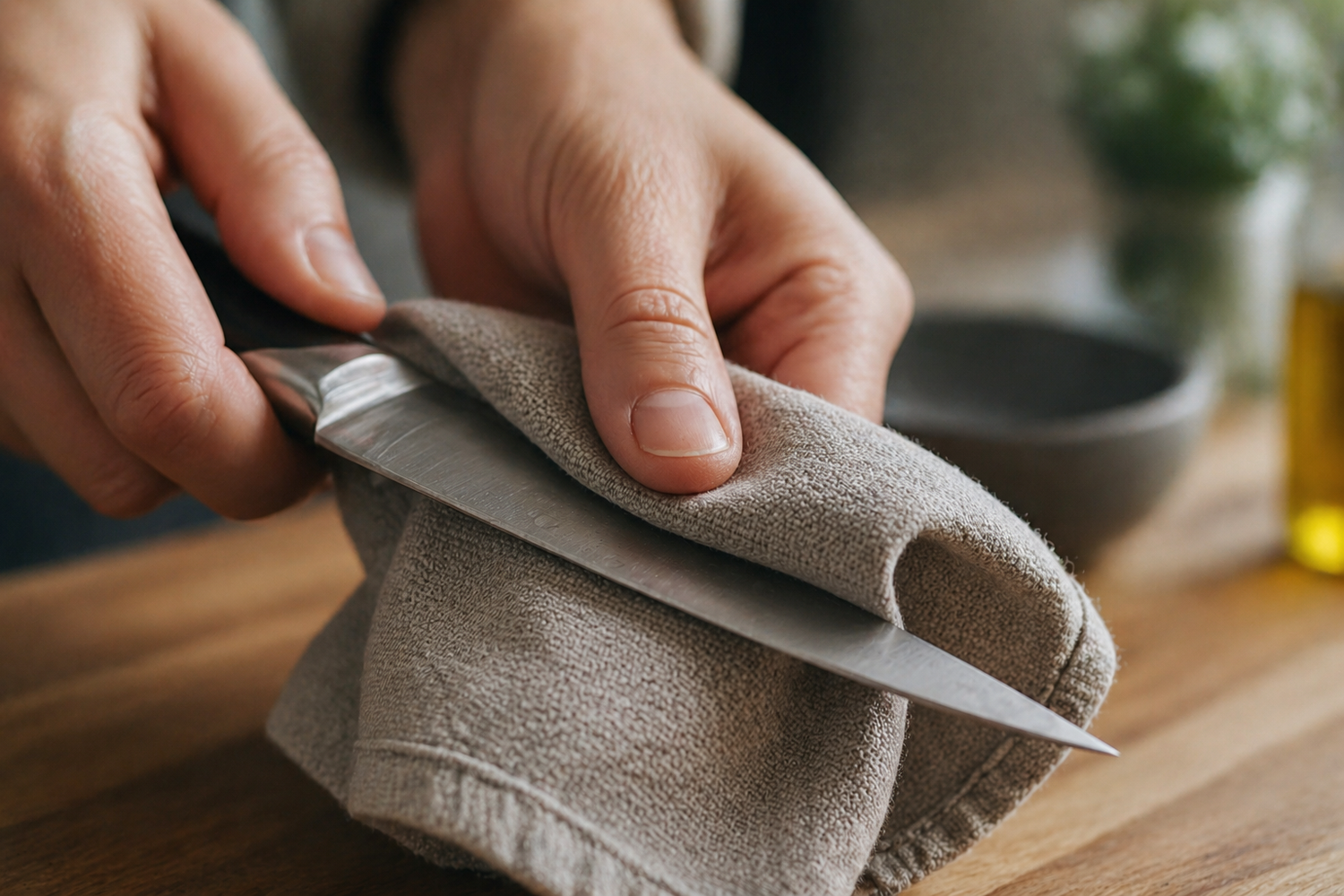
For our models with POM (Polyoxymethylene) handles, like those in the Furtif range, thermal resistance is high, but the temperature shock of machine washing is still not recommended. For precious wood handles, extra care is required. Wood is a living material that reacts to humidity. Prolonged soaking would cause the fibers to swell, risking weakening the full tang assembly or creating play between the scales and the tang. A simple wipe with a damp sponge followed by immediate drying with a soft cloth is the only method approved by our master cutlers.
| Handle Type | Cleaning Method | Recommended Product |
|---|---|---|
| Wood (Walnut, Olive) | Damp cloth only | Occasional linseed oil |
| POM / Polymer | Lukewarm water + soft sponge | Neutral dish soap |
| Nitrox / X46Cr13 Steel | Rinse immediately after use | Clear water |
What Fatal Errors Should Be Avoided?
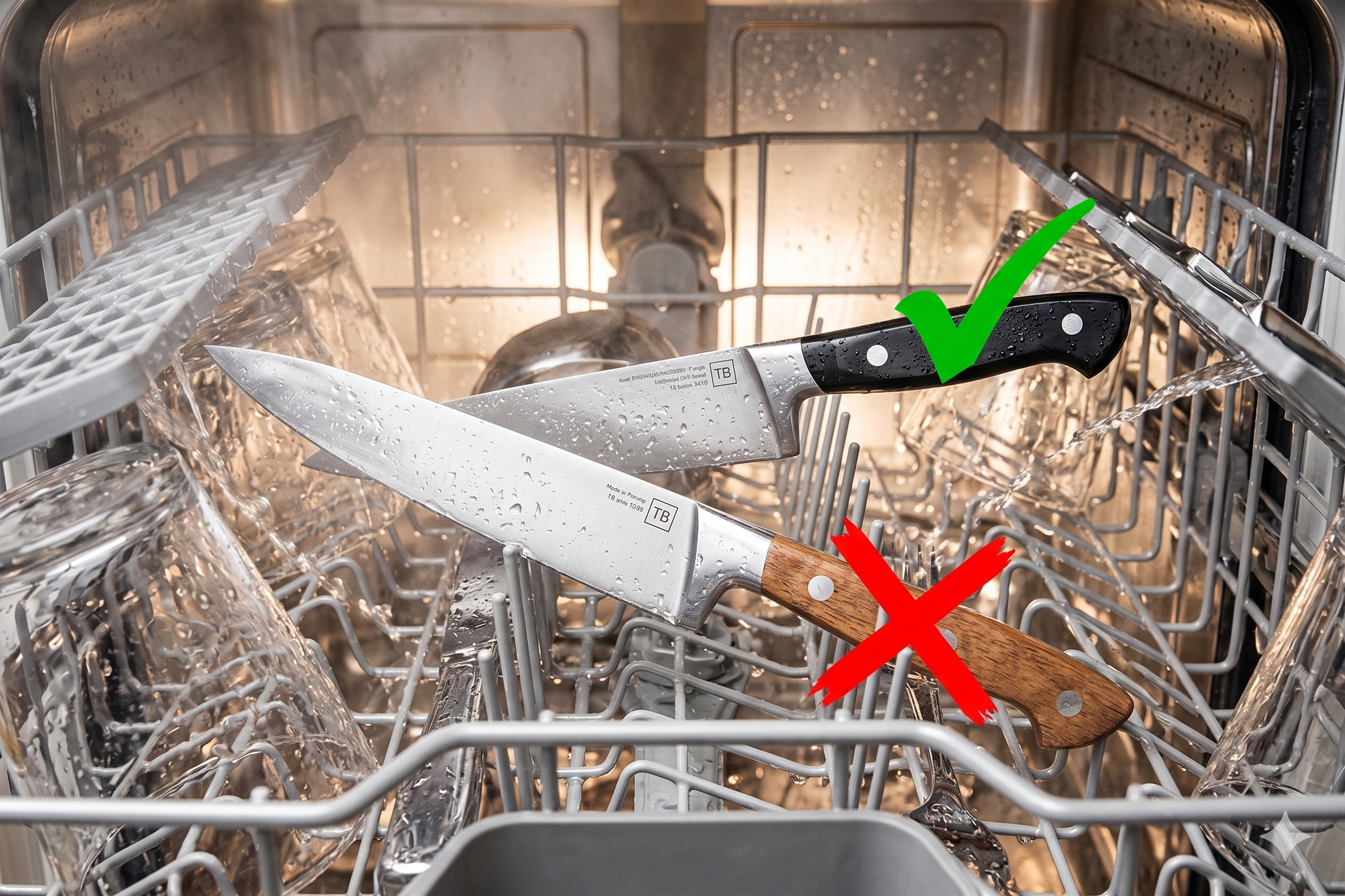
The most common and most devastating mistake is using a dishwasher. Aggressive detergents contain chlorinated agents that attack X46Cr13 steel, causing irreversible pitting corrosion. Furthermore, intense heat expands the knife components, while water jets propel the blades against other objects, instantly dulling the edge. For us, artisans of TB-1648, seeing a full tang knife end up in the dishwasher is a technical heartbreak.
Another harmful practice is leaving a soiled knife on the counter. Organic acids found in lemons, tomatoes, or onions attack the molecular structure of steel if not rinsed off. Even though Nitrox is designed for increased resistance, prolonged exposure eventually tarnishes the mirror polish. Finally, never use your knife as a lever or to cut frozen products. Our smooth blades are optimized for glide and precision, not for brute force. For these tasks, we invite you to explore the entire kitchen collection to choose the appropriate tool.
- Never use a dishwasher, regardless of the collection.
- Never leave to soak in the sink.
- Avoid glass, marble, or slate cutting boards.
- Do not store loosely in a drawer without protection.
How to Store Your Knives to Preserve Their Sharpness?
Storage is often the neglected aspect of maintenance, yet it guarantees safety and the longevity of the edge. A TB-1648 knife stored haphazardly in a drawer is a knife doomed to dullness. Constant friction between blades when opening and closing the drawer creates micro-nicks on the edge, making cutting less clean and more dangerous. We recommend using a high-quality magnetic bar. This solution keeps the blade suspended, avoiding any mechanical contact with the edge, while also showcasing the aesthetic of the piece.
For those who prefer the countertop, a knife block is an excellent alternative, provided the blades are inserted carefully. If you absolutely must store your knives in a drawer, use individual blade guards. This is particularly true for our high-carbon knives or Damascus finishes, where every scratch is an affront to the artisan's work. Storage should also be in a dry place. Although our Nitrox steels are robust, residual moisture in a kitchen can affect wooden handles if they do not breathe properly.
What is the Ideal Frequency for Technical Maintenance?
It's important to distinguish between honing and sharpening. Honing is a daily operation. Before each cooking session, a few passes on a quality honing steel "straighten" the blade's edge. At a microscopic level, the edge of an X46Cr13 steel tends to bend down after repeated impact on the cutting board. The honing steel doesn't remove material; it realigns the molecules. For a regular user, we recommend performing this action systematically. This is the secret of chefs for maintaining a "factory-fresh" cutting sensation.
Sharpening, on the other hand, involves recreating the bevel by removing a tiny layer of steel. This operation should be performed about twice a year for normal domestic use, ideally with a fine-grit whetstone (1000/3000 grit). If you feel your knife requires increased pressure to slice a tomato skin, then it's time. At TB-1648, we design blades with a cutting geometry specifically to facilitate this maintenance, allowing the user to easily find the original angle, usually between 15 and 20 degrees.
| Action | Frequency | Tool Needed |
|---|---|---|
| Honing | Before each use | Round or oval honing steel |
| Sharpening | Every 6 to 12 months | Whetstone |
| Wood Maintenance | Every 3 months | Linseed oil or beeswax |
| Tang Inspection | Once a year | Visual inspection of rivets |
Why Choose a Full Tang Construction for Longevity?
Most of our TB-1648 kitchen knives feature a "full tang" structure. This means the steel of the blade extends the entire length and width of the handle. This technical choice is not just aesthetic; it guarantees perfect balance and unwavering strength. A full tang knife distributes mechanical stress across the entire object, preventing breakage points at the bolster. It's the assurance of a tool that will never separate, even after decades of intensive use.
However, this construction requires particular attention during drying. The gap between the handle scales and the tang, although precisely sealed in our workshops, can accumulate residue if cleaning is neglected. We use stainless steel or brass rivets to ensure a permanent fixation. For the user, this design offers a reassuring grip and optimal force transmission. It is the epitome of forged cutlery, where raw material is tamed to serve culinary excellence.
How do I know if my knife needs sharpening?
The paper test is infallible: try to cut a sheet of paper vertically without forcing. If the blade tears the paper instead of cutting it cleanly, the edge is dull. Another method is to observe the edge under bright light: if you see shiny reflections on the cutting edge, it means the edge is flattened or damaged.
Can wood really last a lifetime?
Yes, provided you never let it become saturated with water. The wood of our Georges knives is selected for its density. By applying food-grade oil from time to time, you nourish the fibers and create a natural hydrophobic barrier that will protect the handle against drying out and cracking.
Frequently Asked Questions about Maintenance
Can I use an electric sharpener on my TB-1648 knives?
We advise against intensive use of electric sharpeners. These devices often remove too much material and can alter the temper of Nitrox steel by overheating. Always prefer a manual stone or professional service.
Why does my blade have small dark spots?
This is likely surface oxidation due to incomplete drying or contact with food acids. Use a mild metal restorer or polishing paste to restore the shine to the X46Cr13 steel.
Which cutting board do you recommend?
Prioritize wood (beech, bamboo, walnut) or high-density polypropylene. These materials "absorb" the impact of the blade, unlike glass or ceramic which instantly dull the edge.