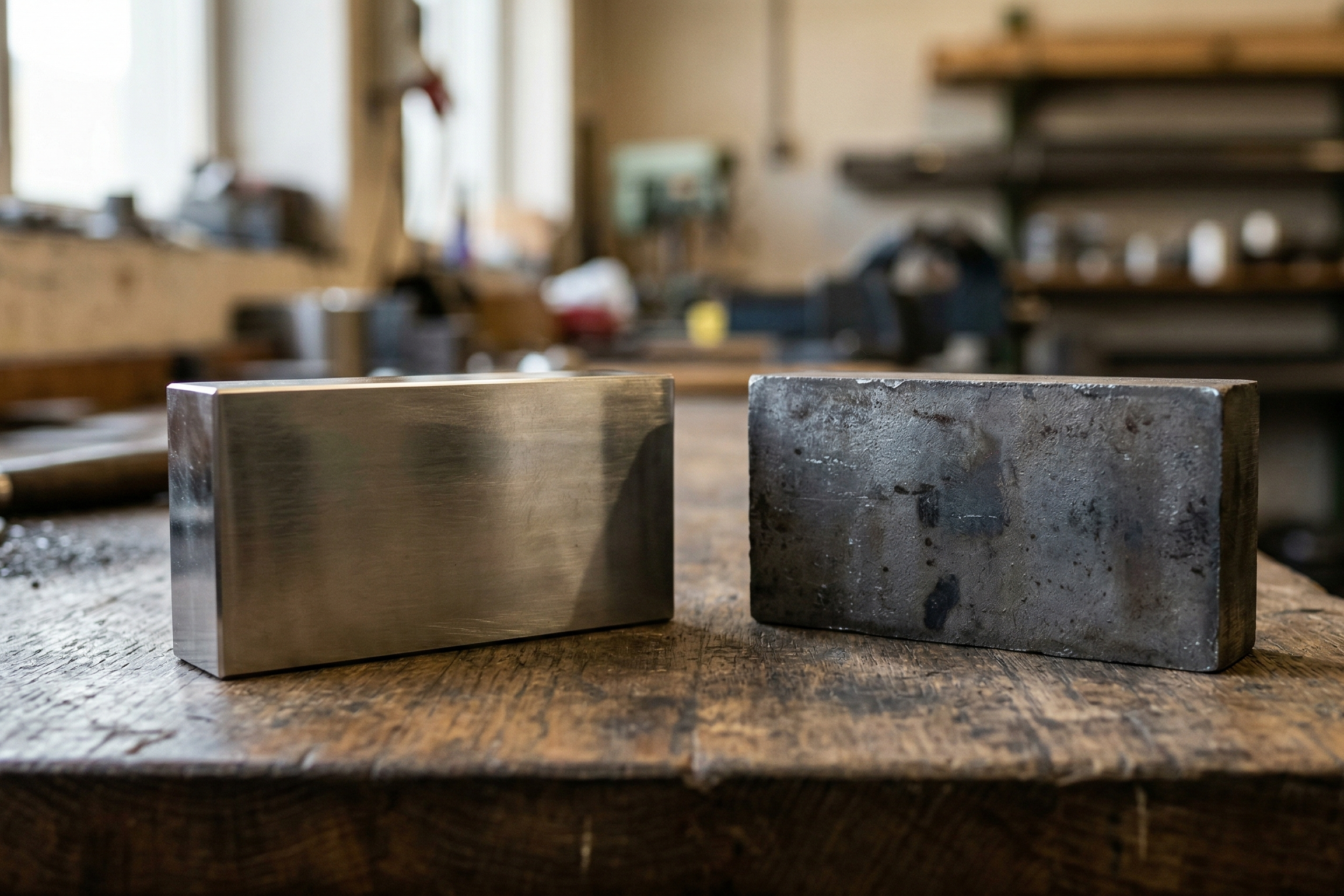

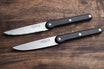
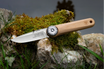
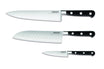
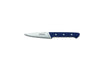
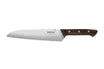

In the arsenal of any cooking enthusiast, two iconic figures share the spotlight: the paring knife and the chef's knife. At TB-1648, we believe that these two instruments are not competitors but complementary. One excels in precision and handheld tasks, while the other dominates the cutting board with its robustness and range. Understanding their technical differences, from steel forging to handle ergonomics, is essential to transforming your culinary routine into a high-precision experience. Whether you're preparing an ancient vegetable velouté or an exceptional cut of meat, the choice of blade directly influences the texture of your food and your working comfort.
Quick Comparison: Paring vs. Chef
- The paring knife offers unparalleled maneuverability for detailed tasks.
- The chef's knife allows a rocking motion for quick chopping and slicing.
- Blade size varies from 7-11 cm for the paring knife vs. 15-25 cm for the chef's knife.
- The chef's knife is the multi-functional centerpiece of the professional kitchen.
Why are these two distinct cutting philosophies?
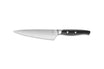
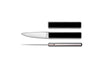
The paring knife embodies precision above all else. Its small size makes it a natural extension of the fingers for peeling, hulling, or sculpting. It is the tool for delicate preparation tasks where visual and tactile control is paramount. In contrast, the chef's knife, like our Brigade Forgé Premium model, is designed for power and efficiency on large volumes. Its curved blade and robustness allow it to handle fine herbs as well as dense vegetables or poultry.
The history of these blade shapes dates back to the forging traditions of Thiers, where ergonomics were refined to meet the needs of kitchen brigades. The paring knife allows for an "in-hand" grip for peeling an apple, while the chef's knife requires constant support from a cutting board to leverage its balance point. Choosing one or the other means deciding whether the motion should be guided by the wrist for finesse or by the shoulder for strength.
- The Paring Knife: Detail work, peeling, incising, ideal for small fruits and vegetables.
- The Chef's Knife: Slicing, chopping, cutting large pieces, professional use.
- Maneuverability: The paring knife excels in tight spaces.
- Versatility: The chef's knife excels in a variety of heavy-duty tasks.
- Balance: Center of gravity towards the bolster for the chef's knife, towards the handle for the paring knife.
How to choose between precision and versatility?
The technicality of a TB-1648 knife is measured by its ability to maintain a lasting edge despite demands. For a paring knife, we look for a thin, rigid blade capable of reaching the narrowest corners of vegetables. For a chef's knife, the HRC hardness must be optimal to withstand repeated rocking motion without prematurely dulling. The table below details these structural differences.
| Characteristic | Paring Knife | Chef's Knife (Gyuto) |
|---|---|---|
| Blade Length | 7 to 11 cm | 15 to 25 cm |
| Average Weight | 40g to 80g | 180g to 250g |
| Type of Cut | Precision / Detailed | Rocking / Chopping |
| Hardness (HRC) | 56-58 HRC (Nitrox Steel) | 58-60 HRC (Forged Steel) |
Daily use often requires alternating between these two extremes. While a utility knife can serve as a bridge, the enlightened amateur will prefer to own both. The Thau N°3 chef's knife, designed by Guy Savoy, perfectly illustrates this pursuit of excellence where the balance between the tang and the blade allows for effortless cutting, even on tough products.
When to use one or the other in the kitchen?
Knowing when to switch tools is the mark of an organized cook. The classic mistake is trying to do everything with a large knife, risking injury on small surfaces, or forcing a small knife on a squash, risking breaking the blade.
- Use the paring knife for: Hulling strawberries, peeling asparagus, removing potato eyes, incising a chestnut.
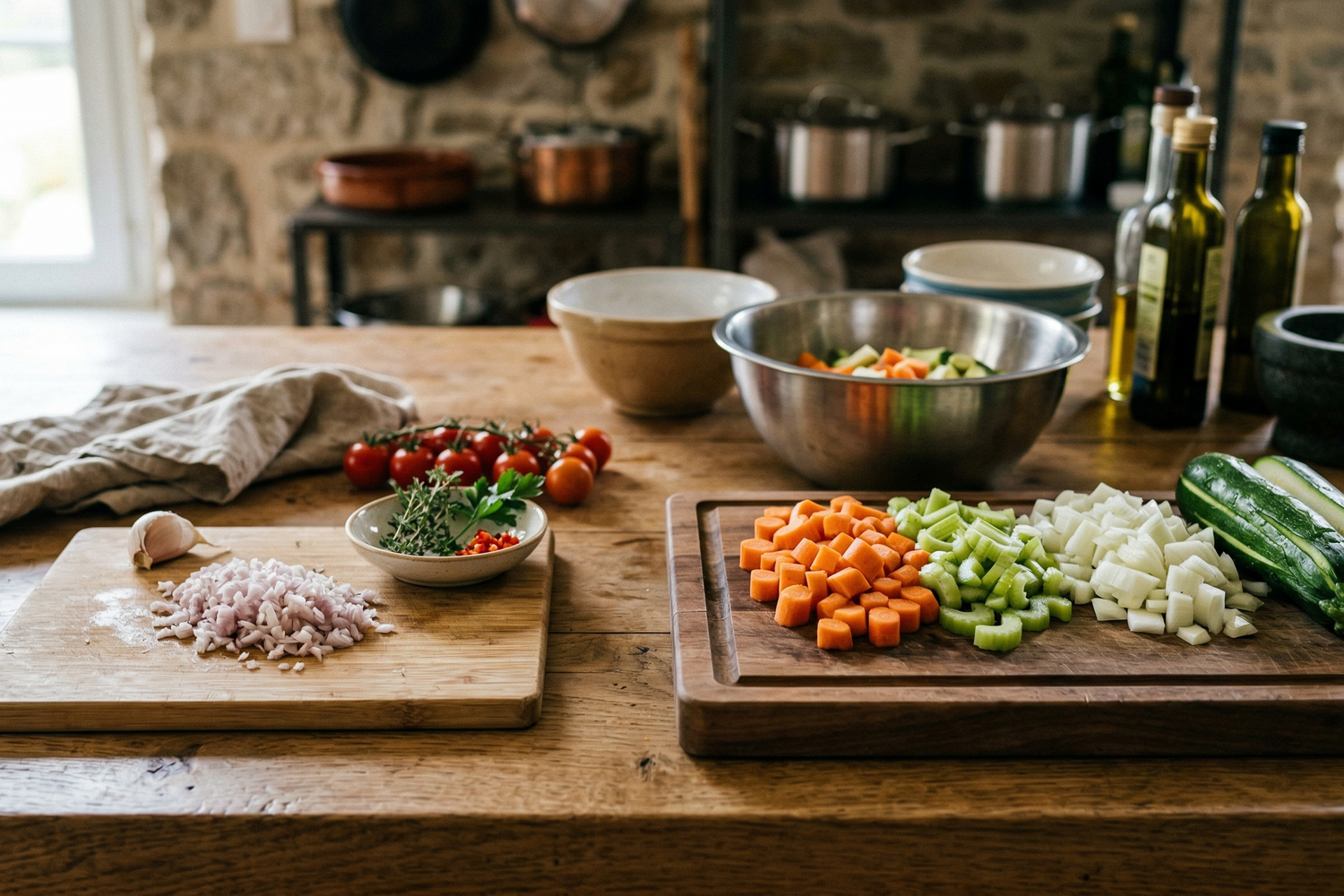
- Use the chef's knife for: Chopping an onion, shredding cabbage, slicing a roast, crushing a garlic clove with the flat side of the blade.
- Precautions: Never use either on bones or frozen food.
- Cutting surface: Always prefer wood to preserve the edge of our Thiers steel knives.
| Model | Recommended Method | Frequency |
|---|---|---|
| Paring Knife | Whetstone (Fine grit) | Every 3 months |
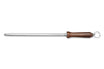
| Chef's Knife | Honing steel or Water stone | Before each intense use |
How to maintain your TB-1648 knives for maximum longevity?
A knife forged in Thiers is an investment for life. Maintenance should not be neglected, as the fineness of the paring knife's edge is as vulnerable as the large surface of the chef's knife is susceptible to oxidation if not dried immediately.
- Washing: Hand wash only with a non-abrasive sponge.
- Drying: Immediately with a soft cloth to prevent limescale stains and oxidation.
- Storage: Knife block or magnetic strip to prevent edges from clashing.
- Sharpening: Maintain an angle of 15 to 20 degrees to preserve the original profile.
Conclusion on the indispensable duo
Ultimately, pitting the paring knife against the chef's knife is a false debate. The former provides the precision essential for finishing touches, while the latter ensures the structure and speed of your preparations. Owning a duo from the TB-1648 collections ensures complete mastery of the cutting process, from simple peeling to final plating. We invite you to test the perfect balance of our Georges handles or the technical elegance of the Furtif range to feel the Thiers passion with every movement. Your kitchen deserves tools that match your creativity.
Frequently Asked Questions about our blades
Can a chef's knife be used to peel fruits?
What is the hardness of TB-1648 knife steel?
Is the paring knife suitable for cutting meat?
TB-1648 Cutlery Glossary
- HRC Hardness: Rockwell scale measuring the steel's resistance to penetration; the higher the number, the harder the steel.
- Rocking Motion: A cutting technique specific to the chef's knife that uses the blade's curvature to chop without fully lifting the knife from the board.
- Bolster: The solid metal part between the blade and the handle, providing finger protection and tool balance.