

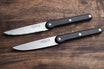

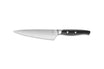
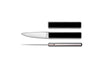
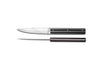
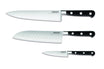

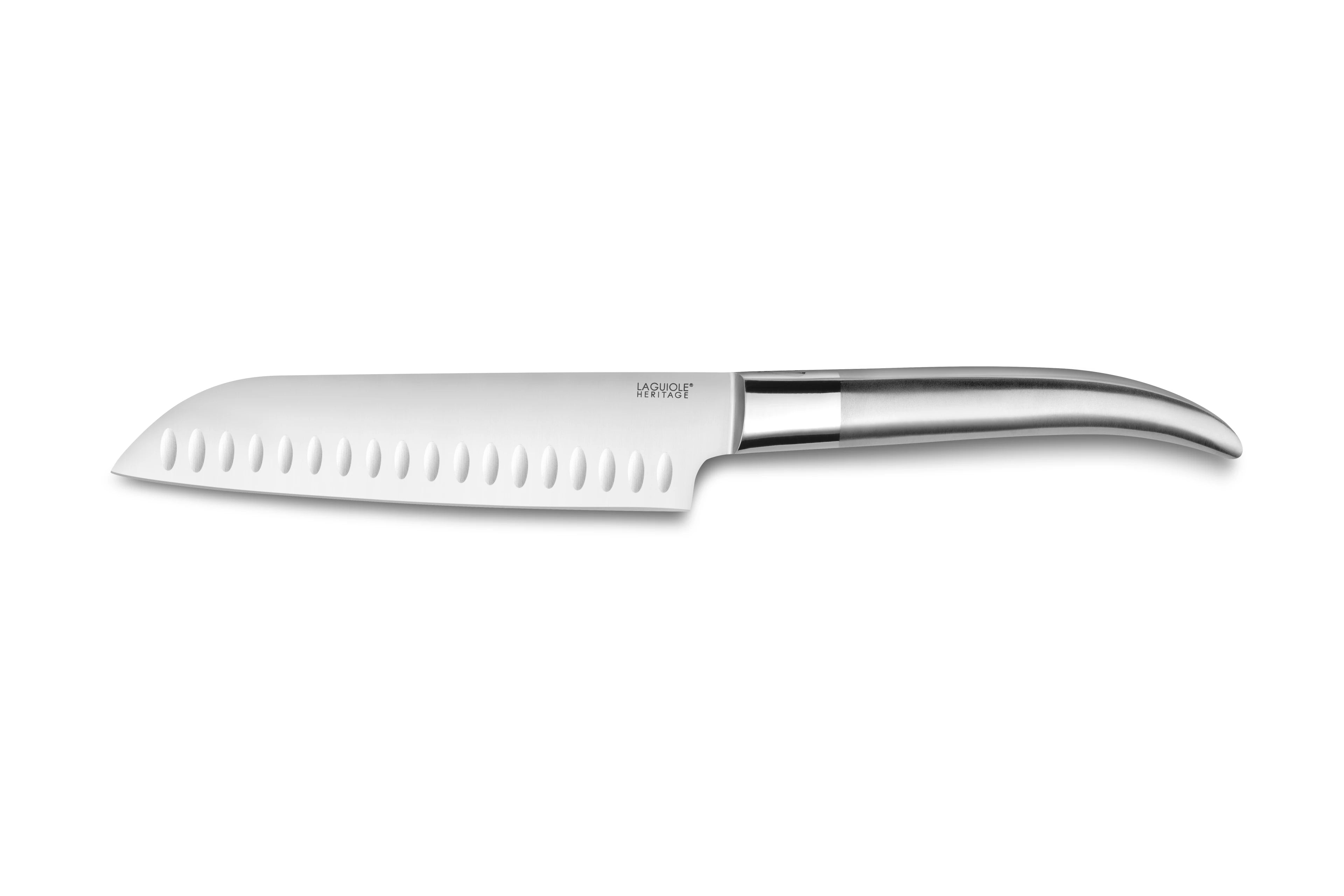
Santoku 18cm Laguiole Héritage
Product specifications
180
Steel
Smooth
Pointue
The durability of a large kitchen knife relies on the connection between its different components. This imported model stands out for its highly robust monobloc configuration. The blade has reinforced thickness to absorb pressure when cutting dense vegetables or large pieces of meat. The absence of rivets or gaps between the edge and the handle eliminates any mechanical weak points. A forged stainless steel bolster ensures a perfect transition to the satin stainless steel handle. This solid metal piece protects your fingers while shifting the center of gravity towards the middle of the tool. The resulting balance reduces wrist fatigue during repetitive movements. To honor the cutlery inspiration, the back of the handle features an engraved bee, a discreet aesthetic signature on this streamlined silhouette. Every aspect of this kitchen knife has been designed to combine longevity and technical efficiency. The table below summarizes the specifications of our model. The regularly spaced hollows along the blade's length create small air pockets during cutting. This system prevents thin slices of moist vegetables (such as cucumbers or potatoes) or delicate fish flesh from sticking to the steel, allowing for faster and cleaner work. Yes. Its full high-quality stainless steel construction and monobloc structure give it high resistance to dishwasher cycles. Unlike natural wood or riveted polymer handles, it is not afraid of prolonged exposure to hot water or detergents. To preserve the edge of your Santoku knife, we recommend regularly using a suitable maintenance tool, such as a sharpening steel or a double diamond sharpener. Also, make sure to cut your food on soft surfaces, such as wood or plastic cutting boards, avoiding glass and marble. What are the key features of this hollow-ground Santoku knife?
How does the monobloc structure optimize robustness in the kitchen?
What are the technical characteristics of this Santoku knife?
Component Technical Specification User Benefit Blade length 18 cm Ideal and versatile size for slicing vegetables and cutting proteins Material High-quality stainless steel Durable cutting power and excellent food neutrality Edge geometry Hollow-ground blade with reinforced thickness Non-stick effect and perfect rigidity under stress Handle finish Satin stainless steel Ergonomic grip and sleek contemporary aesthetic Your frequently asked questions about using the Santoku knife
What is the purpose of the hollows on the blade of this Santoku?
Is this all-stainless steel knife truly dishwasher safe?
How do I maintain the professional 18 cm edge?