
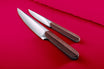
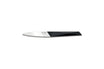

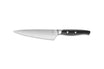

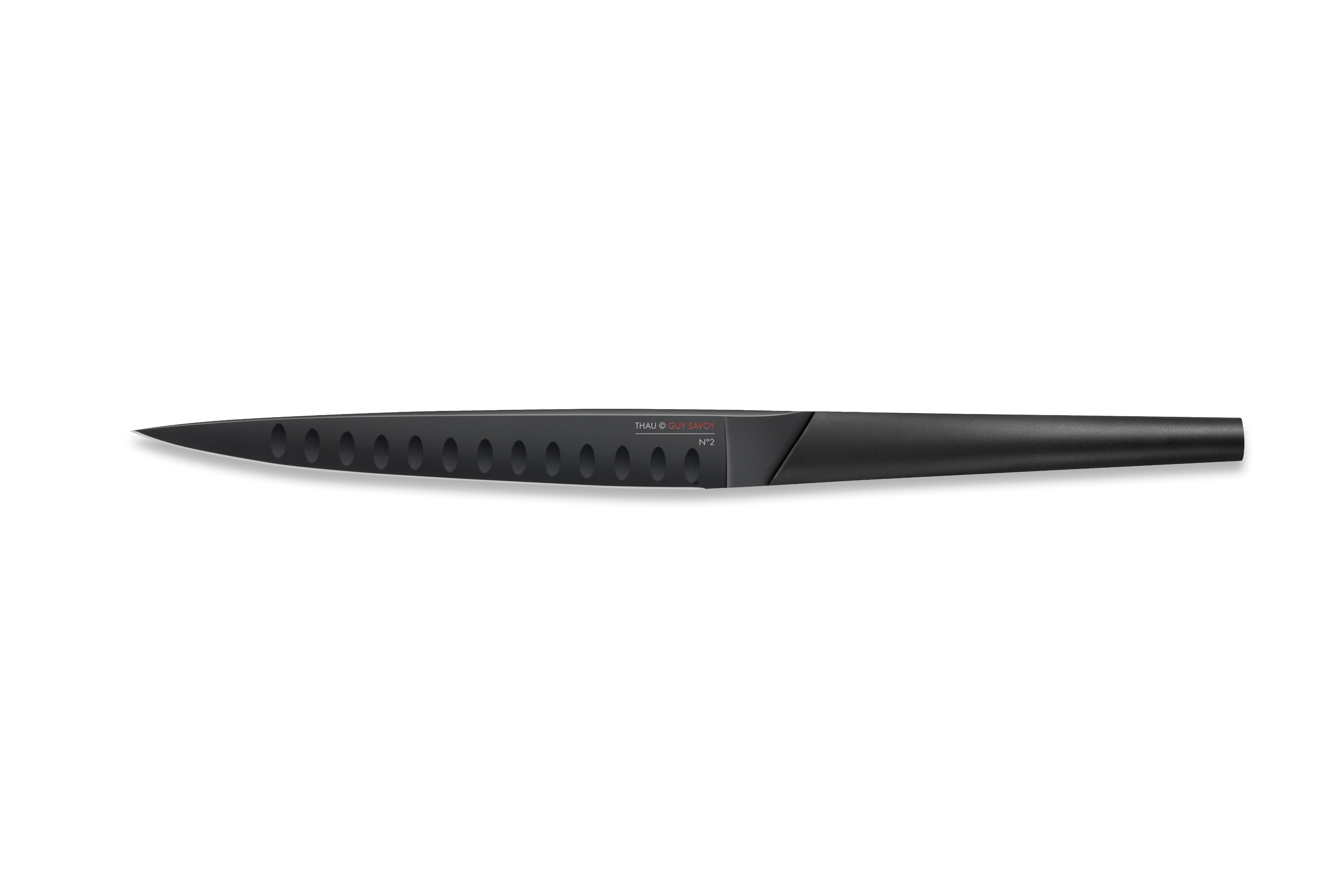
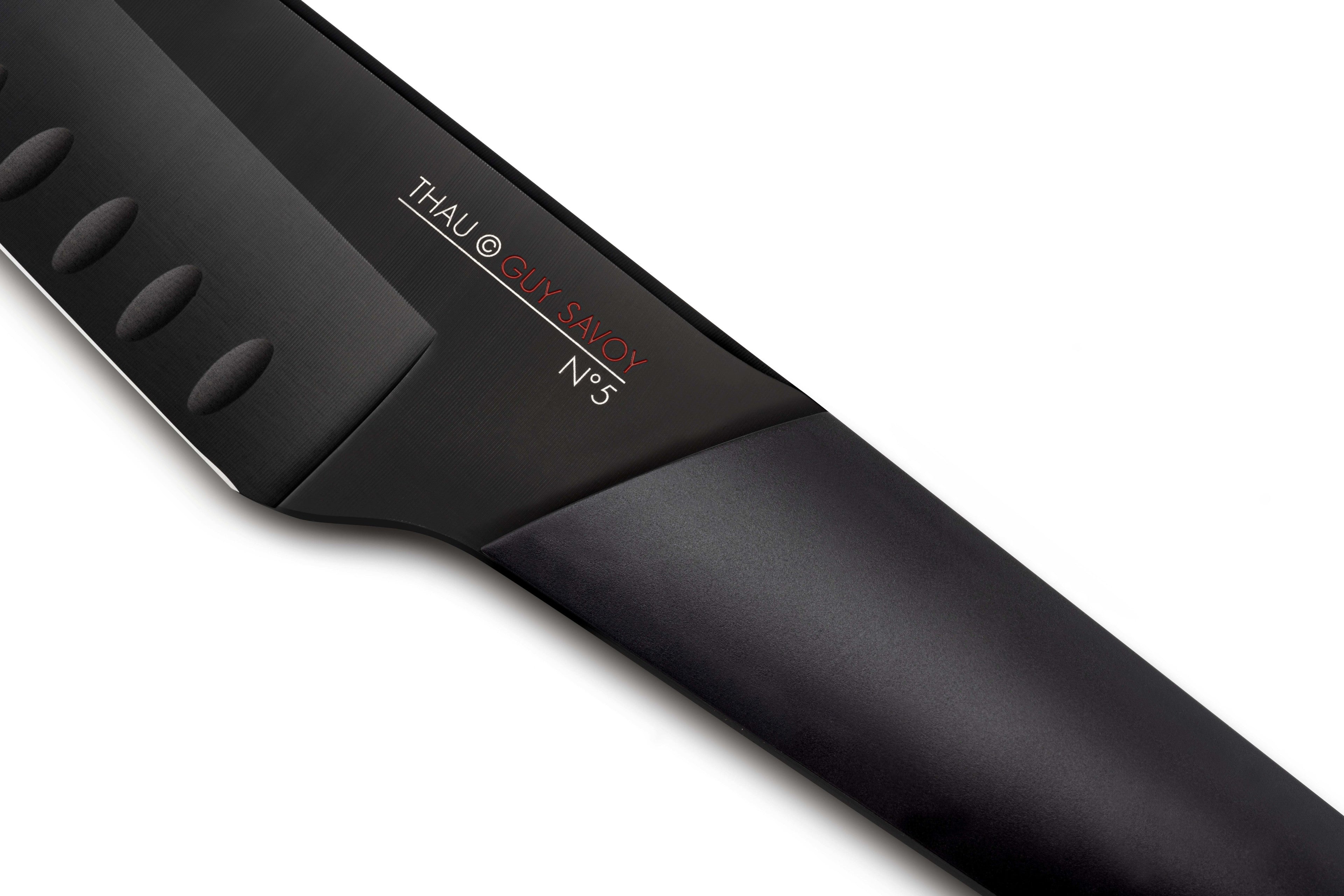
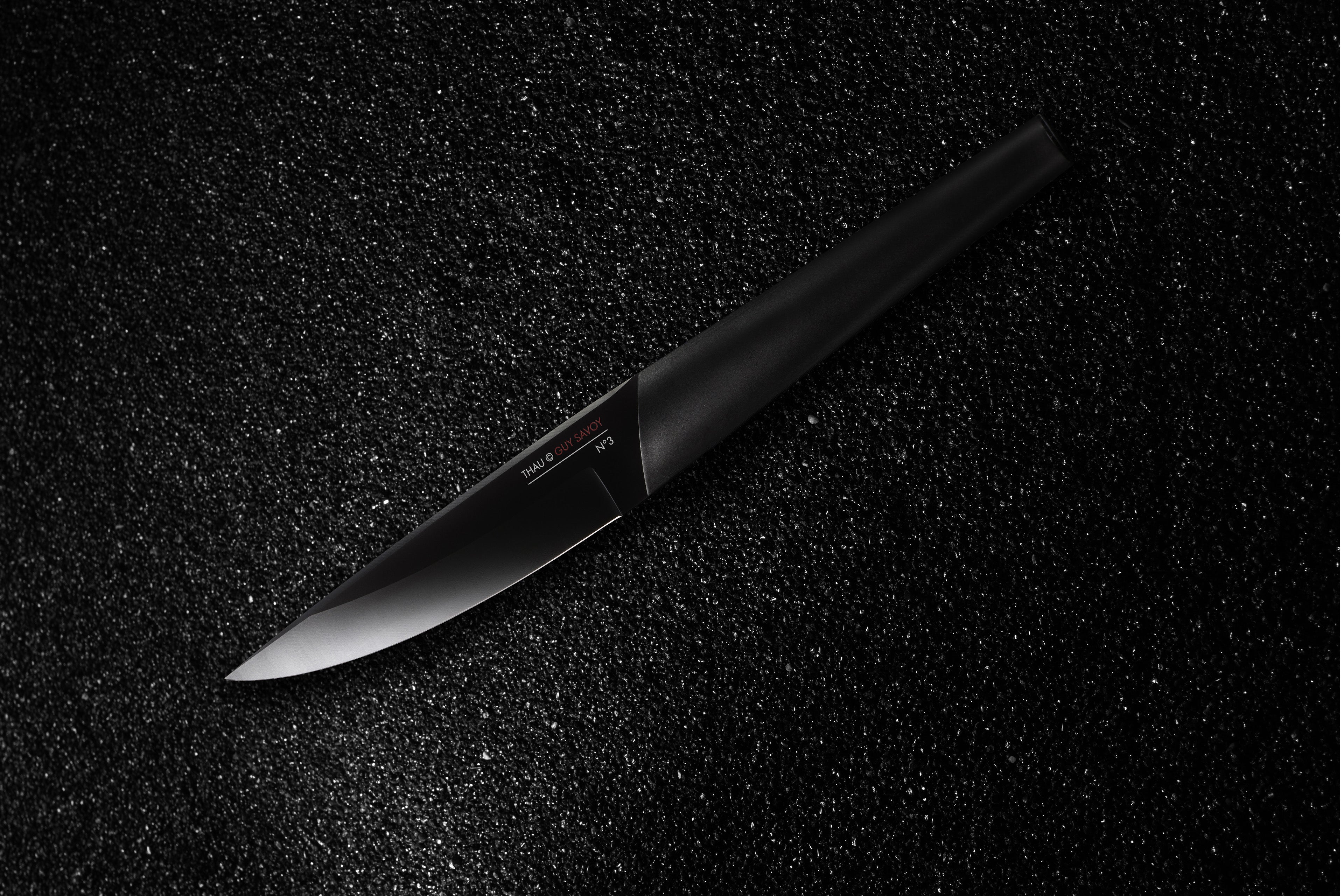
"Thau" No. 2 Fillet Knife by Guy Savoy and Bruno Moretti for TB-1648

A blade so flexible it can bend like a bow; its great finesse combined with this incredible flexibility makes it the most effective knife for filleting fish.
Product specifications
(in g)
230
(in mm)
185
(in mm)
139.08
Technical polymer
(Per side in °)
18
full tang
Mox
Smooth
56-58
Two ranges of knives have emerged
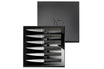
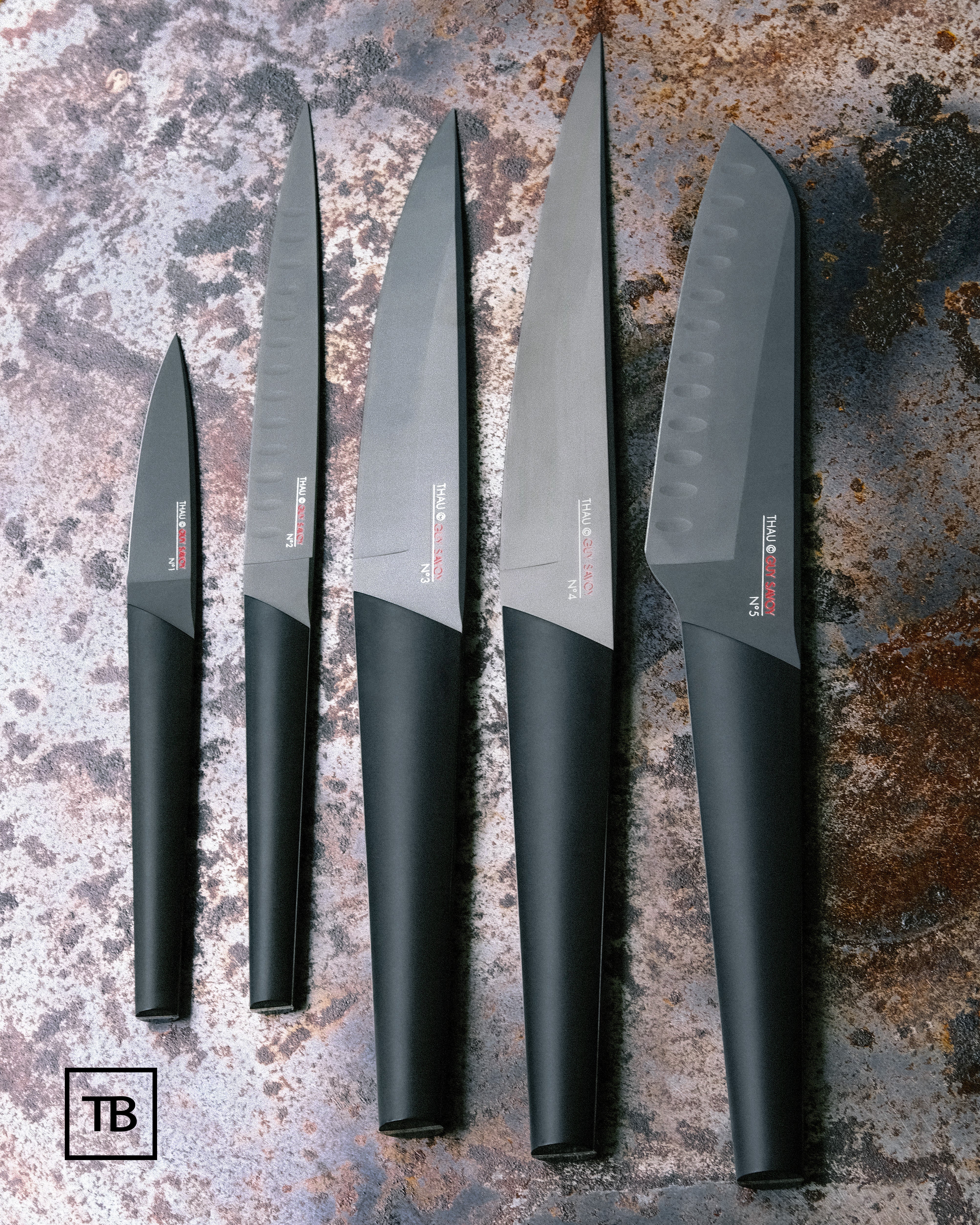
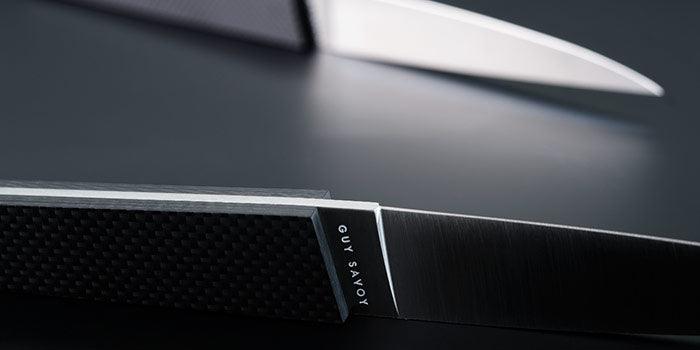
The result of observation and reflection by the Guy Savoy - Bruno Moretti duo, high-level technologies, know-how and the industrial production capacity of Tarrerias Bonjean, two ranges of knives have emerged: the "Ulu and Savik" table knives on the one hand, and the "de Thau" kitchen knives on the other.
Discover our range of knives
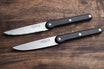
The “Ulu and Savik” range of table knives corresponds to Guy Savoy’s desire to establish continuity between the kitchen and the dining room, the two worlds having to respond to each other.
The “de Thau” range of kitchen knives combines aesthetic qualities with comfort at work. It is intended for cooking enthusiasts, professionals or amateurs.
Kitchen knives with an “aero-aqua dynamic” shape!
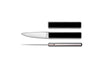
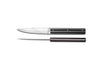
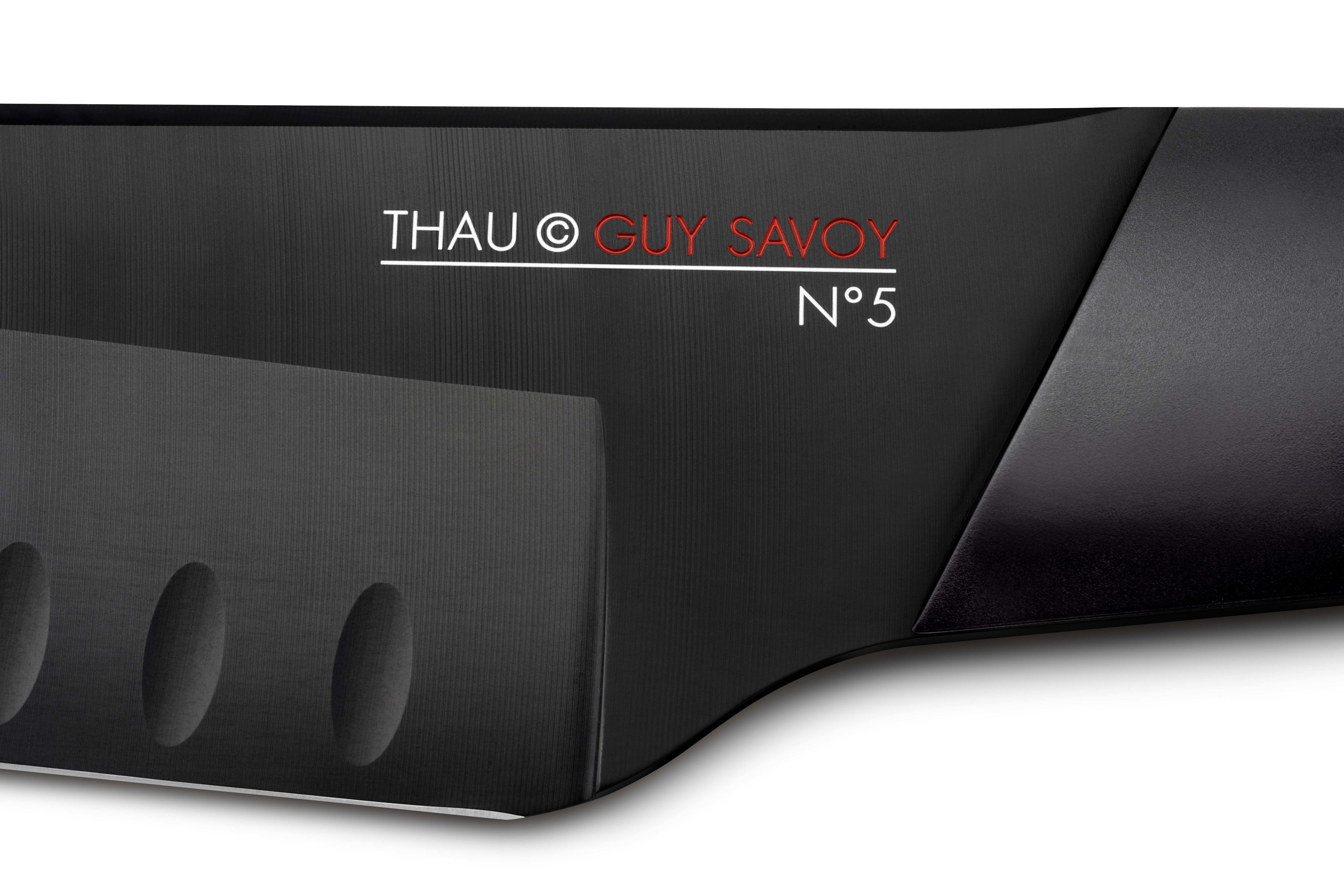
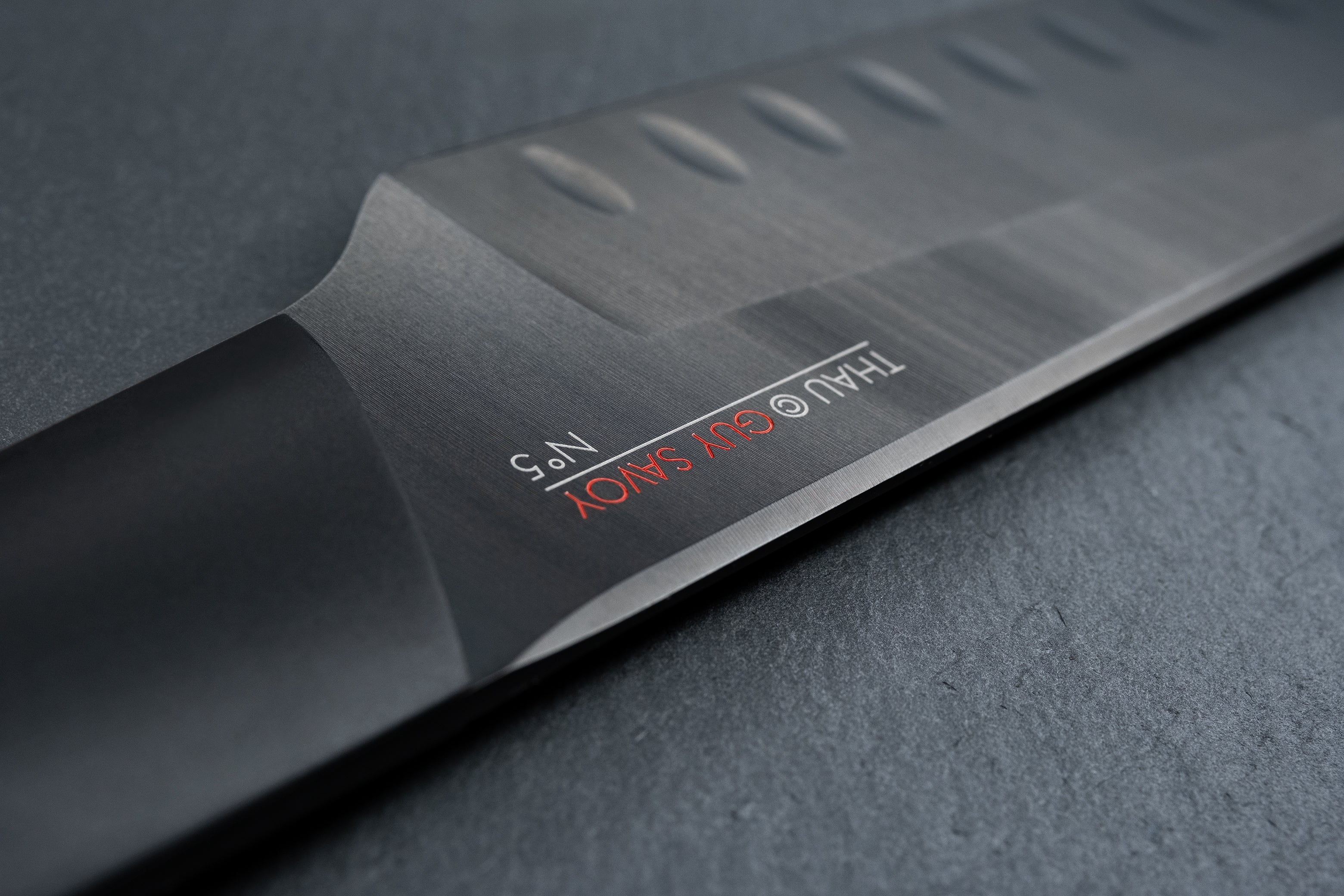
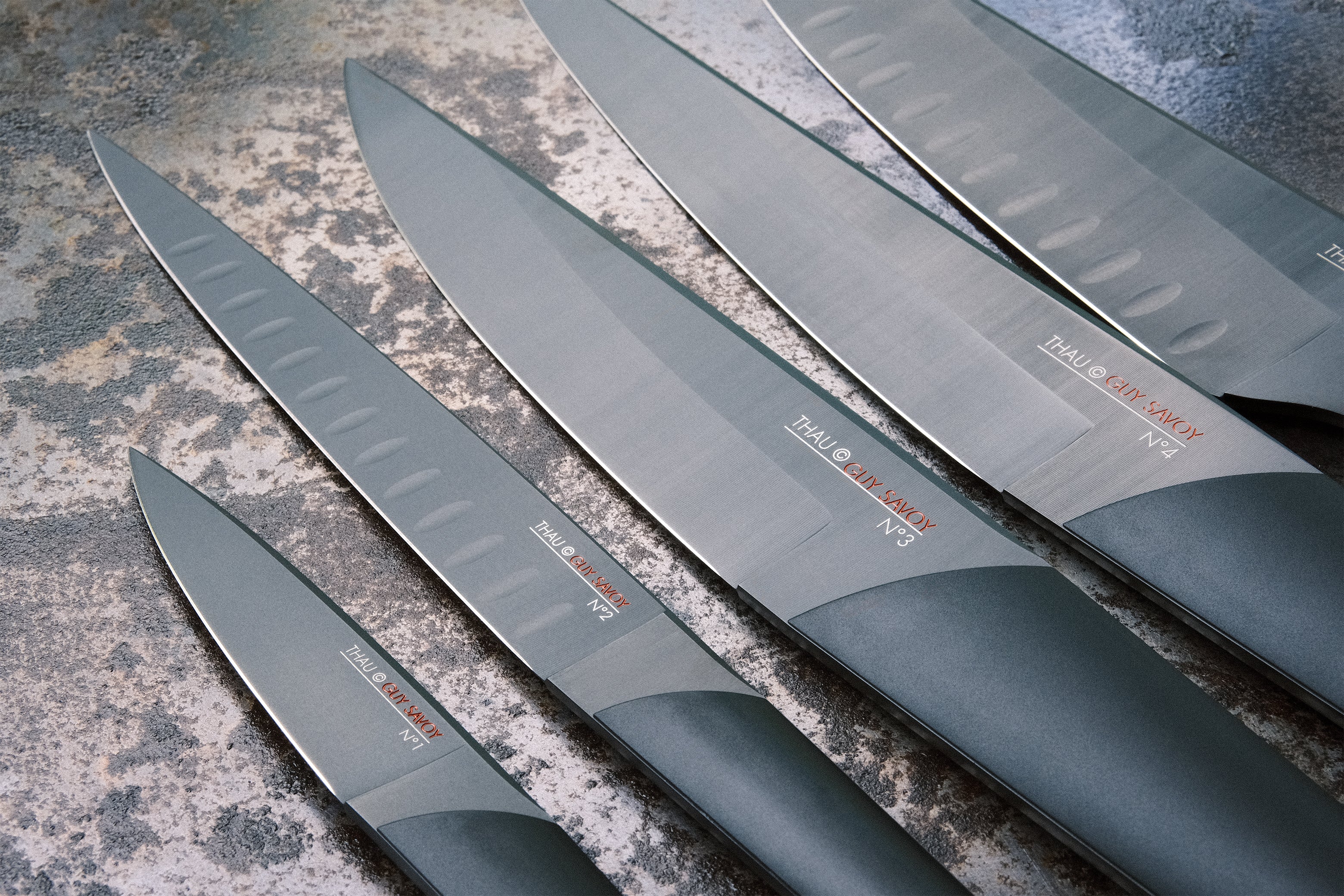
The blade is deeply engraved rather than simply marked on the surface, unlike most knives; the fine and extremely detailed engraving is then carefully lacquered by hand. This blade, made of tempered steel, is composed of mox steel coupled with an almost indestructible PVD treatment, which provides exceptional corrosion resistance. This treatment has turned it black, just like the handle, creating a seamless continuity between the two and giving the knife a sleek, aggressive, and smooth profile… like a shining cetacean leaping out of the water: an “aero-aqua dynamic” shape!
Kitchen knives of great comfort
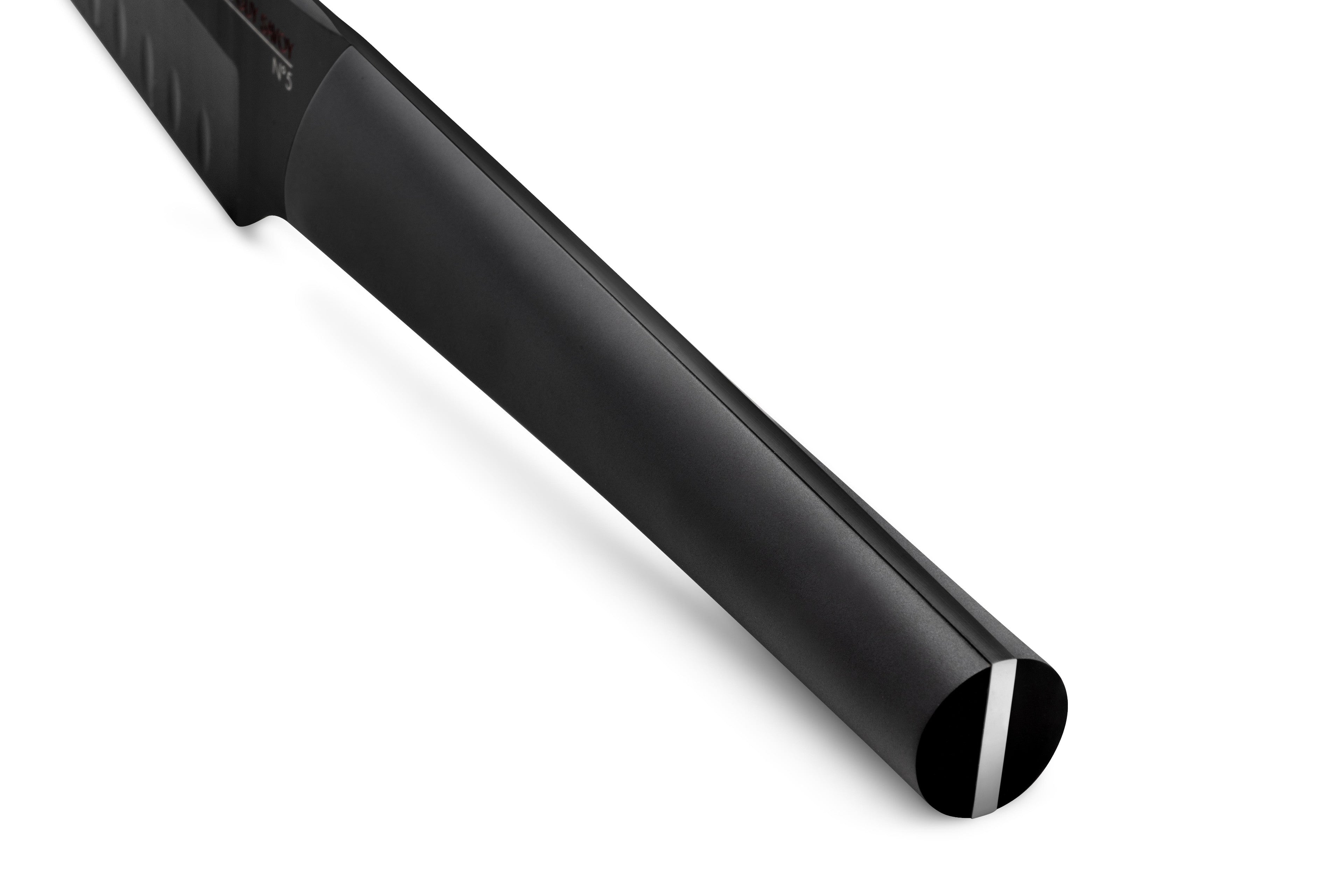
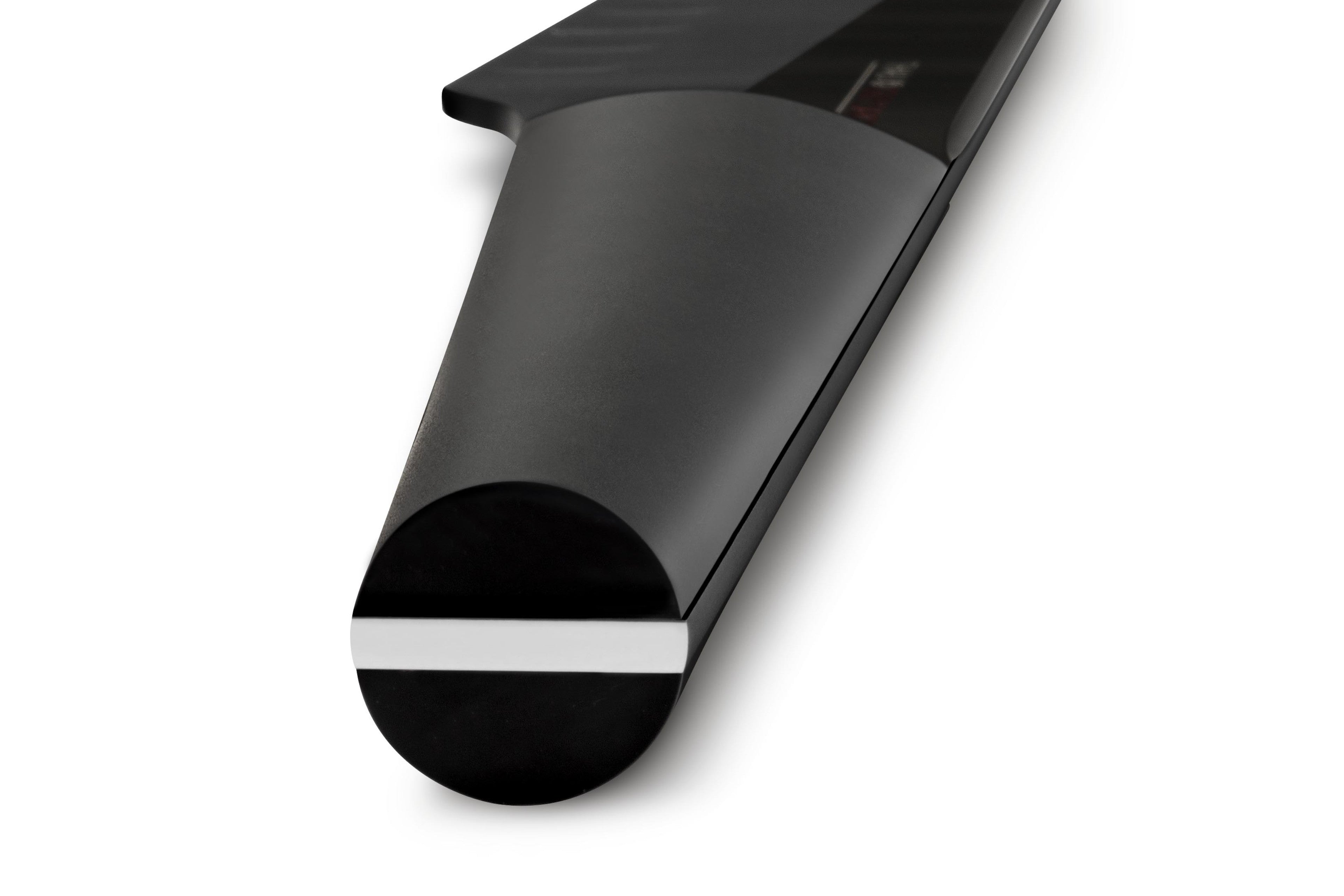
Designer Bruno Moretti observed kitchen work and discovered that chefs often hold the same knife for hours, frequently resting their index finger on the back of the blade for more strength and precision, and that their hand or finger could sometimes slip on the blade. He aimed to create knives that provide great comfort for chefs. The handle size is significantly larger than the standard dimension, offering the same comfort to all hands, as they can position themselves at different levels on the handle depending on their shape and size. The angle of the bolster (the 45° connection between the blade and the handle) has been reversed to ensure better protection for the hand. The back of the blade has been rounded to prevent discomfort during prolonged contact with the finger.
Au-delà de sa fonction première, le Filet de Sole Thau est un allié précieux pour toute découpe fine demandant de la précision. Le contact fréquent avec le sel et l'humidité des poissons nécessite un entretien rigoureux pour préserver l'acier Mox. Affilage robotisé : Procédé utilisant un scan 3D pour garantir un angle de coupe constant et parfait sur toute la lame. Acétate de cellulose : Polymère écologique issu du bois, remplaçant les plastiques pétrochimiques pour le manche. Meulage numérique : Amincissement de la lame à 0,3 mm via des machines à commande numérique pour une pénétration optimale.En cuisine : que préparer avec ce couteau ?
Entretien et longévité
Méthode
Usage conseillé
Pierre à eau (Grain fin)
Entretien régulier pour une coupe "rasoir"
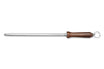
Fusil de boucher
Redresser le fil avant chaque session de découpe
Glossaire Thau®
Kitchen knives with an “aero-aqua dynamic” shape!
The blade is deeply engraved rather than simply marked on the surface, unlike most knives; the fine and extremely detailed engraving is then carefully lacquered by hand. This blade, made of tempered steel, is composed of mox steel coupled with an almost indestructible PVD treatment, which provides exceptional corrosion resistance. This treatment has turned it black, just like the handle, creating a seamless continuity between the two and giving the knife a sleek, aggressive, and smooth profile… like a shining cetacean leaping out of the water: an “aero-aqua dynamic” shape!
Kitchen knives of great comfort
Designer Bruno Moretti observed kitchen work and discovered that chefs often hold the same knife for hours, frequently resting their index finger on the back of the blade for more strength and precision, and that their hand or finger could sometimes slip on the blade. He aimed to create knives that provide great comfort for chefs. The handle size is significantly larger than the standard dimension, offering the same comfort to all hands, as they can position themselves at different levels on the handle depending on their shape and size. The angle of the bolster (the 45° connection between the blade and the handle) has been reversed to ensure better protection for the hand. The back of the blade has been rounded to prevent discomfort during prolonged contact with the finger.
Au-delà de sa fonction première, le Filet de Sole Thau est un allié précieux pour toute découpe fine demandant de la précision. Le contact fréquent avec le sel et l'humidité des poissons nécessite un entretien rigoureux pour préserver l'acier Mox. Affilage robotisé : Procédé utilisant un scan 3D pour garantir un angle de coupe constant et parfait sur toute la lame. Acétate de cellulose : Polymère écologique issu du bois, remplaçant les plastiques pétrochimiques pour le manche. Meulage numérique : Amincissement de la lame à 0,3 mm via des machines à commande numérique pour une pénétration optimale.En cuisine : que préparer avec ce couteau ?
Entretien et longévité
Méthode
Usage conseillé
Pierre à eau (Grain fin)
Entretien régulier pour une coupe "rasoir"
Fusil de boucher
Redresser le fil avant chaque session de découpe
Glossaire Thau®
FAQ
Peut-on couper de la viande avec un filet de sole ?
Pourquoi le manche n'a-t-il pas de rivets ?
Comment le nettoyer après avoir coupé du poisson ?
Est-il compatible lave-vaisselle ?