
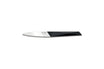

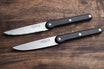
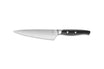
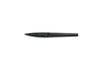
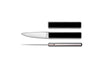

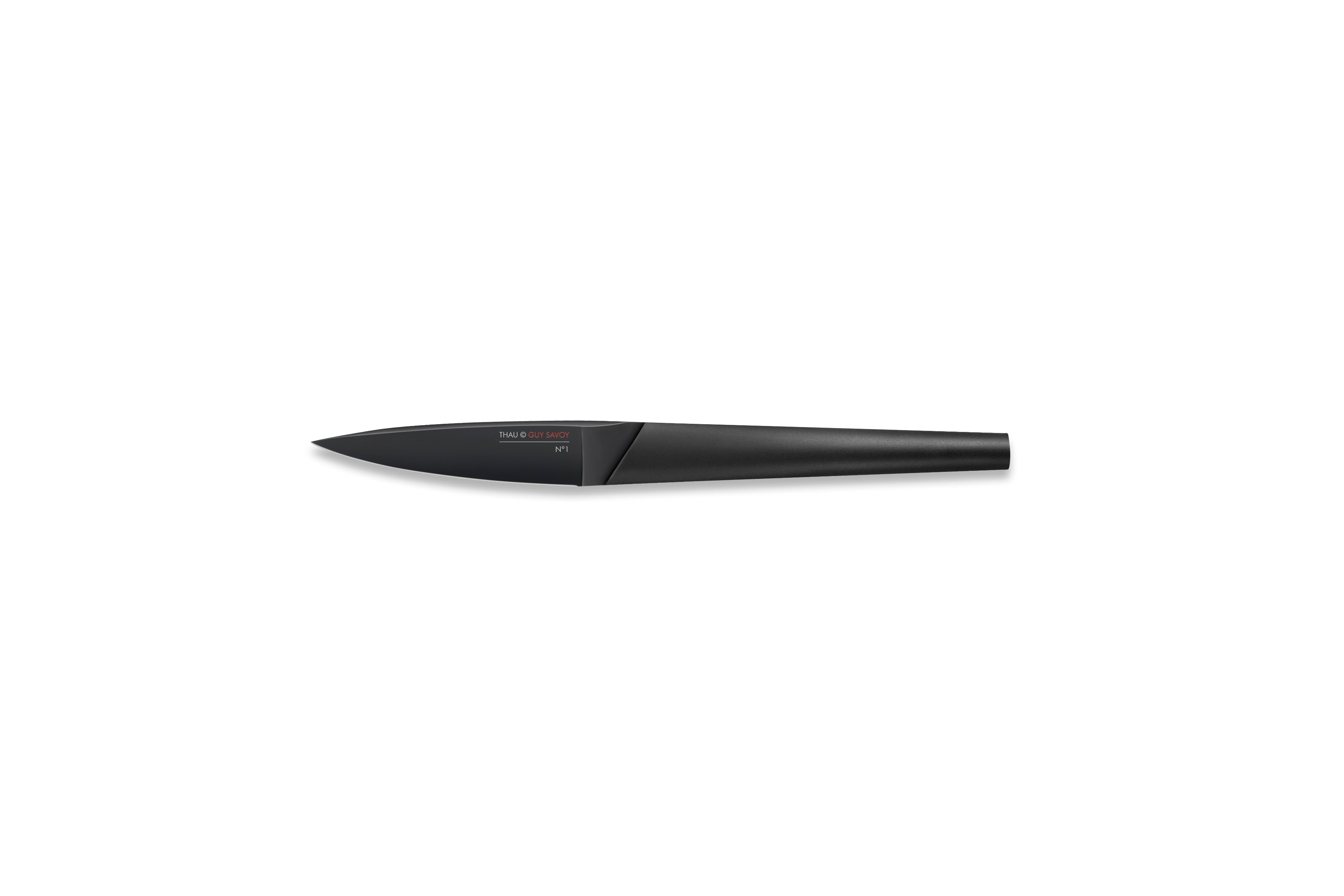
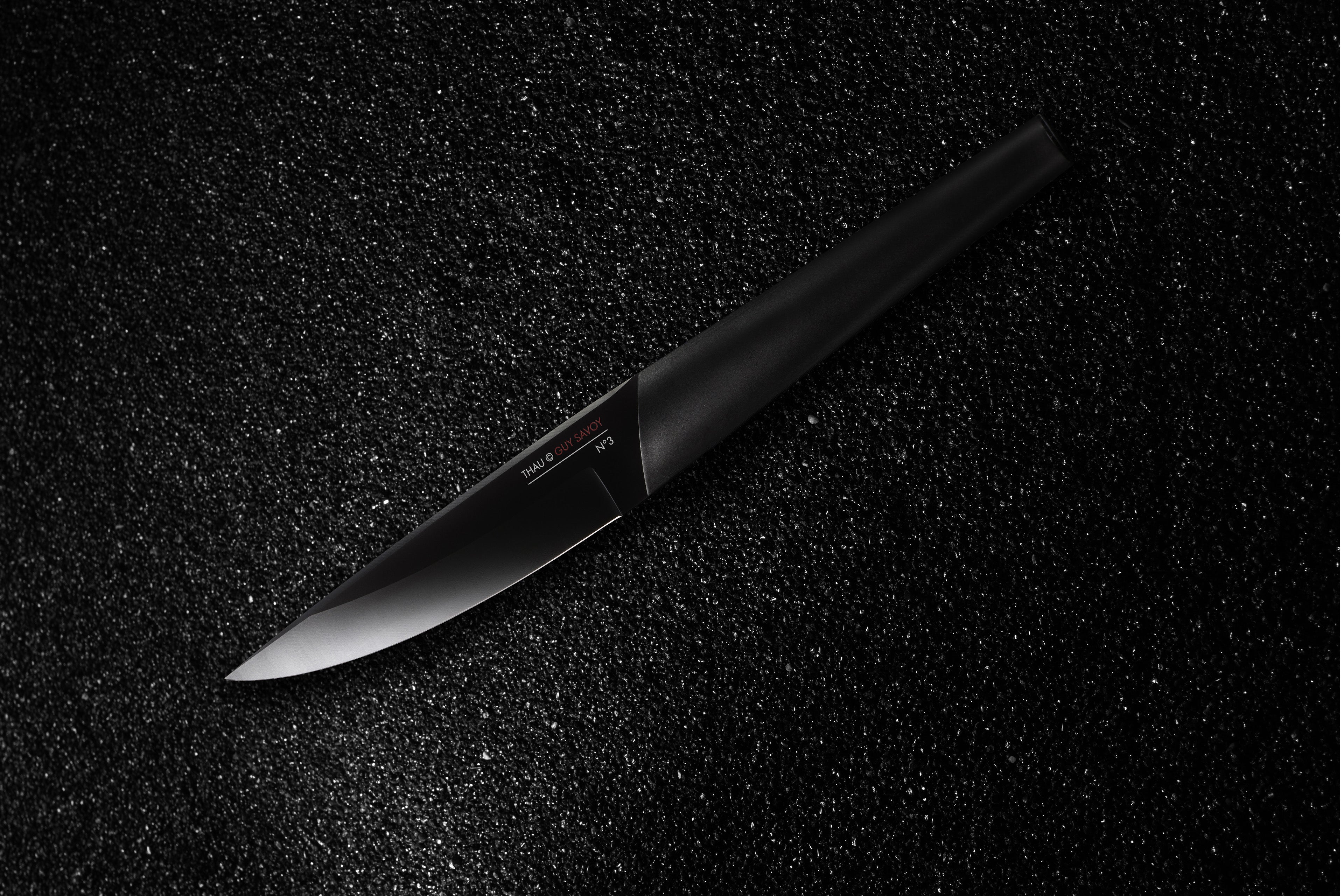
"Thau" N°1 Paring knife by Guy Savoy and Bruno Moretti for Tarrerias Bonjean

It’s the smallest, but also the most multipurpose. It’s the "all-purpose knife," perfect for the countless peeling tasks in the kitchen, and for those small jobs, without which great dishes wouldn’t exist!
Product specifications
(in g)
230
(in mm)
100.1
(in mm)
117.24
Technical polymer
(Per side in °)
16
full tang
Mox
Smooth
54-56
Two ranges of knives have emerged
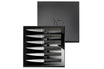
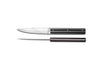
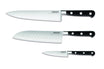
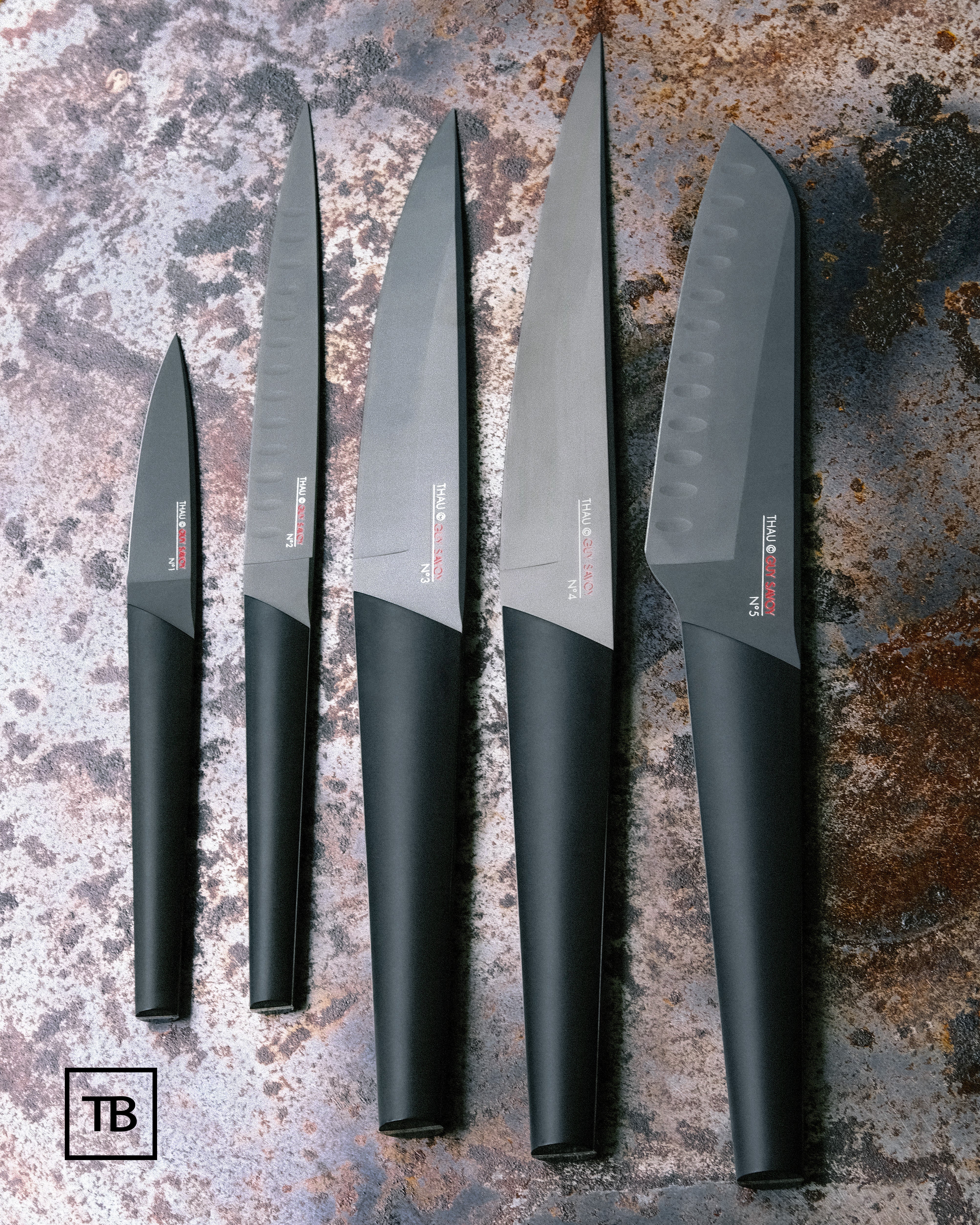
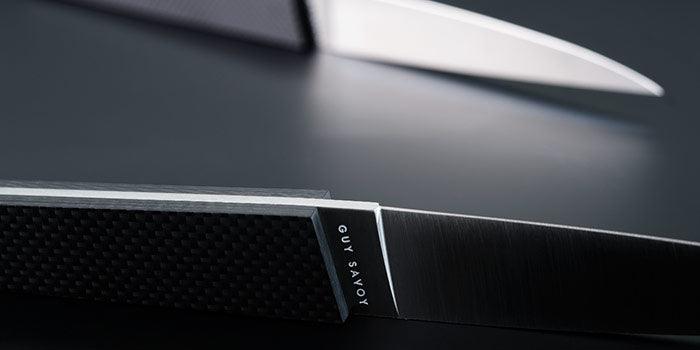
The result of observation and reflection by the Guy Savoy - Bruno Moretti duo, high-level technologies, know-how and the industrial production capacity of Tarrerias Bonjean, two ranges of knives have emerged: the "Ulu and Savik" table knives on the one hand, and the "de Thau" kitchen knives on the other.
Discover our range of knives
The “Ulu and Savik” range of table knives corresponds to Guy Savoy’s desire to establish continuity between the kitchen and the dining room, the two worlds having to respond to each other.
The “de Thau” range of kitchen knives combines aesthetic qualities with comfort at work. It is intended for cooking enthusiasts, professionals or amateurs.
Kitchen knives with an "aero-aqua dynamic" design!
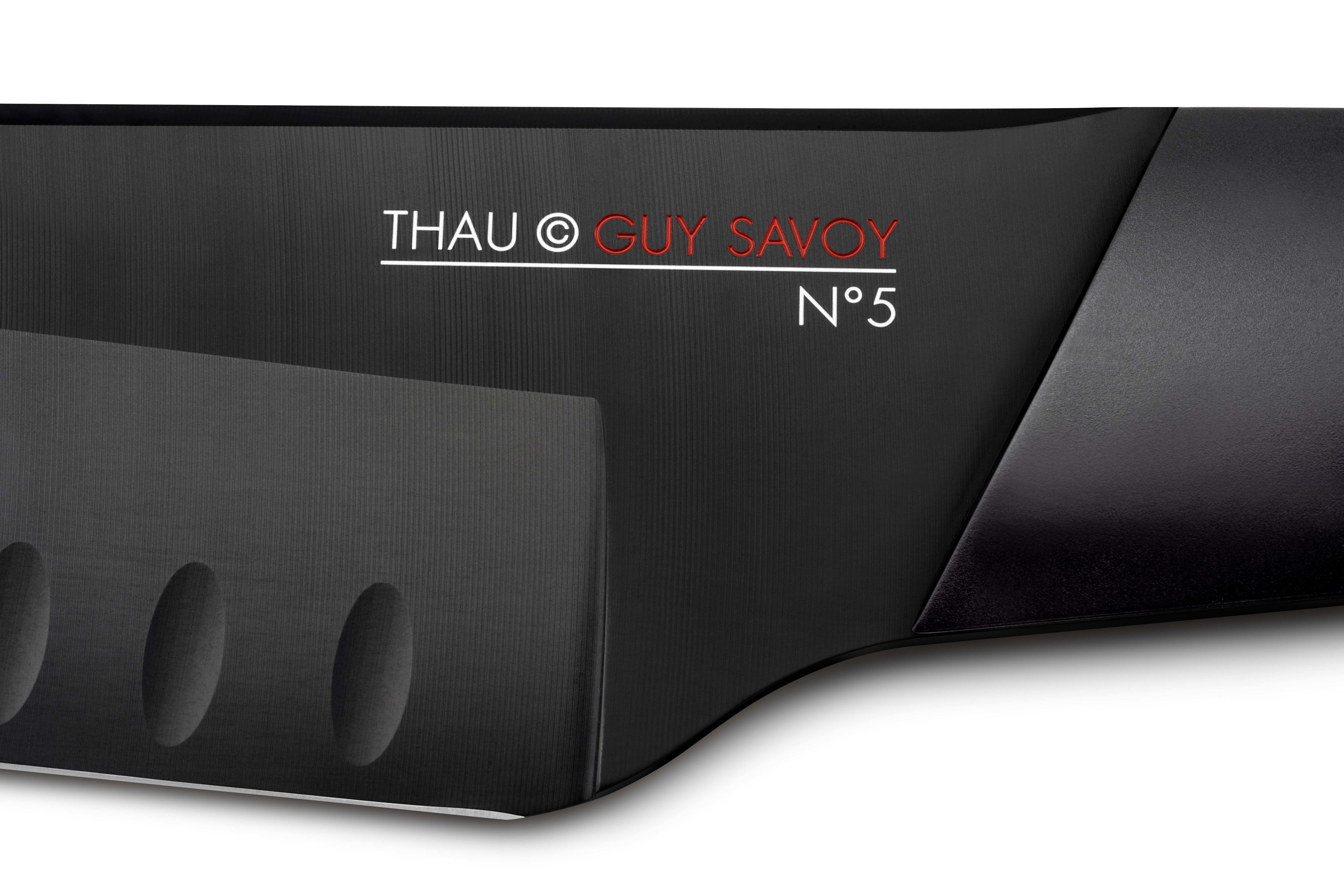
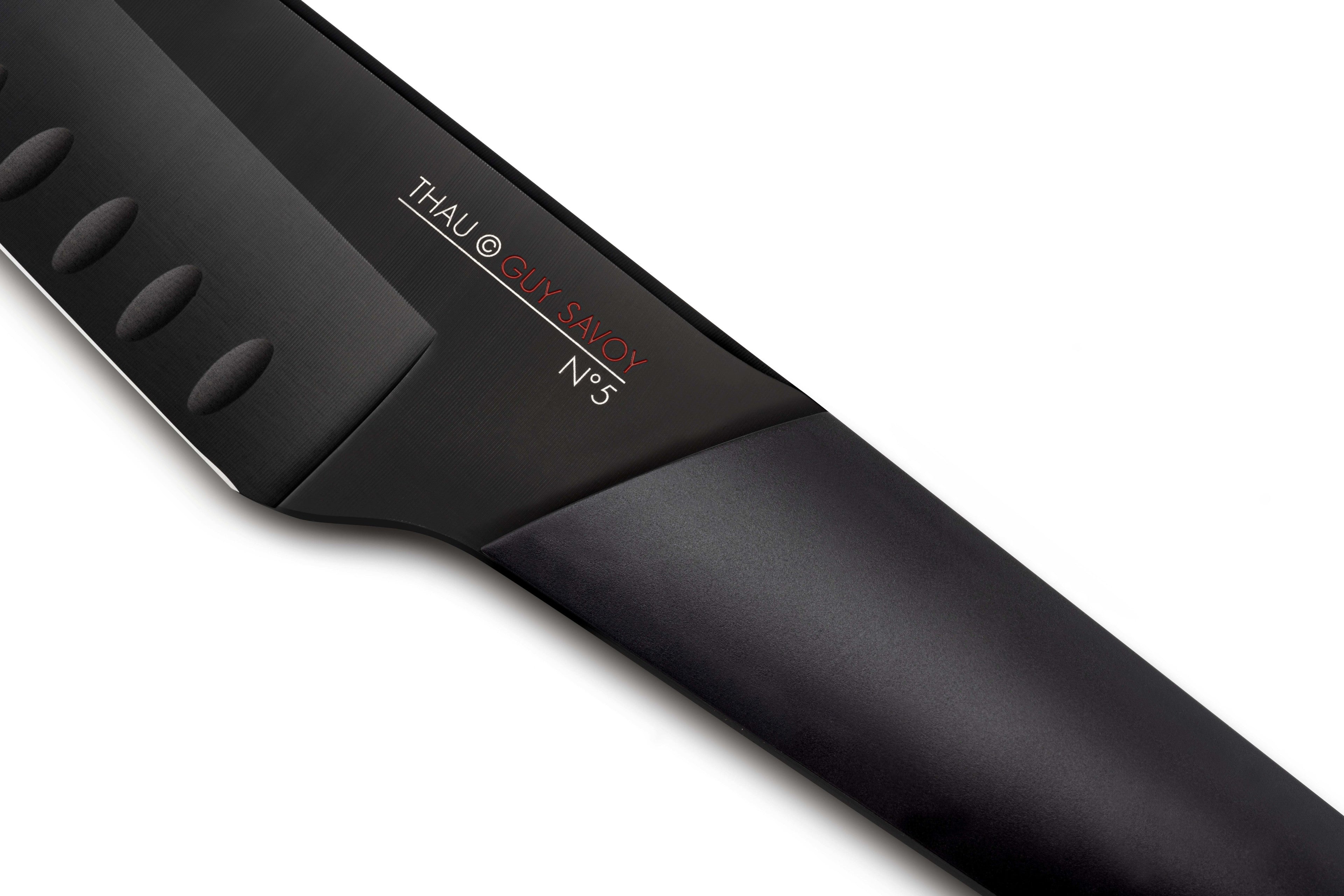
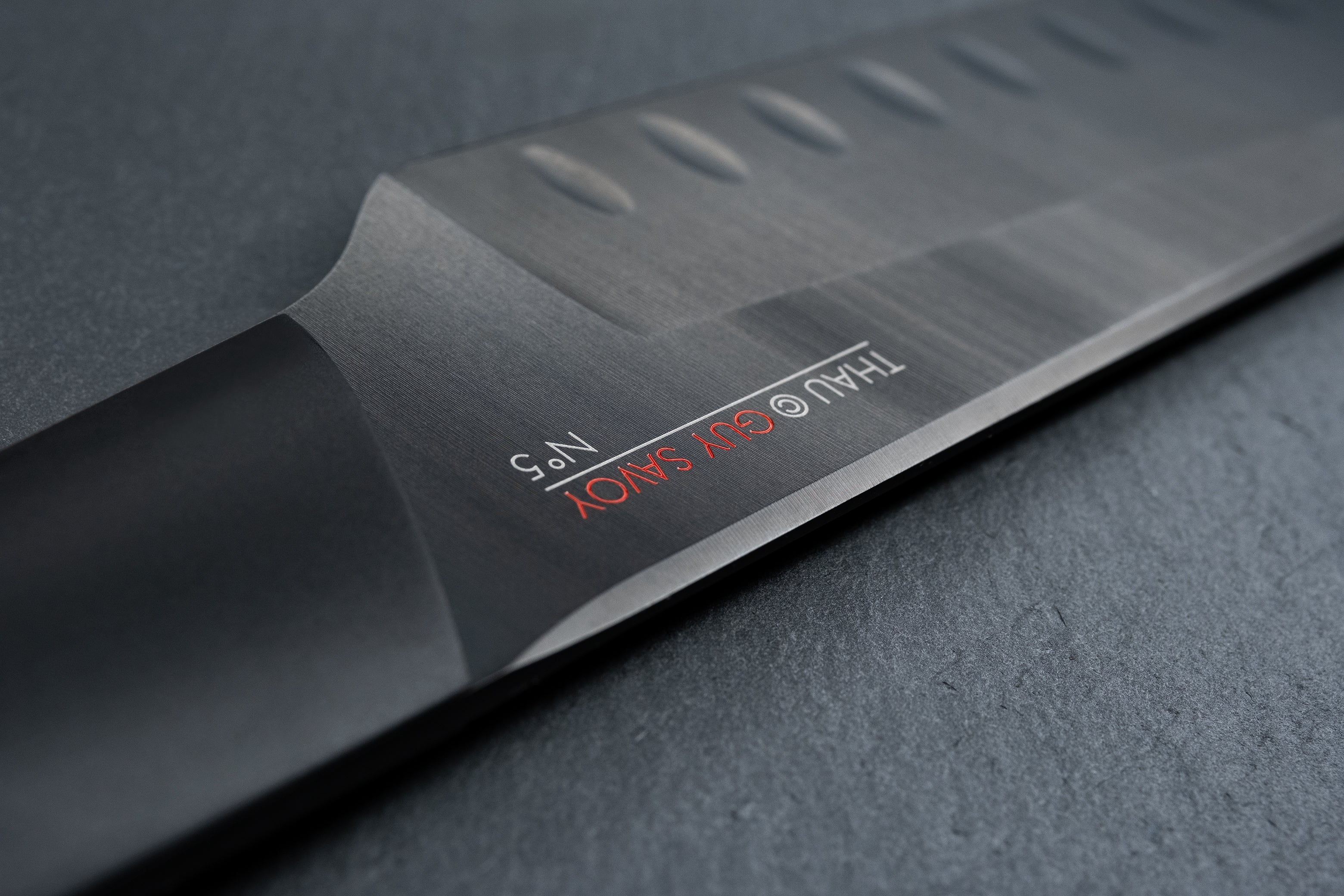
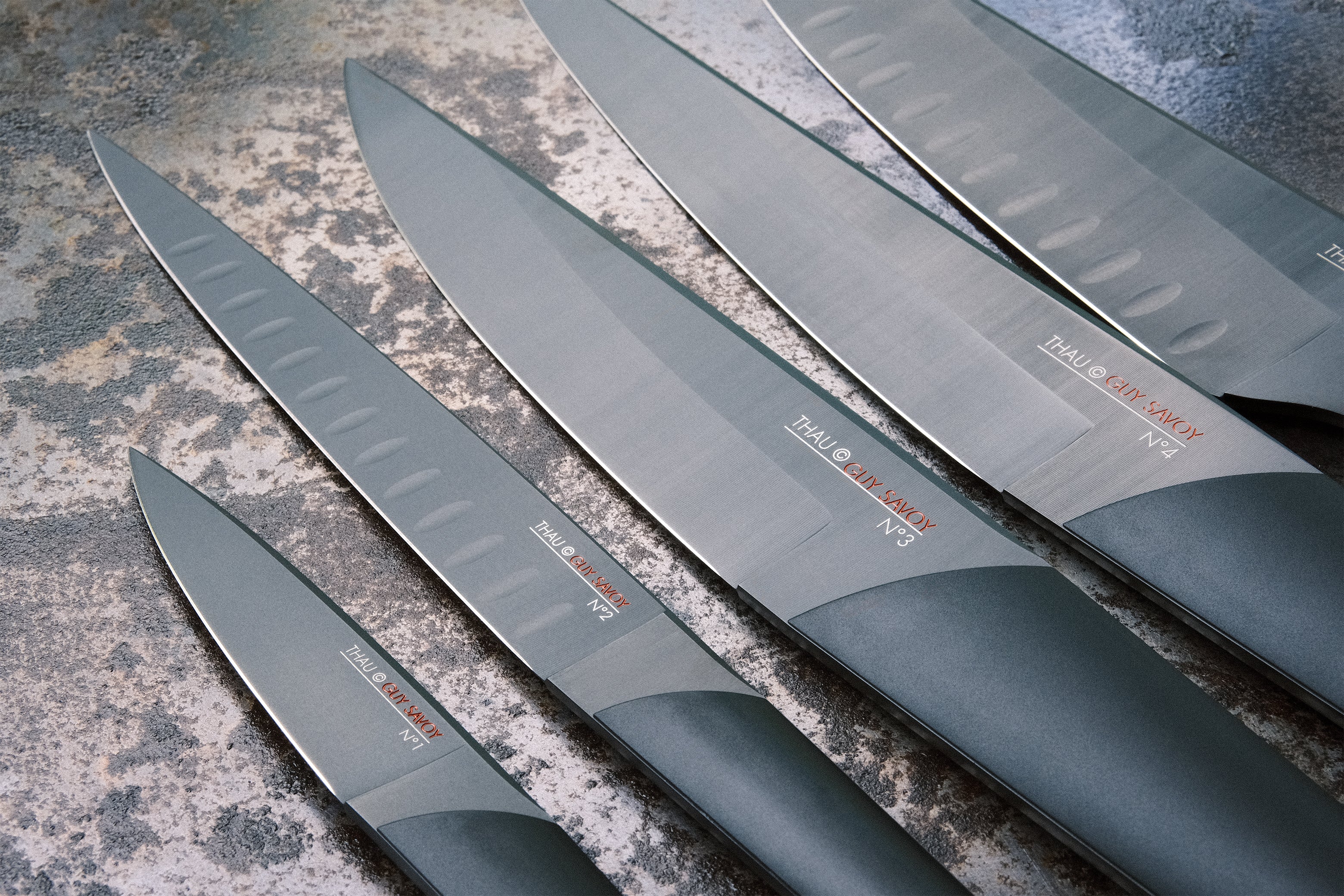
The blade is deeply engraved, not just surface-marked like most knives; the fine and extremely detailed engraving is then carefully lacquered by hand. This blade, made from hardened steel, is composed of mox steel combined with an almost indestructible PVD treatment, providing exceptional resistance to corrosion. This treatment has given the blade its black colour, matching the handle, creating a seamless continuity between the two and giving the knife a sleek, aggressive, yet smooth profile—like a shiny whale leaping out of the water: an "aero-aqua dynamic" shape!
Exceptionally comfortable kitchen knives
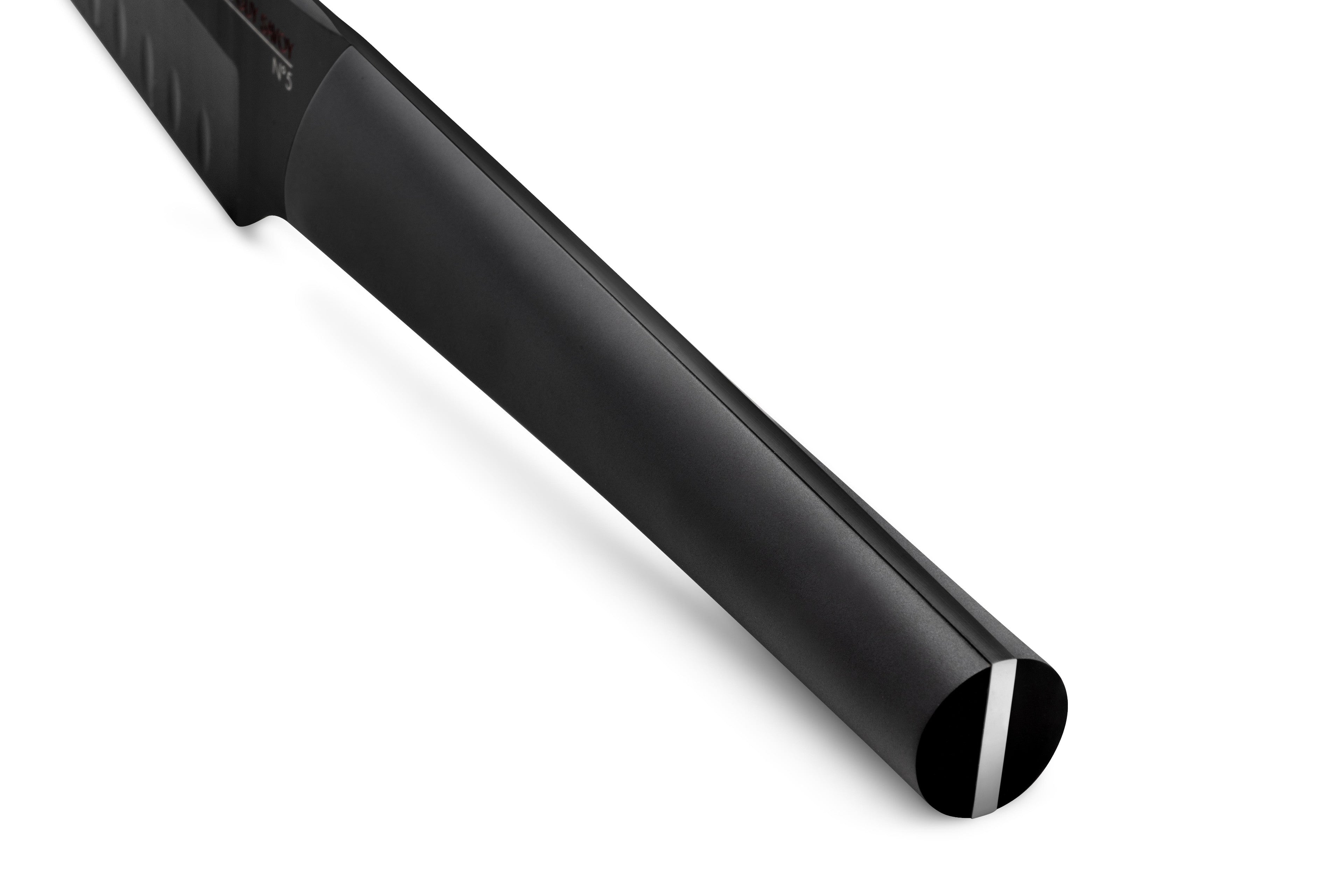
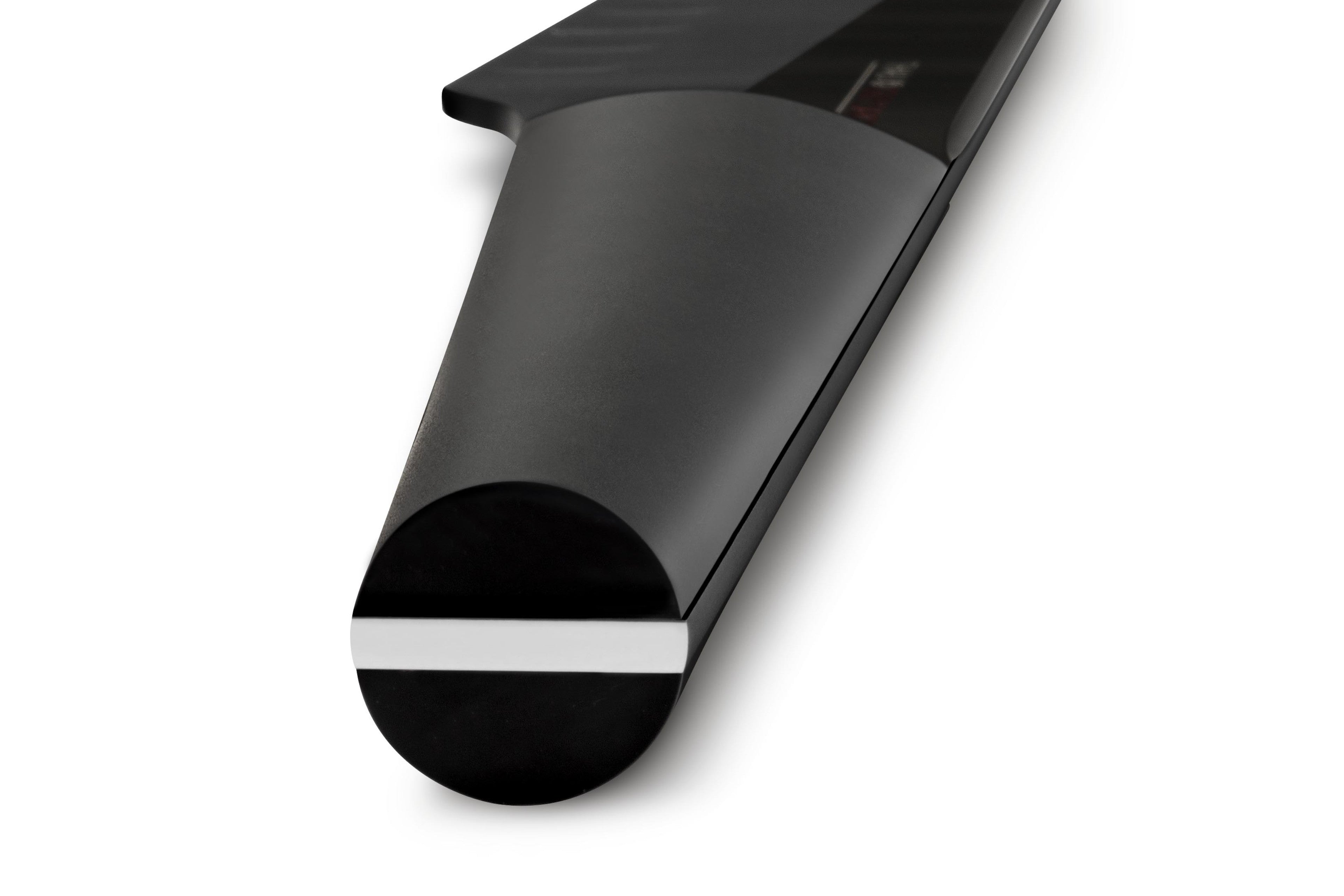
Designer Bruno Moretti observed the work in kitchens and discovered that chefs often keep the same knife in hand for hours, frequently pressing their index finger on the back of the blade for added strength and precision, and that the hand or finger could sometimes slip on the blade. He also noticed that some handles suited certain hands better than others. He set out to create knives offering maximum comfort for chefs. The handle is significantly larger than the standard size, providing equal comfort for all hands, as they can be positioned at different points along the handle depending on their size and shape. The angle of the bolster (a 45° connection between the blade and handle) has been reversed to ensure better hand protection. The back of the blade has been smoothed to avoid causing discomfort during prolonged contact with the finger.
Ce couteau excelle là où les grandes lames s'avèrent encombrantes. Il est le compagnon idéal de la préparation préliminaire des végétaux. Un couteau d'office est souvent sollicité. Pour préserver son affilage robotisé et son revêtement militaire, un soin particulier est requis. La finesse de la lame (0,3 mm au tranchant) impose des règles de bon sens pour éviter tout dommage structurel. Acier Mox : Acier chrome-carbone à 18% de chrome, offrant un équilibre optimal entre dureté et résistance à la corrosion. Pleine soie : Construction où l'acier de la lame traverse tout le manche, garantissant équilibre et robustesse. Contre-champ : Biseau usiné sur le dos de la lame pour assurer le confort du pouce et la sécurité de l'utilisateur.En cuisine : que couper avec le Thau N°1 ?
Comment entretenir votre couteau d'office pour qu'il dure ?
Fréquence
Méthode d'aiguisage
Quotidien
Simple nettoyage et séchage
Hebdomadaire
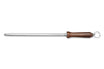
Passage au fusil pour entretenir le fil
Annuel
Réaffûtage sur pierre à eau (grain 1000 min.)
Précautions d'emploi et sécurité
Glossaire technique Thau®
Kitchen knives with an "aero-aqua dynamic" design!
The blade is deeply engraved, not just surface-marked like most knives; the fine and extremely detailed engraving is then carefully lacquered by hand. This blade, made from hardened steel, is composed of mox steel combined with an almost indestructible PVD treatment, providing exceptional resistance to corrosion. This treatment has given the blade its black colour, matching the handle, creating a seamless continuity between the two and giving the knife a sleek, aggressive, yet smooth profile—like a shiny whale leaping out of the water: an "aero-aqua dynamic" shape!
Exceptionally comfortable kitchen knives
Designer Bruno Moretti observed the work in kitchens and discovered that chefs often keep the same knife in hand for hours, frequently pressing their index finger on the back of the blade for added strength and precision, and that the hand or finger could sometimes slip on the blade. He also noticed that some handles suited certain hands better than others. He set out to create knives offering maximum comfort for chefs. The handle is significantly larger than the standard size, providing equal comfort for all hands, as they can be positioned at different points along the handle depending on their size and shape. The angle of the bolster (a 45° connection between the blade and handle) has been reversed to ensure better hand protection. The back of the blade has been smoothed to avoid causing discomfort during prolonged contact with the finger.
Ce couteau excelle là où les grandes lames s'avèrent encombrantes. Il est le compagnon idéal de la préparation préliminaire des végétaux. Un couteau d'office est souvent sollicité. Pour préserver son affilage robotisé et son revêtement militaire, un soin particulier est requis. La finesse de la lame (0,3 mm au tranchant) impose des règles de bon sens pour éviter tout dommage structurel. Acier Mox : Acier chrome-carbone à 18% de chrome, offrant un équilibre optimal entre dureté et résistance à la corrosion. Pleine soie : Construction où l'acier de la lame traverse tout le manche, garantissant équilibre et robustesse. Contre-champ : Biseau usiné sur le dos de la lame pour assurer le confort du pouce et la sécurité de l'utilisateur.En cuisine : que couper avec le Thau N°1 ?
Comment entretenir votre couteau d'office pour qu'il dure ?
Fréquence
Méthode d'aiguisage
Quotidien
Simple nettoyage et séchage
Hebdomadaire
Passage au fusil pour entretenir le fil
Annuel
Réaffûtage sur pierre à eau (grain 1000 min.)
Précautions d'emploi et sécurité
Glossaire technique Thau®
FAQ
Pourquoi choisir un polymère pour le manche ?
Le revêtement noir peut-il s'effacer ?
Ce couteau est-il adapté aux gauchers ?
Comment entretenir le tranchant ?