

A city built around the knife
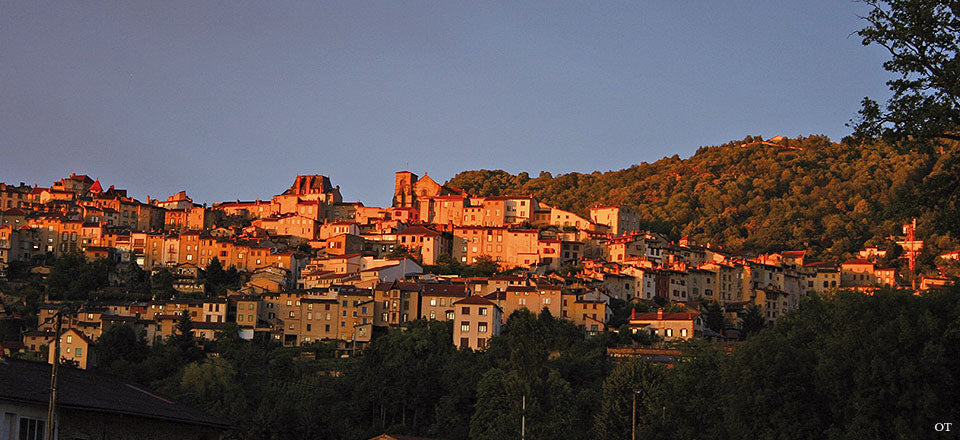
Thiers is a city of 11,000 inhabitants in the Puy-de-Dôme region of France. This figure says little about its weight in French industrial history. Yet, for several centuries, Thiers has produced the majority of knives made in France, establishing itself as one of the world's great cutlery capitals.
It all starts with geography. The Durolle, a river that flows through the gorges below the city, offered exceptional motive power. From the Middle Ages onwards, watermills were set up on its banks to power the grindstones – the wheels used to sharpen and polish blades. Artisans specialized, know-how was passed down, and a sector structured itself. The city's position on trade routes between Lyon and the Atlantic facilitated the distribution of products.
Over the centuries, Thiers no longer produced only utility knives. The city developed expertise in table cutlery, pocketknives, and professional instruments. It attracted families of artisans who, generation after generation, refined their methods and tools. It is in this ecosystem that Tarrerias Bonjean was born.
1648: A foundation, an anchoring
Tarrerias Bonjean was founded in 1648. This date is not a marketing argument: it is a documented fact that places the company among the oldest industrial houses still active in France. For comparison, Louis XIV was only ten years old that year.
Three and a half centuries of continuity in a sector as demanding as cutlery imply permanent adaptations—to materials, techniques, markets—without ever breaking with the foundation of Thiers' know-how. This is not a late reconversion to Made in France: it is an uninterrupted presence in the same territory, with the same fundamental gestures.
This longevity has earned Tarrerias Bonjean membership in Les Hénokiens, an international association that brings together family businesses over two hundred years old that are still owned by their founding families. There are about forty members worldwide. Membership in this circle is subject to strict criteria: proven age, family continuity, financial health. It is not a label awarded based on an application, it is recognition by peers of exceptional longevity.
Vertical integration by GDD
What distinguishes Tarrerias Bonjean from many other brands in the sector is its control over the entire manufacturing chain. Through its subsidiary GDD—Générale de Découpage—the company controls production from raw steel to the finished product: stamping, cutting, polishing, heat treatment, assembly, and quality control.
This vertical integration has concrete consequences. It allows for control of technical specifications at each stage, quick adjustment of processes in case of changes in standards or materials, and guarantees the traceability of parts. In a sector where the term "made in France" can cover very different realities—from simple assembly to full manufacturing—the presence of GDD anchors Tarrerias Bonjean's Made in France in something substantial.
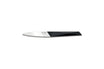
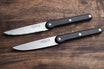
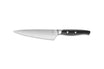
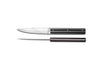
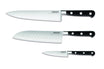
For TB-1648 products, this chain translates into cutlery and table knives manufactured in the Thiers valley, using locally processed stainless steel, according to industrially controlled in-house processes. It is not subcontracted to an Asian supplier and then assembled in France: it is produced here, with the tools and labor of the region.
TB-1648: Thiers know-how for everyday use
The TB-1648 brand is aimed at those who want quality knives and cutlery without crossing the boundary of unattainable luxury. It embodies the intermediate positioning that corresponds to the Thiers tradition: well-made, durable objects designed for use.
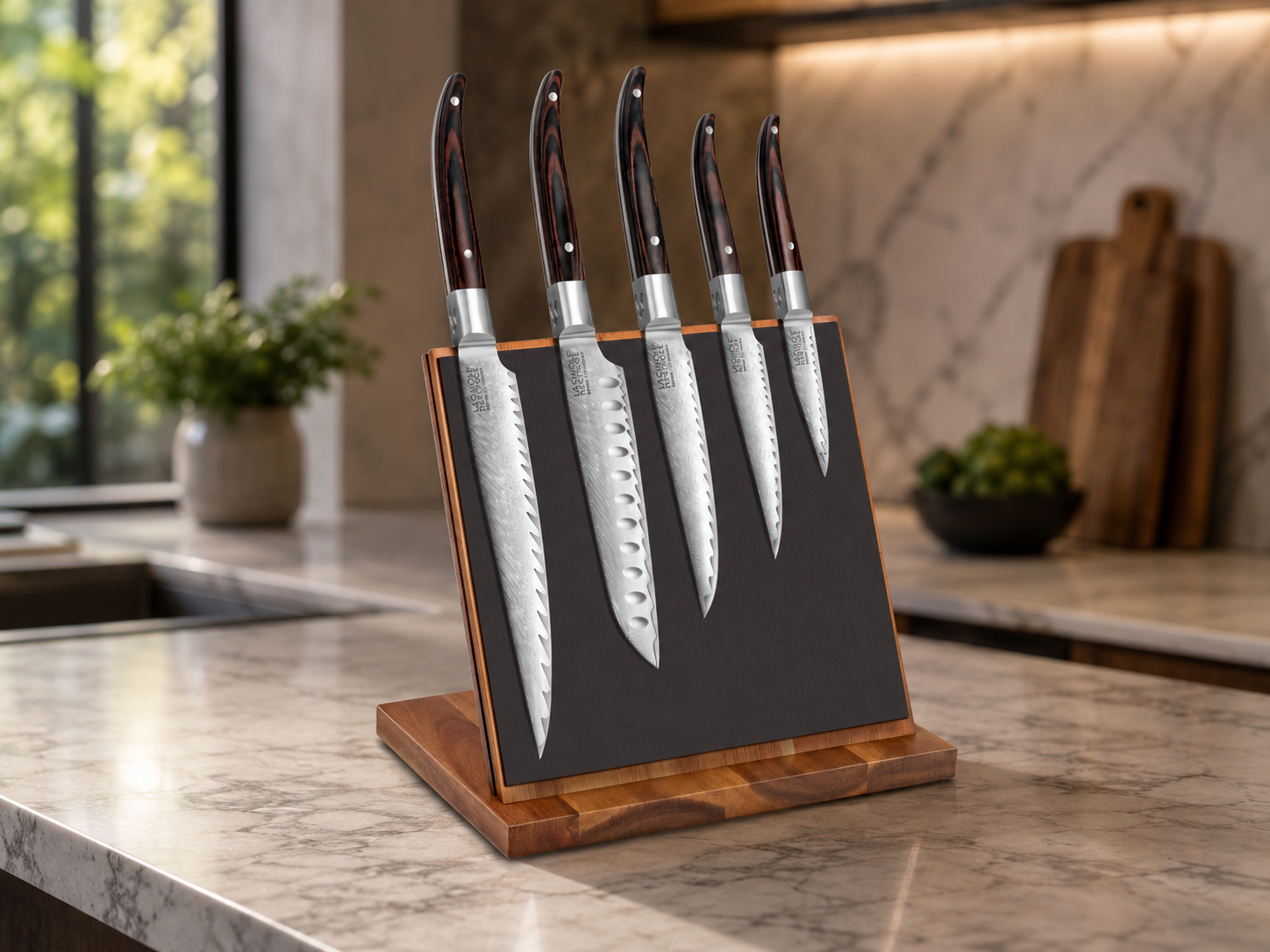
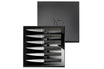
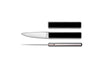
The current collections—Intuition Laguiole Héritage, Absolu, AM/PM—apply this philosophy to different table segments. The Laguiole Héritage reference adopts the visual codes of the regional knife—the ferrule, the spring—in a contemporary version designed for the table. The PVD finishes (Gold, Black, Bronze) alongside the Brilliant and Satin finishes show that the Thiers vocabulary can adapt to very diverse aesthetics, without losing its basic demand for materials and manufacturing.
Thiers is not a folkloric region invoked to justify a price premium. It is a real production site, with companies that employ locally trained cutters, polishers, and assemblers. Tarrerias Bonjean, with nearly four centuries of roots in this ecosystem, is one of its most consistent representatives.