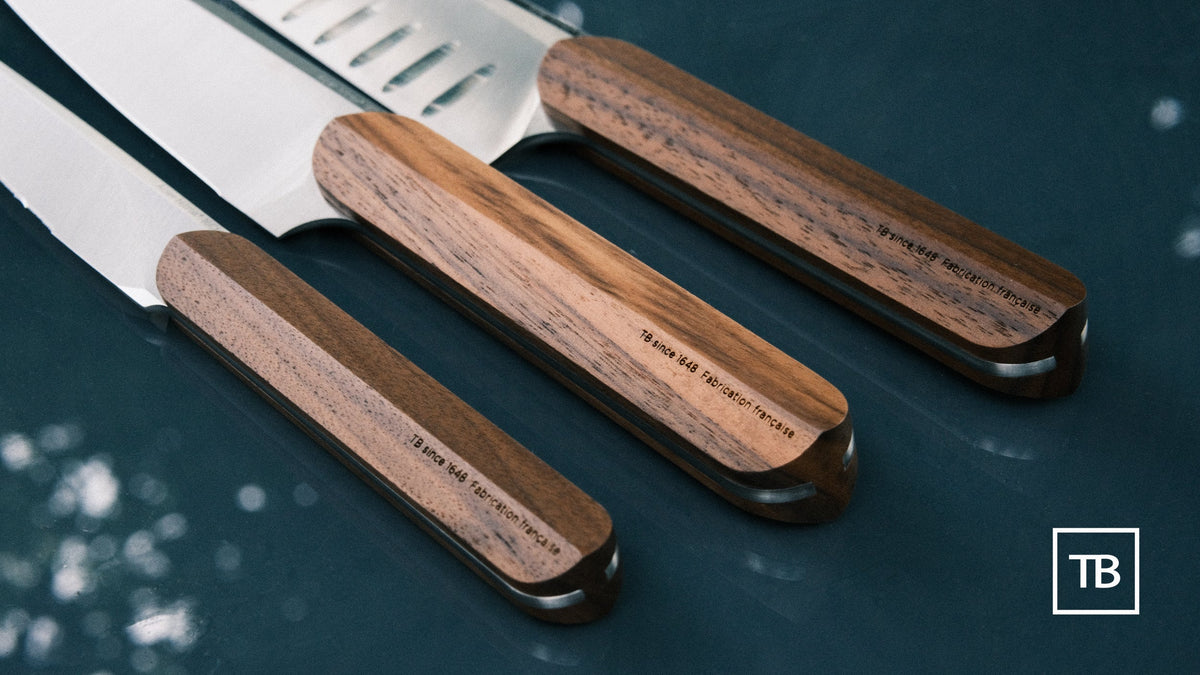
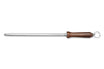

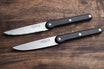
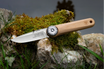
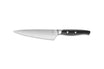
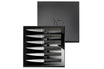
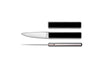
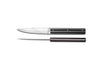
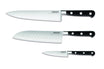
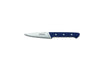
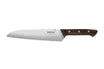

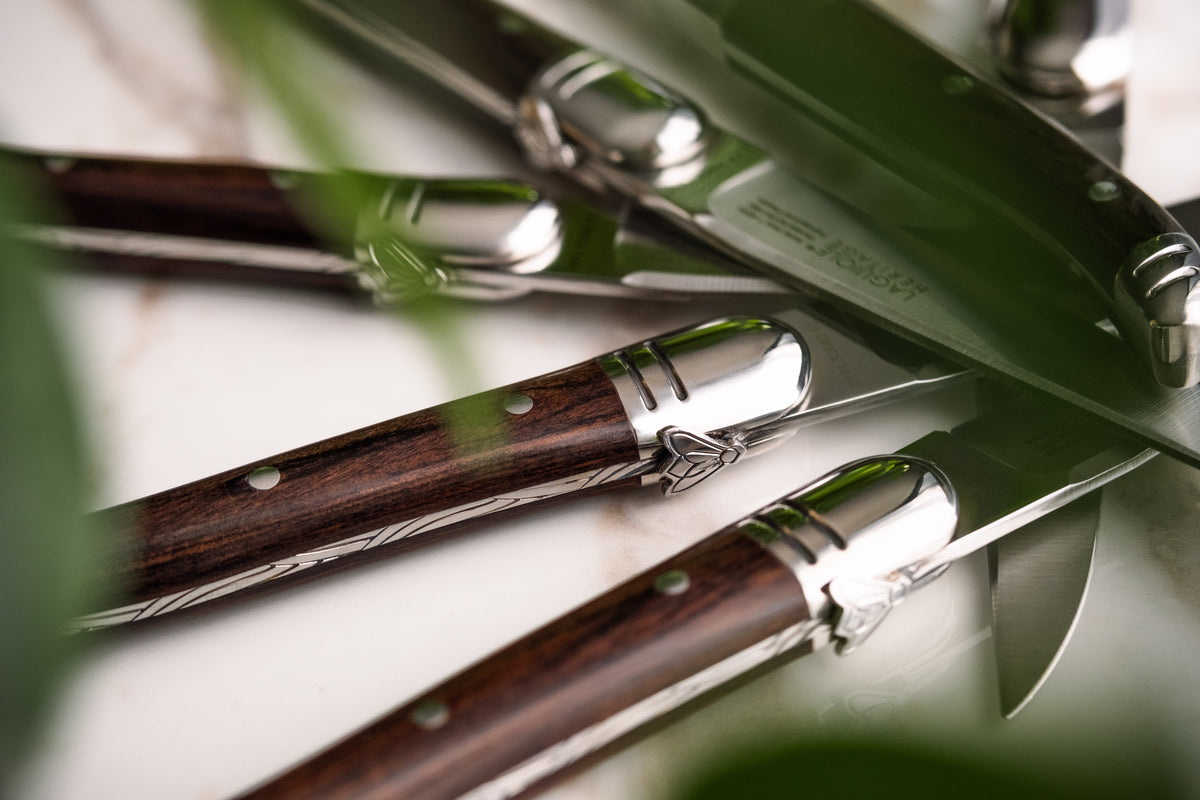
A knife handle is as important for the grip as it is for the durability of the object over time. The TB-1648 range features four materials: POM, olive wood, Hydrawood, and pakkawood. Each offers a different compromise between aesthetics, water resistance, and maintenance.
Key takeaways from the article
- POM is an engineered polymer, olive wood is a natural wood, and Hydrawood and pakkawood are resin-stabilized woods.
- Resistance to moisture and dishwashers varies greatly from one material to another.
- The choice depends as much on daily use as on aesthetic preference.
What is POM?
POM (polyoxymethylene) is a dense engineered polymer used in professional cutlery for its stability. It is not affected by moisture, does not deform over time, and has a homogeneous surface without natural grain. It is a preferred material for intensive kitchen use, where resistance takes precedence over decorative appearance.
What is olive wood?
Olive wood is a noble solid wood, with each piece showcasing a unique grain. This uniqueness is precisely what makes it appealing for high-end kitchen knives or pieces intended as gifts. However, natural wood requires regular maintenance: immediate drying after washing, occasional oiling, and absolutely no dishwasher use.
What is Hydrawood?
Hydrawood is a wood stabilized by resin impregnation under pressure. The result retains the appearance and visual warmth of wood, while gaining significantly greater water resistance than raw wood like olive. It is a compromise between natural aesthetics and the demands of regular kitchen use.
What is pakkawood?
Pakkawood is a laminated wood, composed of thin layers of wood compressed and bonded with resin under high pressure. This structure makes it a dense material, highly resistant to shocks and moisture, widely used in professional cutlery and on high-end flatware.
Comparative table of the 4 materials
| Material | Water Resistance | Maintenance | Aesthetics | Recommended Use |
|---|---|---|---|---|
| POM | Excellent | Minimal | Uniform, technical | Intensive daily use |
| Olive wood | Low to moderate | Regular (oiling) | Unique, natural grain | Careful use, exceptional piece |
| Hydrawood | Good | Reduced | Stabilized wood look | Compromise between use/aesthetics |
| Pakkawood | Very good | Minimal | Dense laminated wood look | Professional and intensive use |
How to choose according to your use?
Professional kitchen or intensive use
POM or pakkawood are ideal for their water resistance and low maintenance, two priority criteria for intensive use.
Exceptional piece or gift
Olive wood, with its unique grain piece by piece, meets a desire for uniqueness that makes sense for a knife intended as a gift or collector's item.
Daily use with aesthetic requirements
Hydrawood allows for a warm wood finish without the maintenance constraints of raw wood.
Frequently asked questions
Can an olive wood handle go in the dishwasher?
No. Olive wood is a natural wood that must be hand-washed and dried immediately to prevent cracks due to moisture.
Is pakkawood a natural wood or a composite?
It is a composite laminated wood: thin layers of wood are compressed with resin, which distinguishes it from solid wood like olive.
Can POM yellow or deform over time?
POM is a stable engineered polymer, designed to withstand intensive use without deforming, unlike some standard plastics.
Glossary
Engineered polymer: Plastic material designed to offer high mechanical properties (resistance, stability) beyond standard plastic.
Stabilized wood: Wood treated by resin impregnation to enhance its water resistance and durability.
Laminated wood: Material composed of superimposed and bonded layers of wood, such as pakkawood.
Find all handle materials in our Excellence and Laguiole Héritage® ranges.