
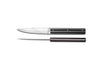
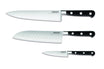

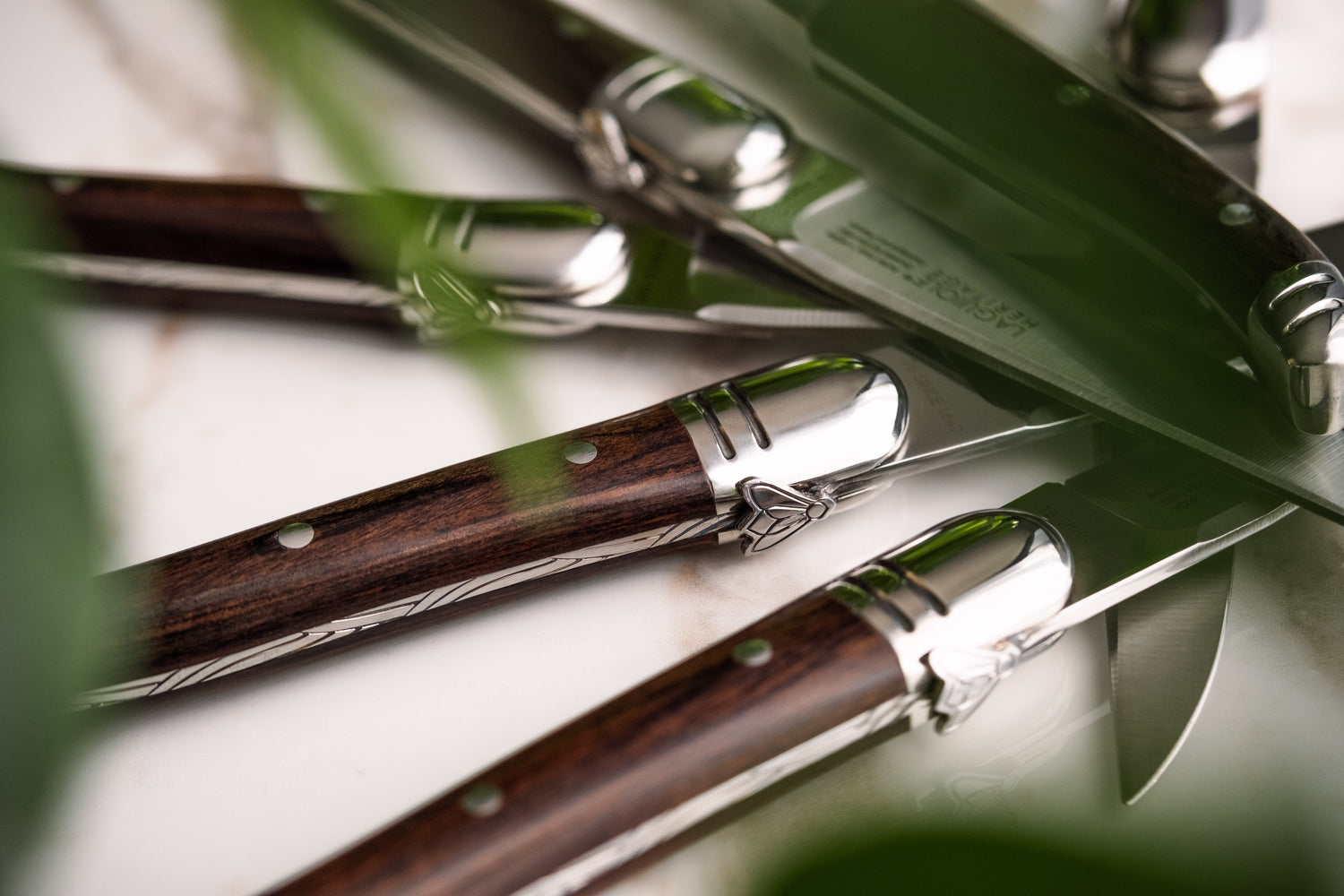
We often think about the tablecloth, the glasses, or how the meat is cooked. But how many times has a good meal been ruined by a knife that saws more than it cuts? The knife is the only element on the table that requires real physical effort from your guests. If it's bad, the experience is bad too.
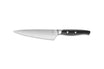
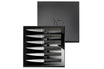
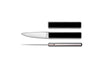
At TB-1648, the table knife is not just an accessory. It's our core business in Thiers. Whether it's a pointed "Steak" model for meat lovers or a "Bound Tip" knife for everyday use, choosing your blade is a precise act.
Camille is undecided about what to wear for her family dinners, while Maxime is looking for clean, modern design for his apartment. Let's explore together how to find the perfect blade to complement your plate through our La Table collection , designed for every lifestyle.
The essentials for making the right choice
- Blade type: The smooth blade offers a surgical cut but requires sharpening. The micro-serrated blade is maintenance-free and grips hard surfaces.
- The shape: Pointed for meat (steak type), rounded for versatile use and spreading.
- The handle material: Wood for warmth and tradition (be careful with the dishwasher), ABS or POM for absolute resistance.
- Construction: Opt for a "full tang" blade for perfect balance in the hand.
- Origin: French manufacturing in Thiers guarantees high-quality cutlery steel.
Should you choose a smooth blade or a serrated blade?
This is the big debate that often divides enthusiasts when they browse our ranges of knives .
The smooth blade (razor edge):
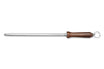
This is the choice of purists, and often Maxime's. Why? Because it doesn't tear the meat fibers. It penetrates the meat effortlessly. The juices stay in the cut, not on the plate. The downside: like a chef's knife, it dulls over time (especially when in contact with porcelain) and will need a quick honing with a sharpening steel or knife from time to time.
The micro-serrated (notched) blade:
It's the easy-care option, often preferred by Camille for everyday use. The micro-serrations are incredibly effective on crusty foods (bread, pizza, grilled meat). The major advantage? The cutting edge is protected by the teeth and requires no sharpening for years. It's the ultimate "zero-hassle" tool.
Steak knife or classic table knife: what's the difference?
It's all in the point and the intention.
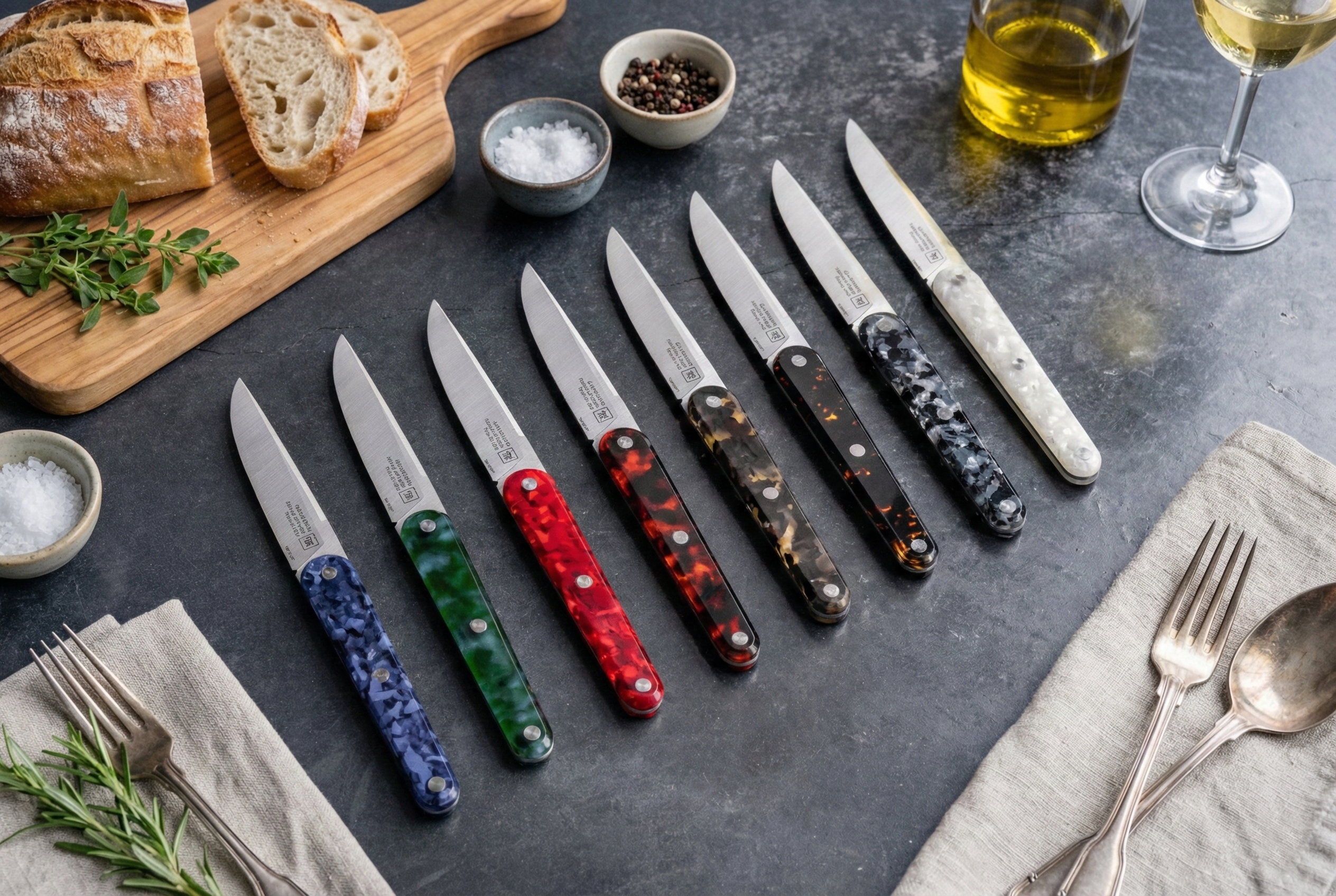
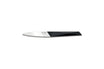
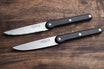
The steak knife (like our Hector or Laguiole Héritage models) has a sharp, tapered blade. It's bold and elegant. It's designed for precise piercing and slicing. It instantly adds a "bistro" or gourmet touch to your decor.
The classic table knife often has a wider blade and a rounded tip. It's the all-purpose knife of French families. It's used to carve roast meat, push peas through the soil, and spread cheese at the end of a meal. If you're entertaining children or elderly people, the rounded tip is also safer.
Wood or composite materials: which is preferable for the handle?
Here, the choice is between emotion and function. In the world of TB-1648 tableware , we offer both approaches to satisfy every desire.
| Material | Atmosphere | Interview |
|---|---|---|
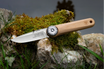
| Wood (Olive, Walnut) | Warm, unique, authentic. Each piece has its own grain. | Hand washing is mandatory. The wood is sensitive to hot water. |
| ABS / POM (Polymer) | Modern, colorful (or chic black), silky feel. | Dishwasher OK. Shock resistant and doesn't move. |
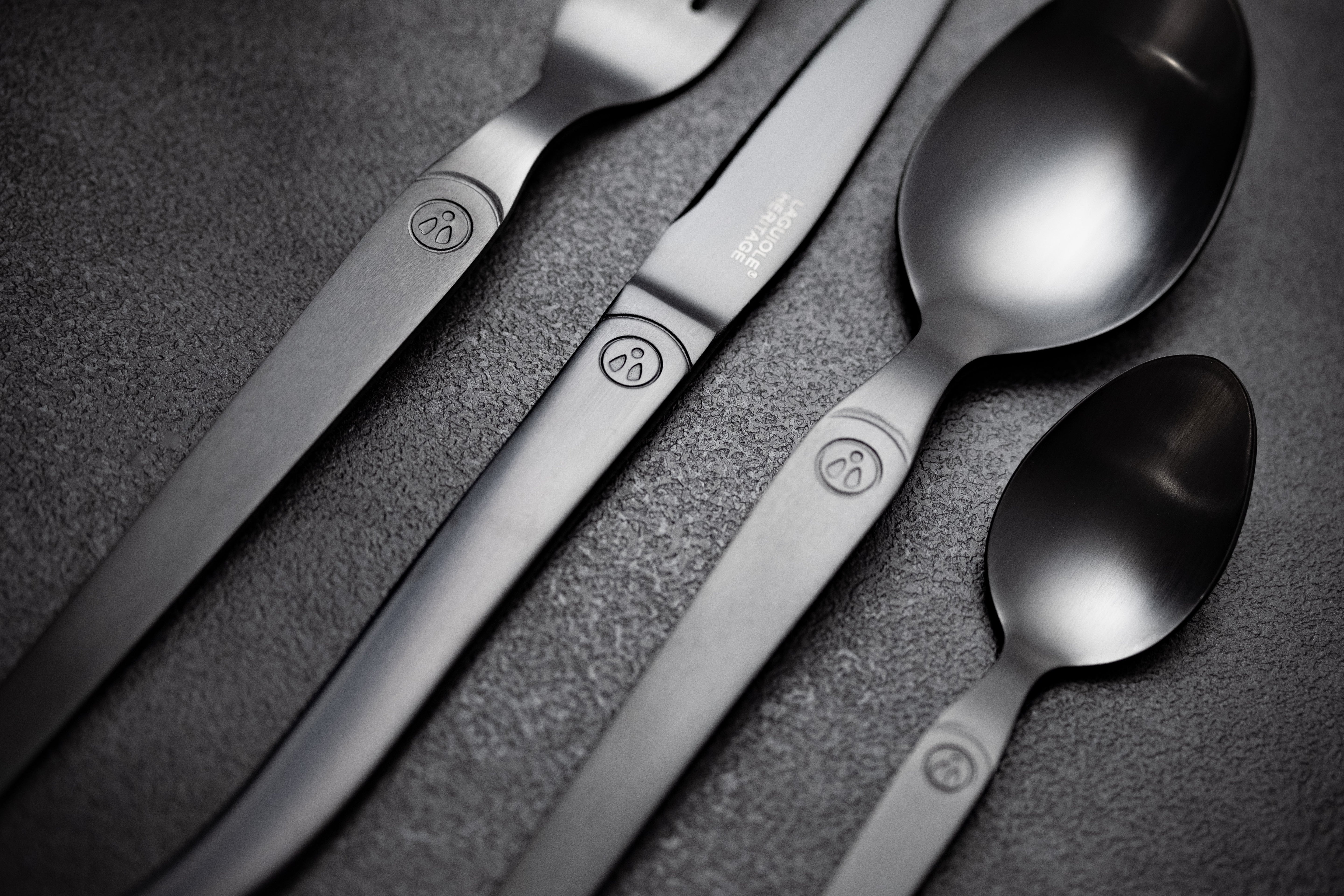
| All stainless steel / One-piece | Clean, industrial, very contemporary design. | Indestructible. Dishwasher safe. |
TB-1648's tip: If you choose a wooden handle, nourish it once or twice a year with a little olive or linseed oil. It will develop a beautiful patina over time.
Why is the balance of the knife a sign of quality?
Take a cheap knife: the handle is often very light (hollow) and the blade heavy, or vice versa. When you put it on the plate, it wobbles. In your hand, it becomes tiring.
A good Thiers knife is recognizable by its construction, often featuring a "full tang." This means that the steel of the blade doesn't stop at the handle joint, but runs the entire length of the handle. Do you see the metal sandwiched between the scales? That's the tang.
This design adds weight and shifts the center of gravity to the palm of your hand. As a result, you don't need to apply much pressure to cut. The weight of the tool does the work, guided by your movement.
Frequently asked questions about our table knives
What features does Evercut technology have on certain models?
Can Laguiole knives be put in the dishwasher?
Why aren't my knives cutting well anymore?
What is the difference between a cast knife and a forged knife?
The cutler's vocabulary
- Silk :
- The blade extends inside the handle. A "full tang" is visible on the edge of the handle, a sign of strength.
- Guilloché:
- Chiseled decoration on the back of the blade or spring, typical of Thiers craftsmanship.
- Martensitic steel:
- Family of stainless steels containing carbon, capable of being hardened (tempered) to obtain a durable cutting edge.