

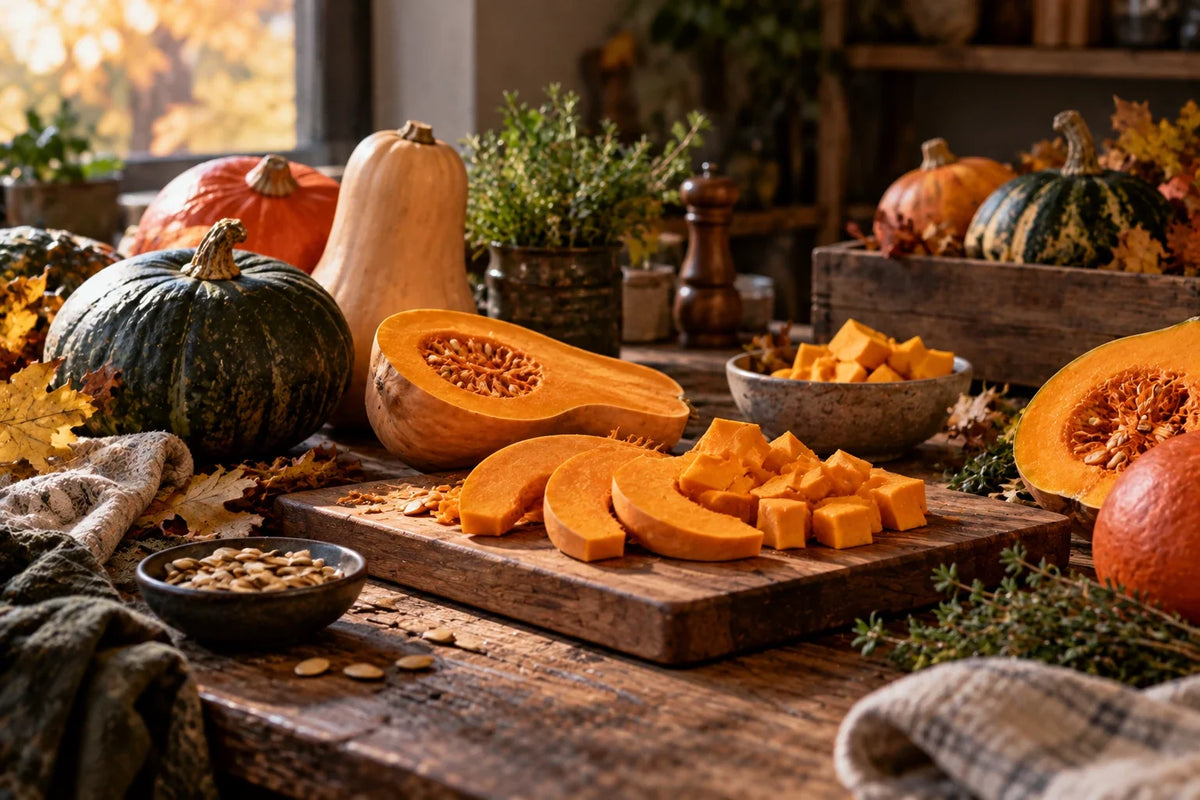
Fall brings squash back to the market stalls, and with it a recurring challenge in the kitchen: their thick skin and dense flesh put poorly chosen blades to the test. The right knife makes as much difference to the safety of your movement as to the quality of the cut.
Key points of the article
- A tall, heavy blade makes it easier to cut thick-skinned squash such as red kuri.
- Keeping the squash stable on the work surface matters as much as the choice of knife for a safe cut.
- Some squash, such as butternut, are easier to peel with a peeler once cut in half.
Why is squash difficult to cut?
The combination of thick skin and dense flesh requires a blade that can sink in without veering off, then pass through the flesh without excessive effort. A blade that is too thin or too short forces you to push hard, which increases the risk of the knife slipping at the moment of initial impact on the skin.
Which knife for red kuri squash?
Red kuri squash has thin skin compared with other squash, so it can be cooked without peeling. A chef's knife with a tall, well-sharpened blade is enough to cut it into wedges, applying steady vertical pressure rather than a sawing motion.
Which knife for butternut squash?
Butternut squash has thicker skin and firmer flesh. The safest method is to slice off both ends to stabilize the base, then cut the squash in half lengthwise with a sturdy chef's knife, before peeling each half with a peeler, which is safer than a knife on a curved surface.
Which knife for spaghetti squash?
Spaghetti squash requires a long, sturdy blade to get through its elongated shape and firm skin. Once cut in half lengthwise, the inside shreds easily with a fork after cooking, which limits knife work to the initial cutting step alone.
Summary table by squash
| Squash | Main difficulty | Recommended knife |
|---|---|---|
| Red kuri | Firm but thin skin | Chef's knife, tall blade |
| Butternut | Thick skin, irregular shape | Sturdy chef's knife + peeler |
| Spaghetti squash | Elongated shape, firm skin | Chef's knife with a long blade |
How to make your cut safe on an unstable squash?
The squash must always be stabilized before the first cut: slicing a thin piece off the base to create a flat supporting surface keeps it from rolling under the blade. The hand that is not holding the knife should rest on top of the squash, never on the side toward which the blade is moving.
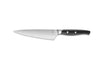
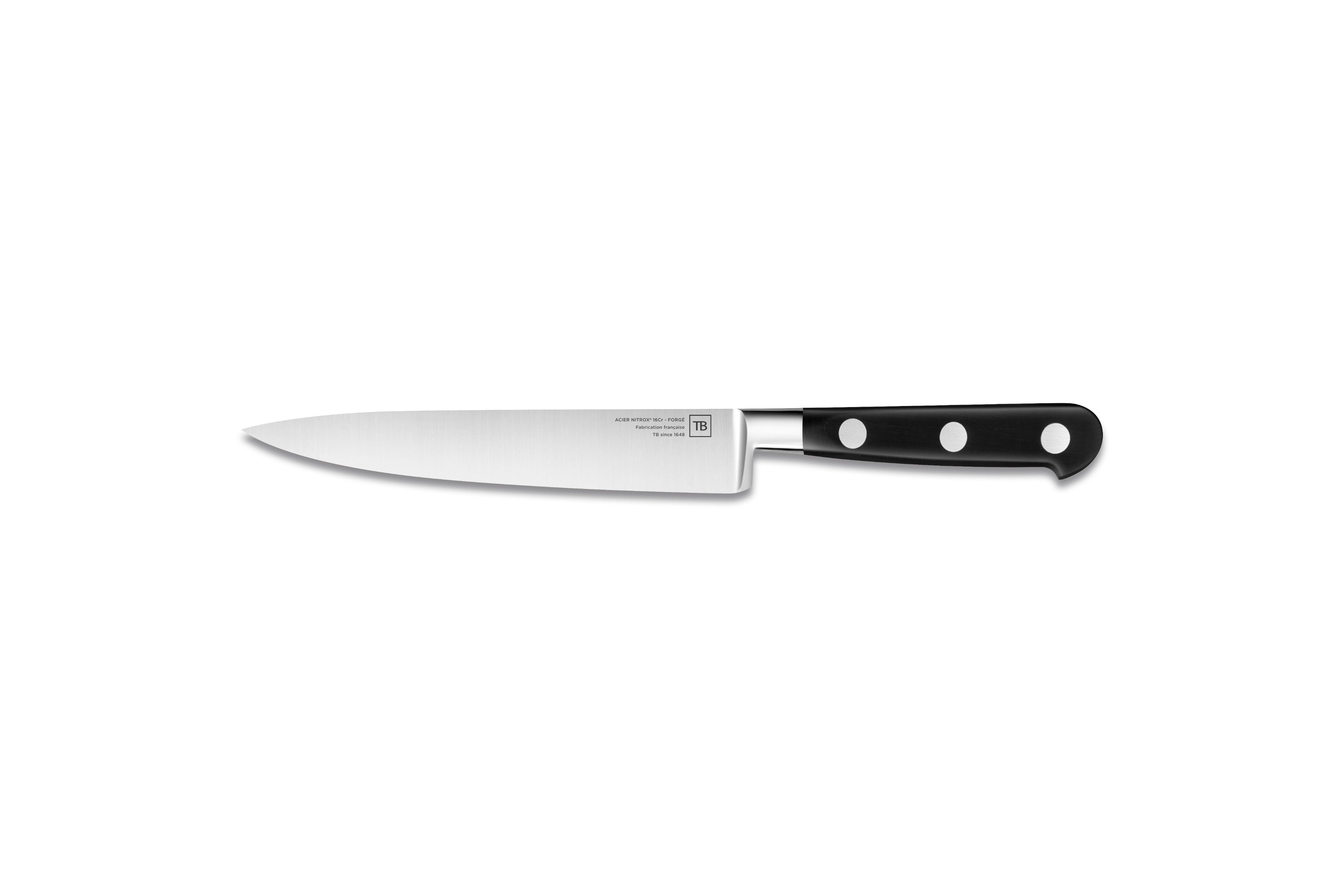
For the initial cut, the Forgé Premium Evercut Chef's Knife offers the necessary weight and rigidity. For peeling butternut and thinner-skinned squash, the Easy Y-Peeler remains the safest tool on a curved surface. All our chef's knives can be found in the Kitchen collection.
Frequently asked questions
Do you need a special knife to cut a very hard squash?
Not necessarily a special knife, but a tall, heavy, well-sharpened blade makes the job much easier than a thin or dull blade.
Can you use a paring knife to peel squash?
A paring knife works for precise areas, but a peeler remains safer and more effective on a curved surface such as that of a squash cut in half.
How do you keep squash from slipping while cutting?
Creating a flat base by slicing off a thin piece before the main cut stabilizes the squash and greatly reduces the risk of slipping.
Glossary
Tall blade: a blade with a large height between the cutting edge and the spine, offering more weight and guidance for vertical cuts.
Peeler: a small tool with a short blade designed to peel fruits and vegetables, safer than a knife on a curved surface.