


The little knife with a big role
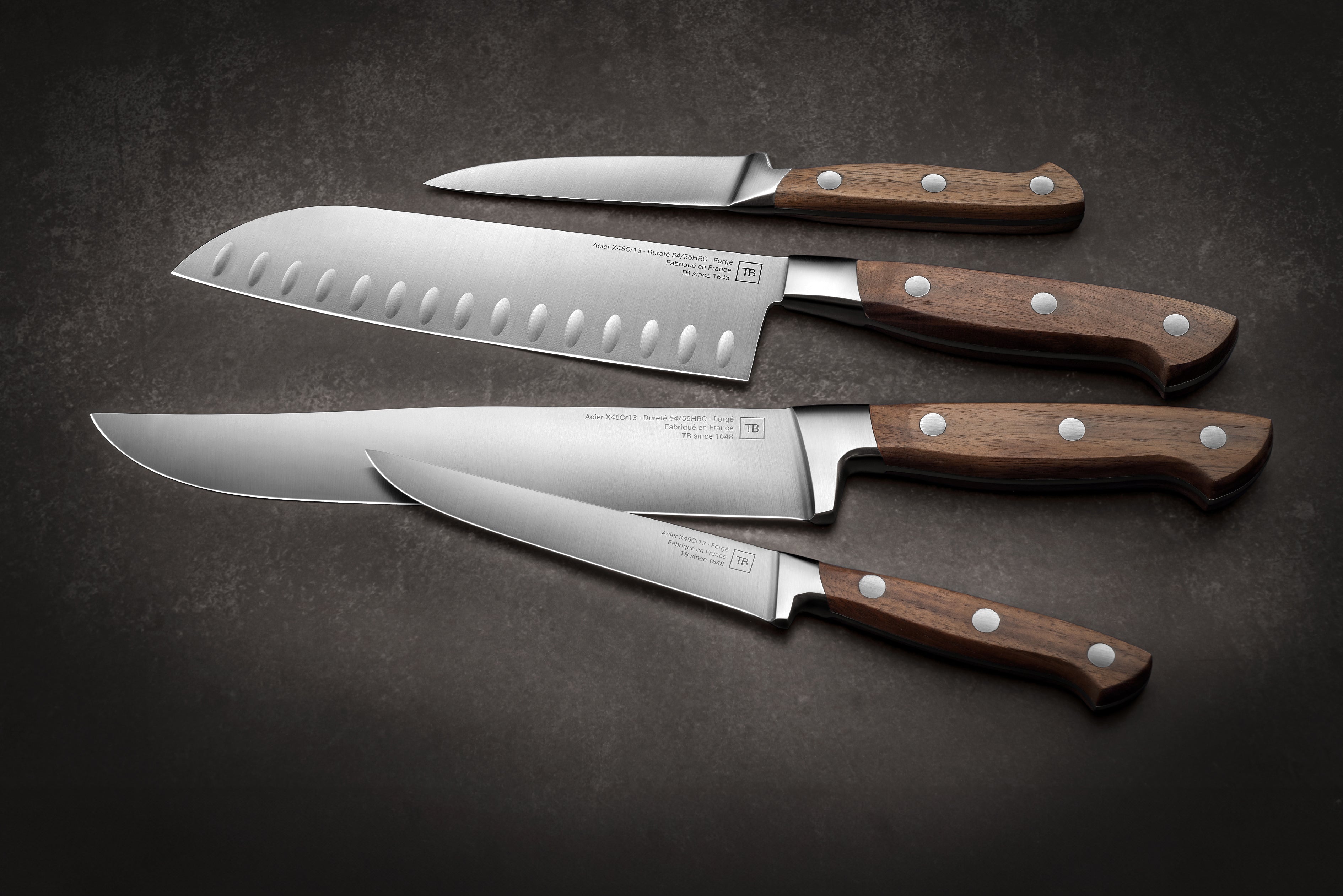
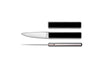
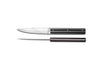
The paring knife is often the unsung hero of our kitchens, the tool we reach for when precise work is needed and that turns out to be indispensable. Although it appears in every cutlery collection, from the most robust ranges like Brigade Forgé Premium to the most design-led ones like Louis, its French name holds a mystery: why is it called a couteau « d’office »?
By looking at its role and technical features, it becomes perfectly clear why this knife deserves the title of default tool, or « d'office » ("as a matter of course"), in any self-respecting kitchen.
What is the paring knife, the kitchen essential, used for?
The paring knife stands out for its versatility and its ability to perform precision work. It is considered the indispensable little knife for a multitude of kitchen tasks.
Main uses of the paring knife:
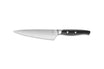
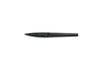
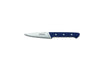
Its blade, generally short (often under 10 cm) and pointed, is designed to be highly versatile, allowing different uses depending on the food being prepared:
- Peeling vegetables and fruit.
- Turning vegetables (a precision technique).
- Pitting fruit.
- Trimming small cuts of meat with great dexterity.
- Finely slicing and chopping.
- Cutting into thin strips.
It is a highly effective kitchen knife, appreciated by enthusiasts and professionals alike.
The technical features that make the paring knife essential
The performance of the paring knife is intrinsically linked to its design, which combines maneuverability and precision.
Lightness and maneuverability
Paring knives are by nature very easy to handle and easy to store. In the Équilibre® range, for example, the blade of the small paring knives is just 2 mm thick, contributing to superior maneuverability.
A good knife, whether a paring knife or a chef's knife, must offer unmatched cutting comfort. High-end kitchen knives, even for small tasks, are perfectly balanced, providing an excellent grip.
Quality and durability
For a kitchen tool to be truly "indispensable" every day, it must be made with flawless quality. French manufacturers such as TB-1648 are committed to producing superior-quality paring knives by controlling the entire manufacturing process.
Paring knives are available in high-performance materials, including very high-quality professional stainless steel or blades featuring innovative technologies for exceptional durability.
- Some models, such as the Paring Knife - Forgé Premium Evercut, benefit from EVERCUT® technology (laser fusion of titanium carbide), which ensures a virtually wear-proof edge guaranteed for life.
- Handles can be made of eco-friendly materials such as POM (polyacetal), which is highly resistant to water, impacts and harsh products, making daily care easier (dishwasher-safe in some cases).
The spirit behind the name: the tool you take "d'office"
In the context of high-end cutlery, this name reflects the essential, automatic nature of its use.
A paring knife is the tool you reach for by default as soon as a task calls for precision or a short blade, since it is specifically designed for this kind of dexterity.
If the chef's knife handles 80% of cutting work, the paring knife takes over for everything else: finishing, trimming, peeling. It is therefore the tool that must automatically be there, no question, to complement the other kitchen utensils.
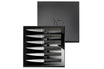
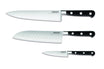
Paring knives are offered in complete sets (for example, the Louis 3-Knife Set including the paring knife, the santoku and the chef's knife), underlining their status as a key, non-negotiable piece of basic equipment.
Ultimately, the paring knife is the embodiment of practicality and precision. It is the one you reach for "d'office" for the details, ensuring that even the smallest culinary preparations are carried out with optimal quality and comfort.
The toolbox analogy:
The chef's knife is the all-purpose hammer of the kitchen, able to strike hard and do most of the work. But when you need to tighten a small screw or make a fine cut, you need a precise screwdriver. That is exactly the role of the paring knife: the specialized tool, indispensable "d'office," to make sure every detail is perfect, from pitting a fruit to carefully trimming an aromatic herb.