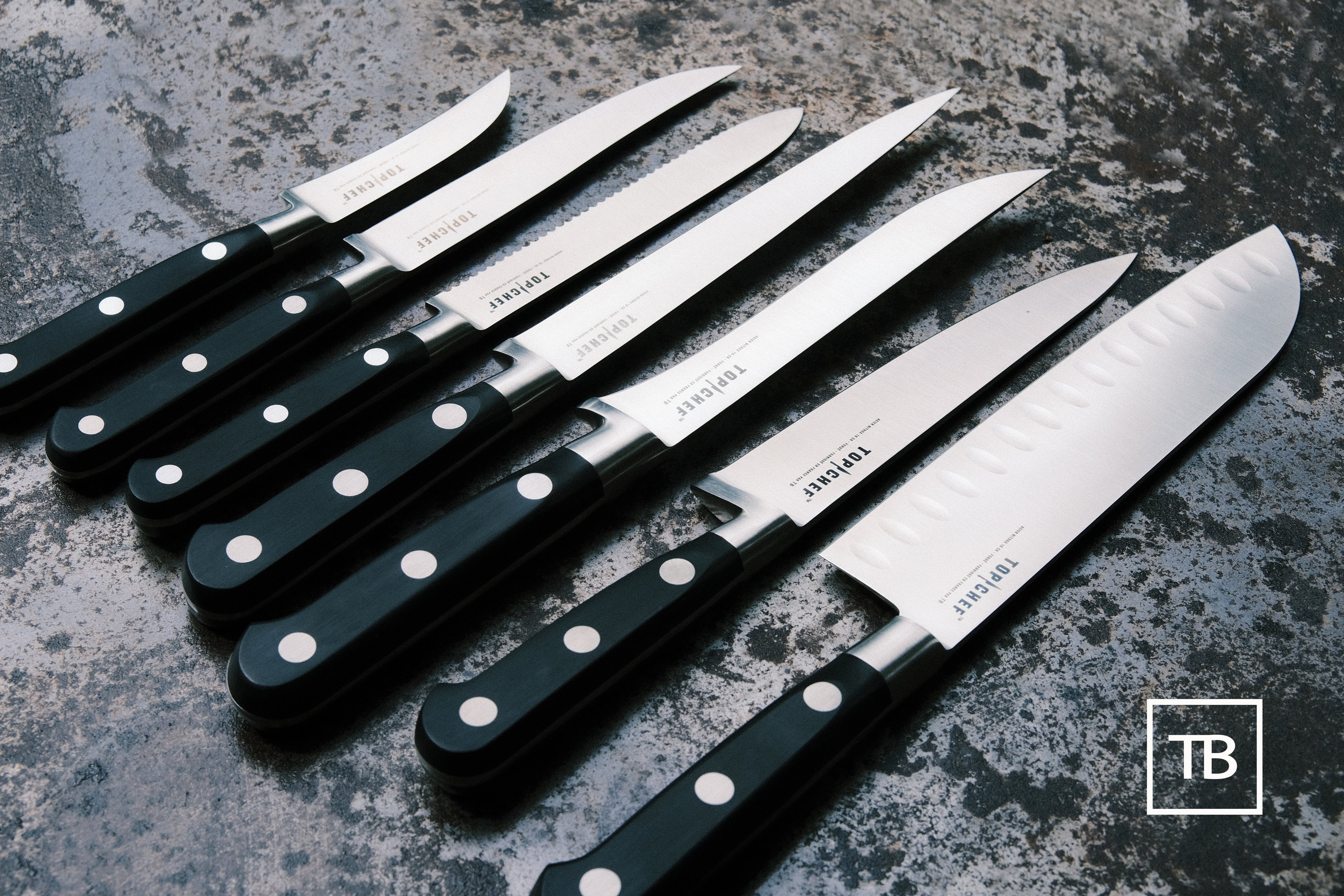
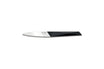
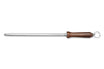

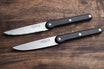
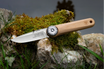
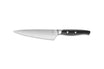
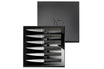
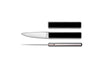
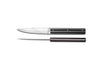
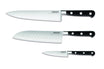
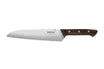

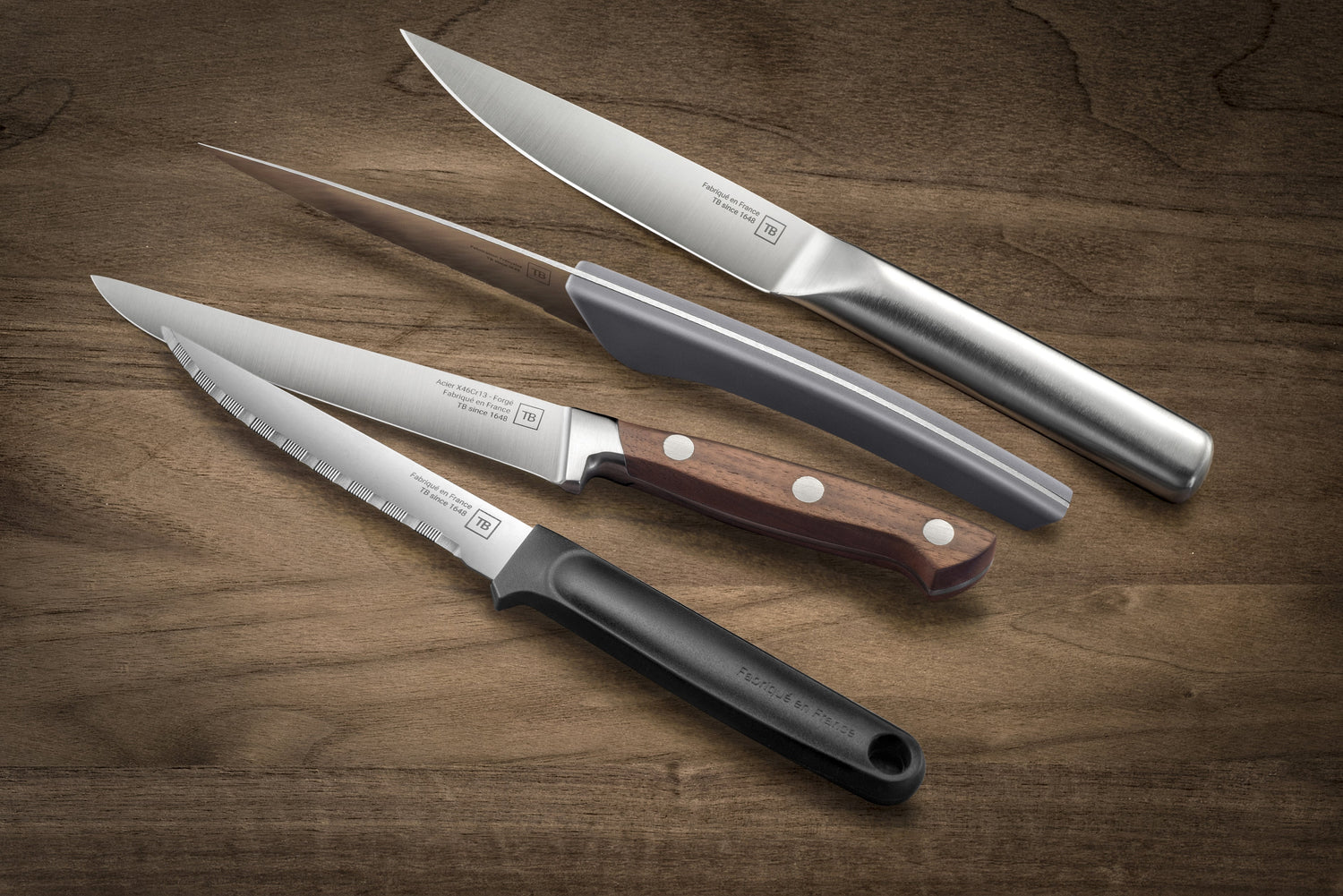
The choice between a plain blade and a micro-serrated blade determines not only the cutting quality of your food but also the longevity of your equipment. While a plain blade offers a clean cut at 15-20°, micro-serrations ensure constant effectiveness without maintenance on abrasive surfaces. We recommend using plain blades for delicate meats and micro-serrations for intensive daily use.
Key points to remember
- Precision: A plain blade does not tear the muscle fibers of meat.
- Maintenance: A micro-serrated blade does not require sharpening, unlike a plain blade.
- Versatility: Serrations are ideal for hard crusts and smooth skins (tomatoes).
- Durability: The steel of TB-1648 models ensures optimal edge retention depending on the chosen model.
What is a plain blade?
The plain blade, also known as a straight-edge blade, represents the very essence of traditional cutlery. Its edge is continuous and uniform along the entire length of the piece. In our workshops in Thiers, we work these blades to achieve a surgical-grade sharp angle. This type of edge works by gliding: pressure is evenly distributed, allowing it to penetrate material without initial resistance.
The main advantage lies in the cleanliness of the cut. On a piece of beef or duck breast, the plain blade separates tissues without crushing them, thus preserving the juices and flavors inside the food. It is the preferred choice of gourmets seeking a refined tasting experience. Knives from the la table range perfectly illustrate this need for aesthetic and technical excellence.
However, this performance requires special attention. A plain blade dulls on contact with hard surfaces like ceramic plates. It therefore requires regular maintenance using a honing steel or a stone to restore the "morailles" or the blade's edge. According to Wikipedia "Table knife", the generalization of the plain blade at the table is intimately linked to the evolution of French table arts in the 19th century.
What is a micro-serrated blade?
The micro-serrated blade features a series of small teeth, or serrations, on its cutting edge. Unlike the broad serrations of a bread knife, the TB-1648 micro-serration is extremely fine, almost imperceptible to the naked eye on some models. Each tooth acts like a micro-saw, initiating the cut even on the most resistant or slippery materials.
This geometry is particularly effective for breaking the surface tension of certain foods. Think of the skin of a tomato or the crust of an individual bread roll: where a slightly dull plain blade might slip, the micro-serration grips immediately. For collections designed for everyday table use, it is a popular solution for its robustness.
The secret to the longevity of a micro-serrated knife lies in the fact that the valleys between the teeth never come into direct contact with the plate. Only the tips of the teeth dull over time, while the valleys retain their cutting power. This makes it the ideal tool for those who do not wish to worry about regular sharpening of their cutlery.
What are the technical differences between the two?
The distinction between these two blade profiles is not limited to visual appearance; it is based on the physics of cutting. The plain blade operates by pressure and gliding, while the micro-serrated blade operates by shearing. This structural difference directly impacts the steel's reaction to abrasion from porcelain or stoneware plates.
| Characteristic | Plain Blade | Micro-serrated Blade |
|---|---|---|
| Cutting Action | Clean slicing (pressure) | Controlled tearing (sawing) |
| Required Maintenance | Regular (honing steel/stone) | None (single edge use) |
| Food Integrity | Excellent (fibers preserved) | Medium (fibers slightly marked) |
| Edge Life | Limited without maintenance | Very long (several years) |
In terms of manufacturing, our Laguiole Héritage® knives can be offered in both versions depending on user needs. It is important to understand that the steel used remains high quality, but the edge treatment radically changes the behavior of the utensil in the long term.
For what use should you choose a plain blade?
The choice of a plain blade is essential when the quality of the meat is the main focus. For a tournedos, duck breast, or roast veal, only a plain blade can respect the silky texture of the meat. It avoids the "chopping" effect that serrations might cause, ensuring that each bite retains its natural moisture.
It is also the choice of the aesthete. A well-maintained plain blade knife offers an incomparable gliding sensation that contributes to the gastronomic pleasure. To maintain this level of performance, we invite you to consult our guide on how to care for your kitchen knives, whose principles apply perfectly to high-quality table knives.
- Tasting noble red meats.
- Ceremonial meals and refined table settings.
- Users willing to perform occasional sharpening.
For what use should you choose a micro-serrated blade?
Micro-serrations are the queen of practicality. They are recommended for everyday family use, where knives are used for various tasks: cutting a pizza, slicing dry sausage, or simply eating a daily meal without worrying about the condition of the blade. Their ability to remain "sharp" despite repeated contact with ceramic is their greatest asset.
They are also essential for certain specific foods. A ripe tomato, for example, requires the grip of serrations to avoid being crushed under the pressure of a plain blade whose edge is not perfectly "razor-sharp." Laguiole Héritage® models with micro-serrations thus offer an ideal compromise between traditional design and the modernity of hassle-free use.
| User Profile | Main Need | TB-1648 Recommendation |
|---|---|---|
| Family with children | Versatility and safety | Micro-serrated blade |
| Meat lover (Steakhouse) | Raw cutting performance | Sharpened plain blade |
| Intensive daily use | Zero maintenance | Micro-serrated blade |
| Formal receptions | Elegance and neatness | Polished plain blade |
Can a micro-serrated blade be sharpened?
This is a recurring question that deserves a clear answer: no, a micro-serrated blade cannot be sharpened by conventional means. Sharpening stones and honing steels are designed to work on a straight edge. Passing a honing steel over serrations would only crush the tips of the teeth, making the knife less effective than before.
While specific tools exist (triangular-shaped stones or very fine honing steels) that can address each tooth individually, this work is extremely tedious and rarely cost-effective for standard table knives. When the micro-serrations no longer cut (often after several years of intensive use), it is generally time to replace your cutlery or entrust the piece to a professional capable of transforming the edge into a plain blade through complete grinding.
This characteristic emphasizes the importance of the initial choice. If you appreciate the act of maintenance and the longevity of an item passed down through generations, the plain blade is your ally. If you view the knife as a functional tool that should be operational at all times without effort, the micro-serrated blade is the rational choice.
And for a table with several guests, what to choose?
Etiquette and the comfort of your guests should guide this decision. At a formal dinner, harmony is key. Respect for traditions, as explained in our article on the meaning of cutlery at the table, often suggests the use of plain blades, which are more visually noble. However, for a barbecue with friends, micro-serrated steak knives will be much better suited for cutting sometimes tougher grilled meats.
We often advise owning a set of each. A complete micro-serrated cutlery set for Tuesday evening meals, and a series of plain-blade table knives (like our forged steel models from Thiers) for special occasions. This allows you to preserve your finest blades from daily wear and tear while ensuring an optimal experience for your guests.
Frequently Asked Questions
Why does my plain blade knife stop cutting after just one meal?
It is likely that you are cutting directly on a very hard ceramic plate, which rolls the edge of the steel. A quick pass with a honing steel is usually enough to realign the edge and restore the initial sharpness. The steel of our knives is designed to be easily maintained.
Does micro-serration really tear meat?
On very tender meat like a beef fillet, micro-serrations can create a slightly irregular cutting surface compared to a plain blade. However, for most cooked meats, the difference in texture in the mouth remains minimal for most daily users.
What is the lifespan of a TB-1648 micro-serrated knife?
Depending on the frequency of use and the type of cutting surface, a micro-serrated knife maintains satisfactory effectiveness for 5 to 10 years without any intervention. It is the most economical and durable option for family use without the constraint of technical maintenance.
Technical Glossary
Plain: Refers to a straight and continuous edge, allowing a clean cut by gliding without tearing material.
Micro-serration: Machining of extremely fine teeth on the blade's edge, increasing initial grip and cutting longevity without sharpening.
Serration: Blade profile featuring large teeth (like a bread knife), designed for sawing hard or fibrous materials.